Place a rack in the upper third of your oven and preheat it to 300°F. Line a 9×13-inch rimmed baking sheet with parchment paper.: The moment you preheat, you begin controlling how the oats and nuts toast, which affects aroma and color development. You should notice the oven slowly warming and when it reaches temperature the air will feel dry and warm; that steady heat is what crisps the clusters without burning them. Lining the pan with parchment prevents sticking and allows you to press and lift the granola cleanly later. One common mistake is not positioning the rack properly, which can lead to uneven browning, so make the upper third placement deliberate. Also, ensure the sheet is rimmed so any melted sugar does not drip onto the oven floor, which can smoke. If your oven runs hot, consider checking 5 to 10 minutes earlier than instructed to avoid overbrowning. Use an oven thermometer if you suspect calibration issues, because consistent heat equals consistent texture.
In a large bowl, stir together the oats, almonds, pecans, coconut, cinnamon, and salt (plus cocoa powder and additional cinnamon if you are making one of the variations.: When you combine these dry elements, you are creating the structural matrix of the granola. Run your fingers through the mixture to feel that the ingredients are evenly distributed, and breathe in the initial nutty, spiced scent that foreshadows the final aroma. Even distribution prevents dense pockets of spice or cocoa which would skew flavor. A frequent misstep is tossing wet and dry ingredients together too early; keeping them separate until the oil mixture is ready ensures an even coating. If you notice clumps in the dry ingredients, gently break them apart so the wet binder can coat each flake. This step sets the stage for crunchy clusters once baked.
In a medium saucepan, combine the olive oil, light brown sugar, and honey. Stir over medium heat, until sugar dissolves and the mixture begins to bubble. Remove from heat and stir in vanilla.: As the mixture heats, watch it transform visually and audibly; the sugar will dissolve into the oil and when it reaches a gentle bubble you will hear soft popping and see a glossy sheen. That bubbling signals the binder is hot enough to coat and caramelize the oats. Removing from heat promptly is crucial so the vanilla retains its aroma and does not volatilize off. A common error is overheating, which can make the binder taste bitter and alter texture. Use medium heat and stir continuously so the sugar melts evenly. Once off the heat, adding the vanilla will perfume the mixture without losing nuance, making the granola smell irresistibly baked rather than just sweet.
Pour the warm olive oil mixture over the oat mixture. With a wooden spoon, gently scoop and fold, coating the oats, nuts, and spices, until fairly evenly moistened. Spoon the mixture onto the prepared baking sheet, press down gently with the back of a wooden spoon, then place in the oven.: The moment the warm binder meets the dry mix you will see glossy flakes and clusters beginning to form, and the aroma will turn complex with toasted sugar and vanilla notes. Folding rather than vigorously stirring preserves nut integrity and keeps the oats from pulverizing. When spreading on the sheet, press down with steady, even pressure to create clusters that will hold through baking. Pressing too hard can compact the granola into dense bars rather than loose clusters, while not pressing at all reduces clumping. A typical mistake is using a metal spoon that can crush ingredients; a wooden spoon or spatula yields gentler handling. Once the sheet goes into the oven you are committing these clusters to golden transformation, so take a final look for even thickness across the pan to ensure uniform browning.
Bake for 30 minutes, removing from oven and stirring once every 10 minutes. When finished baking, the granola will be slightly toasted around the edges and smell amazing.: During the bake you will notice the fragrance evolve from sugary to toasty and nutty; that is your sensory cue that caramelization is occurring. Stirring every 10 minutes redistributes heat and prevents the edges from overcooking while encouraging even color development. The sound will be quiet; listen for any crackling that indicates sugar is bubbling more aggressively in spots, which may need earlier stirring. Avoid skipping the interim stirs, a common mistake that leads to burnt patches. Visual cues to look for include a warm golden hue and darker caramelized edges. Remember the granola will continue to darken slightly after removal, so pull it when it is golden rather than deeply brown to protect delicate flavors.
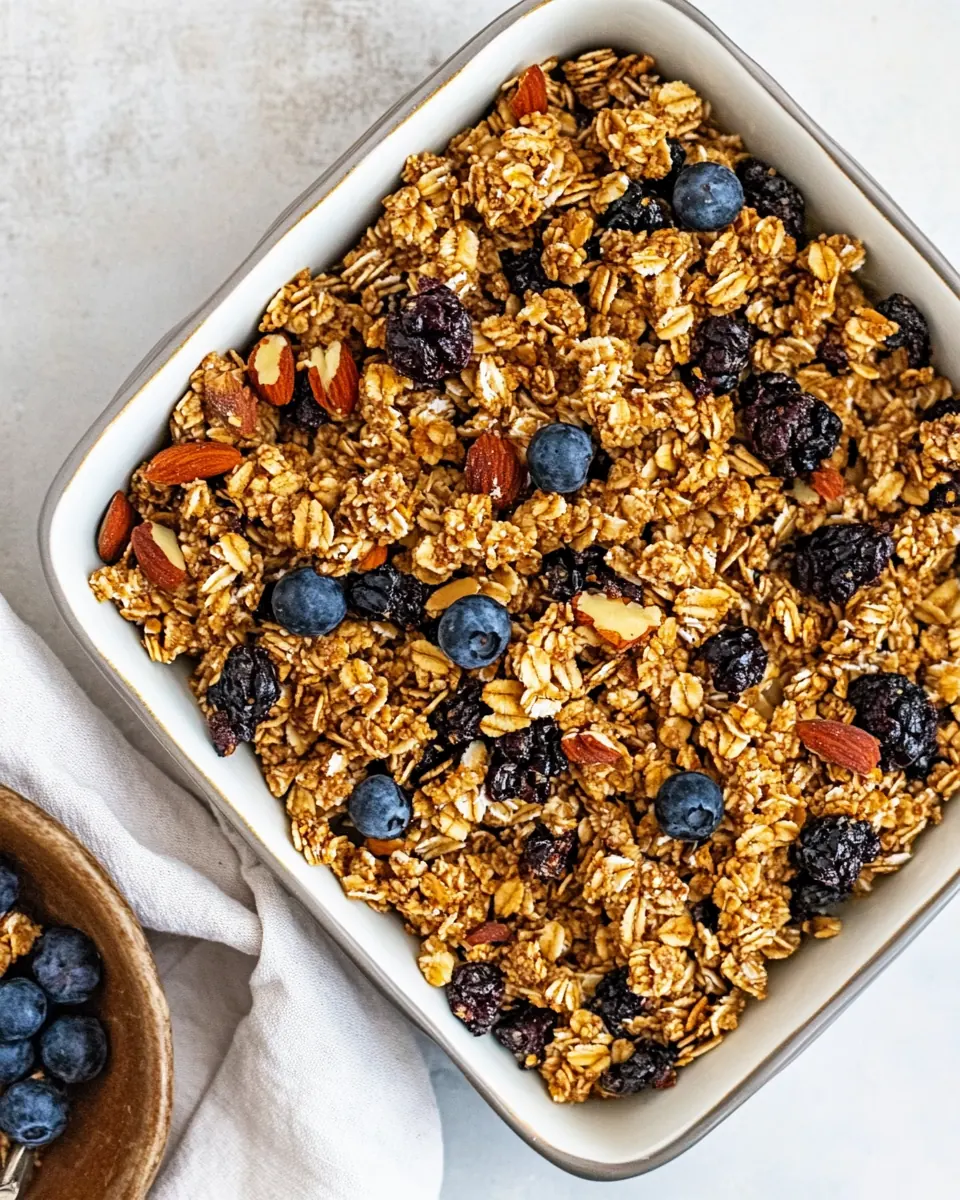
Remove from the oven and let cool completely. Stir in dried fruit and chocolate (if using).: Cooling is when the clusters set and the texture becomes pleasantly crunchy; you should feel the difference if you gently press a cooled piece, it will snap rather than compress. The aroma at this stage is fully developed and inviting, with toasted nuts and sweetened coconut prominent. Adding dried fruit and chocolate after cooling preserves their texture, preventing chocolate from melting and dried fruit from becoming overly dry. A frequent slip up is stirring in mix ins while still warm, which causes chocolate to smear and fruit to lose chew. Allow plenty of time to cool on the pan; rushing this step can ruin the intended cluster structure. Once cooled and mixed, transfer to airtight containers to maintain crispness and aroma.