In a food processor, add in the pie crust ingredients plus 1/2 cup of powdered sugar and pulse until a dough has formed. Slowly drizzle in the water while pulsing until it becomes a meal-like texture.: The bowl will begin to show clumps of dough and a coarse, sandy texture before it comes together, you should hear a gentle change in the motor pitch as it forms. This method keeps the butter cold which leads to flakier pastry, and pulsing rather than continuous mixing prevents overworking gluten. A common mistake is running the processor too long, which warms the fat and results in a tough crust, so pulse in short bursts and watch for the dough to just come together.
Transfer the dough to a clean surface and roll it out until it is about 1/8” thick. Form it into a 2” inch deep 8” round tart pan. Trim off any excess.: You will feel the mixture clump slowly as the liquid binds the dry ingredients, and it should resemble coarse crumbs that hold together when pinched. Adding water gradually allows you to stop at the right moment so the dough is neither dry nor wet. If you add too much water, the dough becomes sticky and hard to handle, leading to a dense crust, so err on the side of adding less and adding a teaspoon more only if needed.
Bake in the oven at 400° for 12-15 minutes or until lightly browned and cooked. Let it cool.: As you roll, the dough should be cool to the touch and roll with a few faint cracks at the edges that you can press smooth. A 1/8” thickness gives a light, crisp shell that bakes evenly. Keep the dough chilled between rolling if it softens, because warm dough stretches and shrinks in the pan. A frequent pitfall is overworking the dough which toughens it, so handle it lightly and use gentle, even pressure with the rolling pin.
In a large metal bowl over a medium size pot of boiling water, whisk together the eggs, egg yolks, 1/4 cup of sugar, zest of 1 lemon, and juice of 1 lemon until it becomes very thick, like a custard, which is about 2 to 4 minutes. Be sure to whisk constantly. Remove the bowl and whisk in the butter until it has melted. Cool the mixture in the refrigerator until completely cooled.: When fitting the crust into the pan, press gently into the corners and up the sides so there are no air pockets, and trim excess for a neat rim. The depth and diameter give the tart the right proportion of crust to filling, and an even layer prevents soggy spots. If you stretch the dough too much while lining the pan it will spring back and shrink during baking, so allow it to relax and patch any thin spots instead of stretching them.
In a standing mixture with the whip attachment on high speed, mix the mascarpone and cream cheese until light and fluffy, which takes about 5 to 7 minutes, and then add in the remaining lemon zest, lemon juice, and powdered sugar. Mix until combined, and then fold in the chilled lemon curd.: Use a sharp knife or rolling pin over the pan edge to remove extra dough, then crimp or smooth the rim as you prefer; clean edges create an attractive final presentation. Excess dough can be saved and baked as decor or scraps, but leaving it makes the crust too thick and uneven. A mistake here is leaving ragged edges that bake unevenly, producing dark or underdone spots, so aim for uniform thickness all around.
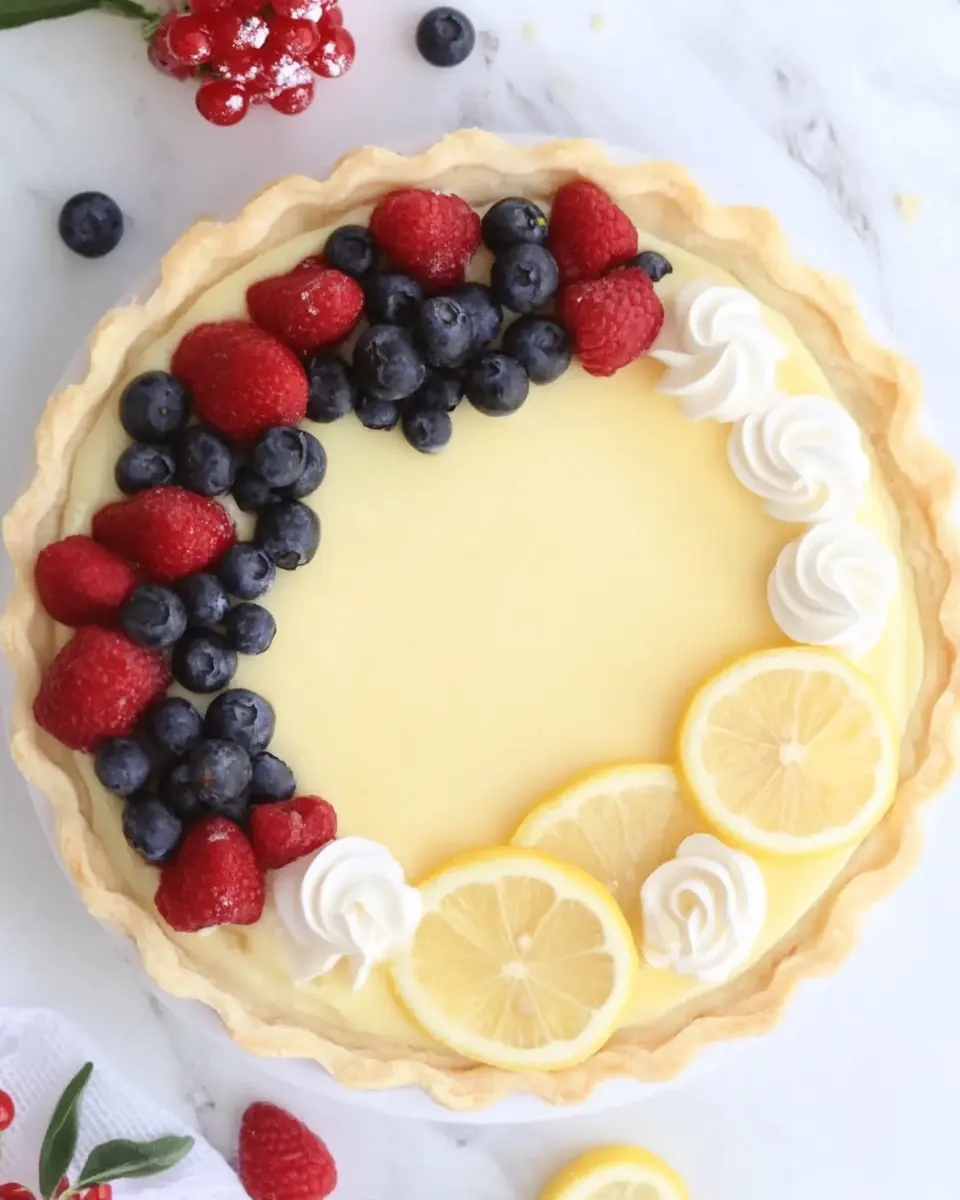
Pour the mixture into the cooked pie shell and cool overnight in the refrigerator or until it firms up. Garnish with berries and serve!: As the crust bakes you should see it take on a pale golden tone and smell a warm, toasty aroma of butter . The high heat sets the layers in the dough quickly, promoting flakiness and preventing a soggy bottom. Use visual cues rather than relying solely on time because oven temperatures vary. One thing to avoid is opening the oven repeatedly which drops the temperature and can cause the shell to collapse or bake unevenly.
Let it cool: Cooling the shell at room temperature allows the structure to firm up and prevents condensation from softening the base when the filling is added. The cooled shell will feel slightly firm and not soft to the touch. Rushing this step by adding warm filling can create a runny center, so give it time to cool thoroughly.
In a large metal bowl over a medium size pot of boiling water, whisk together the eggs, egg yolks, 1/4 cup of sugar, zest of 1 lemon, and juice of 1 lemon until it becomes very thick, like a custard, which is about 2 to 4 minutes: As you whisk constantly the mixture will gradually thicken and take on a pale, glossy sheen, and the aroma will intensify with bright lemon notes. Using a double boiler provides gentle, even heat so the eggs thicken without scrambling, yielding a smooth curd. A common error is letting the water touch the bowl which can overheat and cook the eggs too fast, so keep a gentle simmer and whisk continuously.
Be sure to whisk constantly: Continuous whisking ensures even heat distribution and creates a silky texture rather than curdled bits, and you will notice the mixture pulling slightly from the sides of the bowl when it is ready. This motion also traps air that makes the curd lighter. Stopping to answer a call or stepping away risks lumps or cooked egg bits, so stay attentive for uniform consistency.
Remove the bowl and whisk in the butter until it has melted: As the warm curd meets cold diced butter , whisking will create a glossy, emulsified curd that tastes rich and velvety. The small pieces melt into the curd, rounding the flavor and smoothing texture. If the butter is too warm or added too quickly it can separate, so add it gradually while whisking to maintain a cohesive emulsion.
Cool the mixture in the refrigerator until completely cooled: Chilling firms the curd and stops carryover cooking, giving a stable base to fold into the cheese mixture. You will feel the curd thicken and the aroma will mellow slightly. A mistake is folding in warm curd which can deflate or soften the whipped cheese, so be patient and cool it thoroughly.
In a standing mixture with the whip attachment on high speed, mix the mascarpone and cream cheese until light and fluffy which takes about 5 to 7 minutes: The whisk will aerate the mascarpone and cream cheese into a pale, billowy mass that sings when you lift the whisk; this creates the luscious texture for the filling. Whipping at high speed incorporates air which keeps the filling from feeling dense. Overwhipping can break the mixture and cause it to become grainy, so stop when it is smooth and airy.
Then add in the remaining lemon zest lemon juice and powdered sugar: Adding the additional lemon components and powdered sugar at this stage brightens the cheese base and sweetens it evenly, and you will notice the mixture become slightly looser and more fragrant. This step balances the richness with acidity. If you add too much juice at once the mixture may loosen excessively, so add gradually and taste as you go.
Mix until combined and then fold in the chilled lemon curd: The folding motion preserves the airy texture while integrating the curd, so you should see ribbons of pale lemon color swirl through the mixture before it harmonizes. Folding rather than beating keeps the filling light and prevents deflation. Vigorous mixing will flatten the aerated base and yield a denser filling, so use gentle, deliberate turns.
Pour the mixture into the cooked pie shell and cool overnight in the refrigerator or until it firms up: As the filling settles into the shell the surface will smooth and the fridge will help it set to a sliceable consistency, with the aroma of lemon mellowing into a creamy finish. Overnight refrigeration gives the best texture and flavor melding. A common misstep is rushing the chill time, which results in a filling that is too soft to slice neatly, so give it ample time to firm.
Garnish with berries and serve: Fresh berries add color, freshness, and a subtle textural contrast that complements the creamy filling; arrange them just before serving for the best visual impact. The berries should be dry and cool, not wet, or they can create moisture on the surface. If you prepare the tart too far in advance with berries already on top they may weep, so garnish at the last moment.