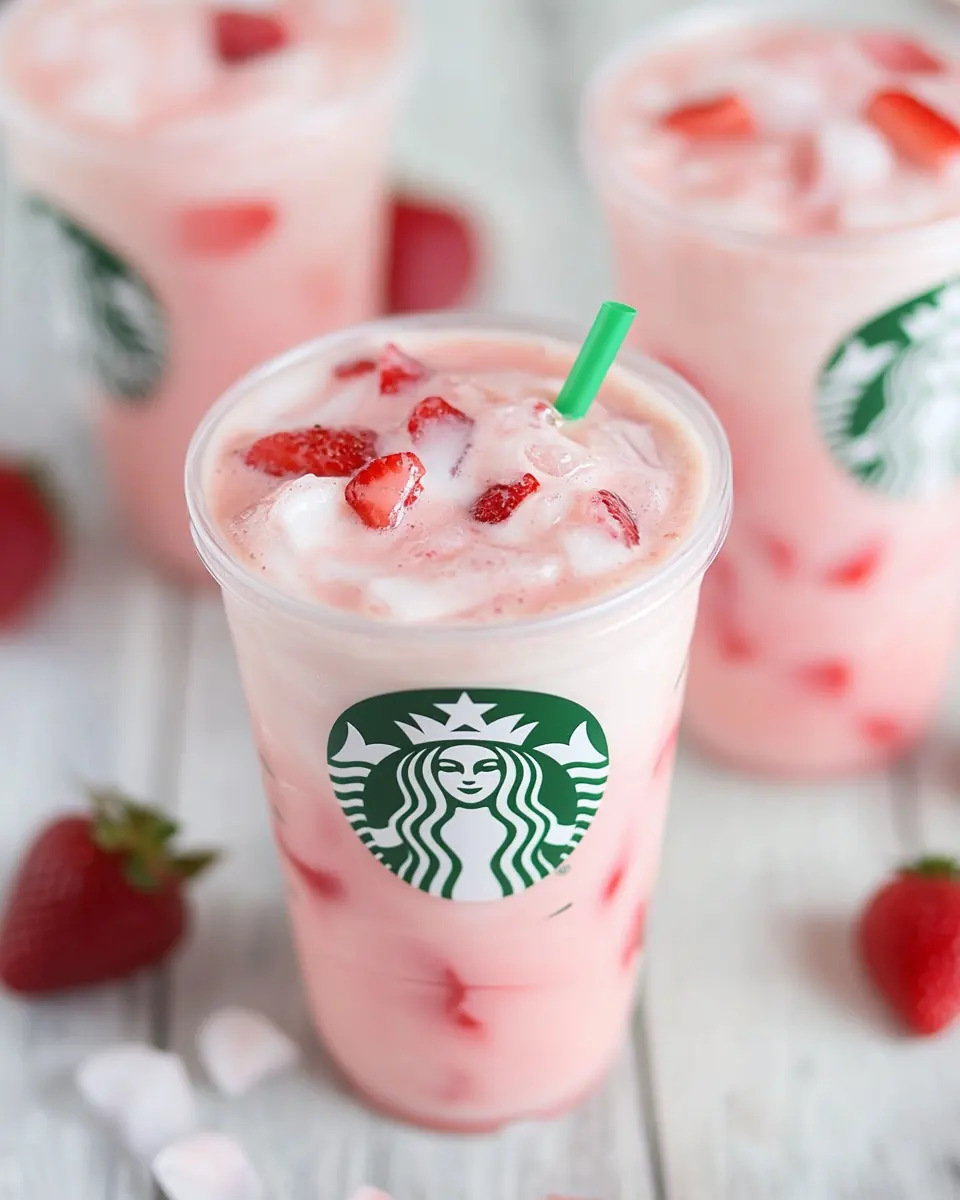
In a pitcher add white grape juice, unsweetened coconut milk, and strawberry simple syrup.: The moment you combine the liquids you will notice a soft swirling of pale pink and cream. Stirring here helps the creamy coconut milk emulsify into the brighter white grape juice , giving a uniform color and texture, and the aromatic strawberry simple syrup begins to perfume the mix. If the mixture looks separated, give it a few more gentle stirs rather than shaking vigorously, which can cause foaming. A common mistake is adding syrup before tasting the juice and milk together, so always taste and adjust to avoid over sweetening.
Stir to combine, taste, add more strawberry simple syrup if desired.: As you stir, breathe in the sweet strawberry scent and gauge the balance between creaminess and fruit brightness. This tasting moment is crucial to nudge sweetness up or down. If you find it too rich, add a splash more white grape juice ; if it is too light, a little extra strawberry simple syrup can correct it. Avoid dumping large amounts of syrup at once, which can quickly push the drink into overly sweet territory; incremental additions are safer.
To serve, pour over ice and garnish with fresh berries.: Pouring over a glass full of ice creates a chilled textural contrast and a slight dilution that helps meld the flavors. The sound of the liquid hitting the ice is part of the experience, and the cold intensifies the mouthfeel. Garnishing with a few fresh strawberries brings color and invites tasting. One mistake is using warm syrup or warm liquid over ice, which melts the cubes too fast and waters down the drink, so keep components chilled if possible.
To a medium-sized saucepot add diced strawberries, granulated sugar and water. Stir to gently combine.: As you toss the diced strawberries , sugar, and water into the pot, you will smell the fresh fruit sweetening almost immediately. This combination is the foundation of the simple syrup, and stirring until the sugar dissolves helps prevent scorching. Use a medium pot so the fruit can break down evenly; overcrowding can lead to uneven cooking. A common error is turning the heat too high, which can burn the sugar and create an off aroma.
Set over medium heat and bring to a simmer and cook until the strawberries are mushy and the syrup has thickened, about 15 minutes.: When the pot begins to simmer you will hear gentle bubbling and smell the fruit becoming deeply aromatic. The strawberries will collapse and the liquid will reduce into a glossy syrup, indicating concentrated flavor. Stir occasionally to prevent sticking, and reduce heat slightly if it bubbles too vigorously, which can lead to a darker burnt flavor. Avoid rushing this step because insufficient reduction results in a thin syrup with muted strawberry notes.
Remove from the heat and let cool, about 30 minutes.: After removing from heat, the syrup will continue to settle and the steam will carry away some of the raw fruit sharpness, leaving a rounder flavor. Cooling helps the syrup thicken further and makes it easier to strain. Do not try to cool quickly with ice, which can water it down; patience yields the best intensity. A common misstep is bottling hot syrup which can create condensation and shorten storage life.
Over a fine mesh strainer, strain the simple syrup, add to an airtight container or jar and keep in the refrigerator for up to a week.: Straining clarifies the syrup and removes seeds and pulp, giving a smooth liquid to mix into drinks. Pouring through a fine mesh will yield a bright, clear syrup with concentrated aroma. Store in a clean airtight jar to preserve freshness; label with date if you make several batches. The error to avoid here is storing in a warm spot, which can accelerate fermentation or spoilage.