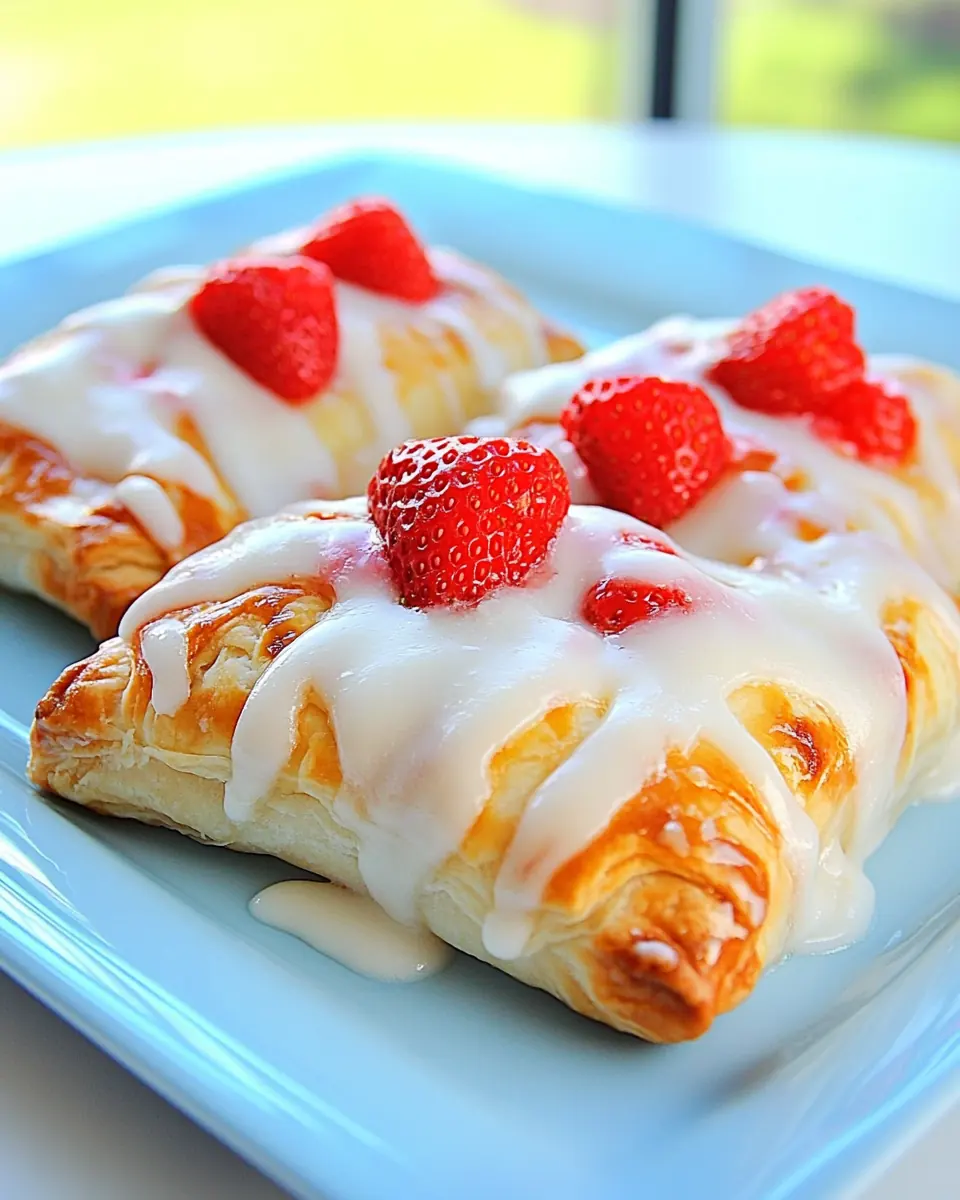
Remove puff pastry sheets from package and lay on counter to thaw. In the meanwhile chop strawberries into small pieces and place in a bowl. Toss with granulated sugar and let sit for 30 minutes.: You will notice a cool, slightly buttery aroma as the puff pastry relaxes; gentle thawing prevents the layers from sticking together and preserves the lift you want in the oven. Touch the dough carefully, it should be pliable but still chilled, and if parts feel overly soft, pop them back in the fridge for a few minutes. A common mistake is rushing thawing, which leads to sticky dough that tears when you unfold it.
Pre heat oven to 400 degrees. Lightly flour your work surface and unfold pastry sheets and cut along the creases to create 6 long strips of dough. On one half of the dough gently spread 1 tbsp of cream cheese in the center (you should only use about 3 oz of the cream cheese and leave the remaining 1 oz for the glaze), leaving about an inch of dough on each side. Top with 1-2 tbsp of chopped strawberries. Fold the dough over, and pinch closed with a fork to create an enclosed pocket. Repeat for all 6 pastries.: The sweet fragrance of chopped strawberries becomes more pronounced as you cut them, and smaller pieces distribute flavor evenly in each strudel. Use a sharp knife for clean cuts, which helps the berries hold their shape and prevents a watery filling. Avoid chopping into mush, since overly crushed fruit will leak excessively during baking.
Place on a parchment or silicone lined baking sheet. Beat the egg with 1 tbsp of water in a small bowl. Brush the tops of the pastries with the egg wash. Using a sharp knife cut 3 slices on the top of the pastry, being careful not to slice through the bottom.: As the sugar draws juices out, the bowl will glisten and a light syrup will form; this step amplifies the berry flavor and softens the fruit slightly so it melds with the cream cheese . Stir once or twice while it sits to ensure even maceration. Don’t skip the rest, because under macerated berries can taste too tart.
Bake for 15-16 minutes. Should be puffed up and a golden brown.: You will smell a faint warm air as the oven reaches temperature and a properly heated oven ensures quick steam formation inside the pastry which creates lift and flakiness. Preheating fully avoids soggy bottoms. A common error is placing pastries in an oven that is not hot enough, which prevents proper puffing.
To make the glaze, in a small bowl combine the remaining 1 oz of cream cheese with 1/2 cup powdered sugar and 1 tsp of milk or heavy cream and beat with a fork or whisk until smooth. Spoon into a zip close bag and snip a corner off to pipe onto a warm 'toaster' strudel.: Dusting with a little flour keeps the puff pastry from sticking, and cutting along creases gives neat, uniform pockets that bake evenly. You’ll see clean edges and straight lines which translate to consistent baking. Be careful not to over flour or the layers may not adhere when sealed.
On one half of the dough gently spread 1 tbsp of cream cheese in the center: The creamy aroma of the cream cheese is mild, and spreading it in the center creates a cushion that keeps some berry juices from saturating the dough. Leave an inch border so the pastry seals well and the filling stays contained. Overfilling here is the top mistake, it causes leaks.
You should only use about 3 oz of the cream cheese and leave the remaining 1 oz for the glaze: Reserving cream cheese for the glaze ensures a rich, tangy finish; using the right amount inside keeps the texture balanced so the filling is creamy not greasy. Measure carefully so the glaze will be smooth and pipeable. Too much cream cheese inside can make the pastries heavy.
Top with 1 to 2 tbsp of chopped strawberries: Adding a modest spoonful of macerated strawberries delivers bright bursts of flavor without soaking the dough. The juices mingle with the cheese for a tender interior. Resist piling too many berries, which can weigh down the pastry and cause seams to open.
Fold the dough over, and pinch closed with a fork to create an enclosed pocket: You will feel the sealed edge firm up under the tines of the fork, and the sound of the fork pressing creates a satisfying rhythm. A well sealed pocket traps steam to puff the layers and holds filling in place. If the edges are not pressed firmly, the pastries can open and leak.
Repeat for all 6 pastries: Working methodically, you will notice each pocket looking more uniform, which helps them bake evenly. Arrange them neatly on the tray to allow proper circulation. Haste here leads to uneven sizes and inconsistent baking.
Place on a parchment or silicone lined baking sheet: Lining the tray reduces sticking and facilitates even browning, and you can hear a light sizzle when they hit the hot oven surface, signaling good contact. The lining also makes cleanup quick. Putting them directly on metal can cause overbrowning on the bottom.
Beat the egg with 1 tbsp of water in a small bowl: The egg wash will take on a smooth, glossy look when beaten, and thinning with water ensures it spreads evenly without pooling. Brush lightly for a consistent golden color. Too heavy an egg wash can weigh down the pastry layers and prevent full puffing.
Brush the tops of the pastries with the egg wash: Brushing brings out a warm, bronzed color and a subtle sheen; you will see a noticeable transformation from pale to bakery brown. Use a pastry brush in long strokes to avoid streaks. Over brushing can cause pooling which burns in the oven.
Using a sharp knife cut 3 slices on the top of the pastry, being careful not to slice through the bottom: Those three vents let steam escape, giving a pleasing puff and a peek at the filling, while preventing burst seams. The sound is quiet but you will see the top relax where cuts are made. Cutting too deep will let filling leak onto the tray.
Bake for 15 to 16 minutes: As they bake the kitchen fills with a warm, fruity scent and the pastry puffs up into layered domes that turn a uniform golden brown; this visual cue means they are done. Rotate the tray if your oven has hot spots to get even color. Underbaking yields soggy interiors, while overbaking makes them dry.
Should be puffed up and a golden brown: The tops should feel crisp and spring slightly when touched, and the bottoms should be firm enough to lift without bending. Cool slightly before glazing so the filling sets. Cutting into piping hot pastries can make the filling run.
To make the glaze, in a small bowl combine the remaining 1 oz of cream cheese with 1/2 cup powdered sugar and 1 tsp of milk or heavy cream and beat with a fork or whisk until smooth: The glaze should be silky and glossy, with a cool tang from the cream cheese that contrasts the warm pastry; whisking well prevents lumps and gives a pipeable texture. Add milk slowly to reach the right consistency. If too thick, it will be hard to pipe, if too thin it will run off the pastry.
Spoon into a zip close bag and snip a corner off to pipe onto a warm 'toaster' strudel: Piping the glaze lets you add pretty, controlled lines that melt slightly into the warm crust, creating appealing contrast and extra sweetness. The aroma of warm pastry and cool glaze together is irresistible. Don’t apply while the pastries are too hot or the glaze may slide off.