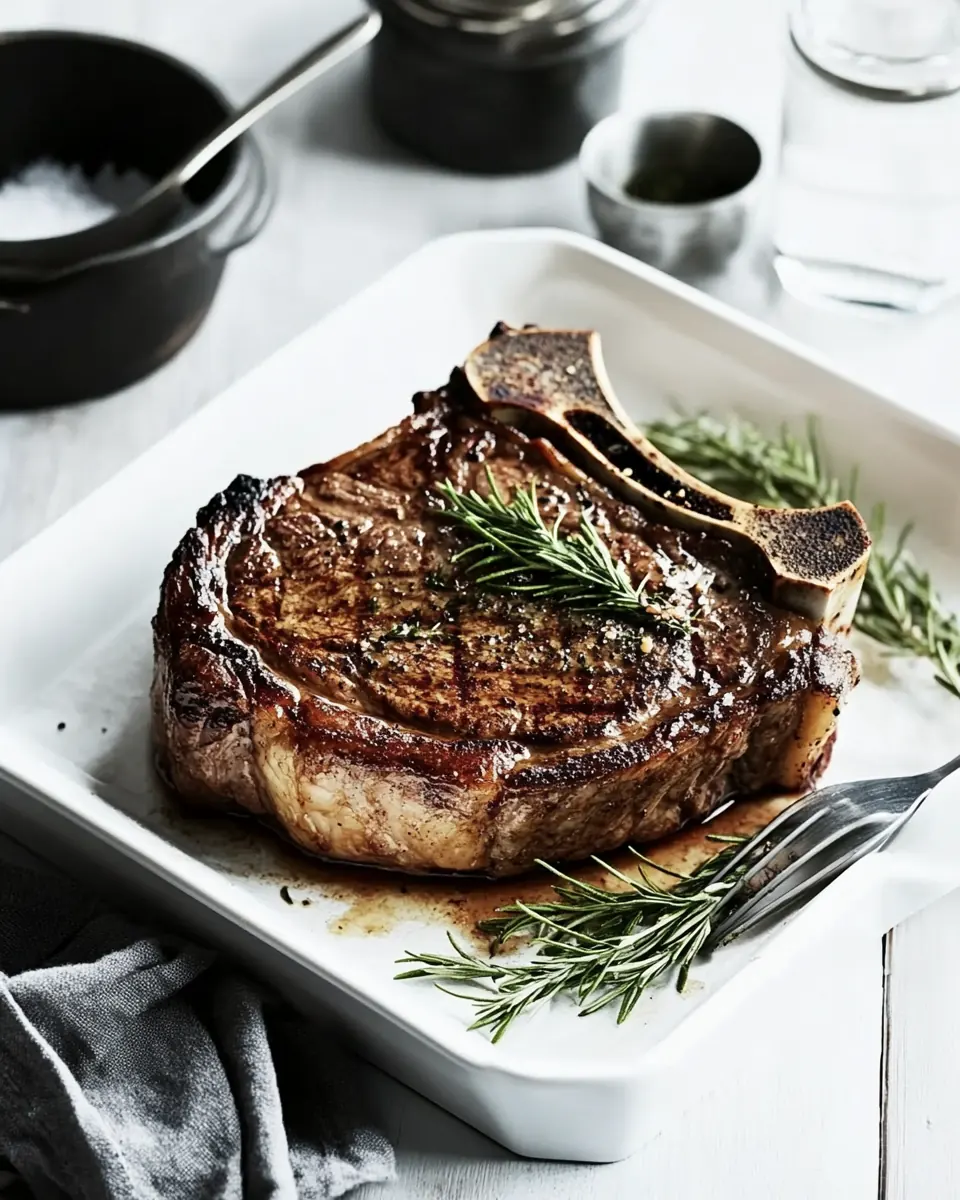
Preheat the oven to 400°.: The air in the oven will warm and surround the pan with steady heat, allowing the interior of the steaks to rise gently after searing. You should feel a slight warmth when you open the oven, and the environment helps finish the meat without overbrowning the crust. A common mistake is not preheating, which makes the cook time unpredictable and can lead to uneven doneness.
Pat the steaks dry on all sides with a paper towel.: The surface should feel matte rather than damp, which encourages immediate browning when it meets the hot oil. You will notice less steam and more sizzling sound on contact, which signals efficient Maillard reaction. If the surface is wet, the steak will steam instead of sear, losing that desirable crust.
Season them on all sides with salt and pepper. You can also dry brine the steak for 4 to 24 hours.: The salt will draw some moisture out briefly and then reabsorb, seasoning deeply, while the pepper adds a bright bite. You might see tiny crystals on the surface and smell a toasty aroma as the pepper warms in the pan. Avoid adding salt too late, as it will not penetrate as well and the crust may be bland.
Add the olive oil to a large cast iron or carbon steel pan and heat over high heat until the oil smokes lightly.: Heating until the oil is just at the smoking point ensures an intense sear, producing a deeply browned crust quickly. You will see a faint shimmer on the oil surface and smell a toasty note; that is the cue to add the steaks. If the oil smokes heavily and smolders, reduce the heat slightly, because burnt oil will impart an unpleasant bitterness.
For a medium-rare internal steak, place it in the pan, turn the heat down to medium, and let the steak cook for 1 minute.: Listen for a lively sizzle, which means the surface proteins are browning. The edges will darken and the side touching the pan will develop a golden tone. Avoid moving the steak too soon, or you will tear the developing crust and lose flavorful browning.
Next, using tongs, move the steaks around in a circular motion for 1 minute. Doing this will help completely brown the top of the steak.: This gentle motion promotes even browning across the top while maintaining contact with the hot surface, giving a more uniform crust. You should hear a steady, confident sizzle and see the surface color deepen evenly. A pitfall here is overmanipulation, which can disrupt browning and create uneven sear patterns.
Flip the steak over and immediately add in the butter, garlic, and thyme.: As the second side hits the pan, the butter will foam and the garlic and thyme will release fragrance, bathing the meat in aromatic fat. Tilt the pan and baste using a spoon to coat the surface with the flavored butter, which helps build an even glossy finish. Be careful not to let the butter brown too darkly, because burned butter tastes bitter.
Transfer the pan to the oven on a middle rack and cook for 5 minutes or until it reaches 125° internally, which is a medium-rare doneness.: In the oven, the steak cooks more evenly, and you will notice the initial strong sizzle subside to a quieter roast. Use an instant read thermometer to check for 125°, aiming for that target to achieve medium-rare after resting. A common mistake is relying solely on time; ovens vary, so the thermometer is your best friend.
Remove the steaks and place them on a rack to rest for 4 to 5 minutes before serving.: Resting lets the juices redistribute, turning a loose, bleeding interior into a juicy, sliceable center. You may see the surface firm slightly and juices pull back into the meat, which signals readiness. Cutting too soon causes those juices to spill onto the plate, leaving the steak drier than intended.