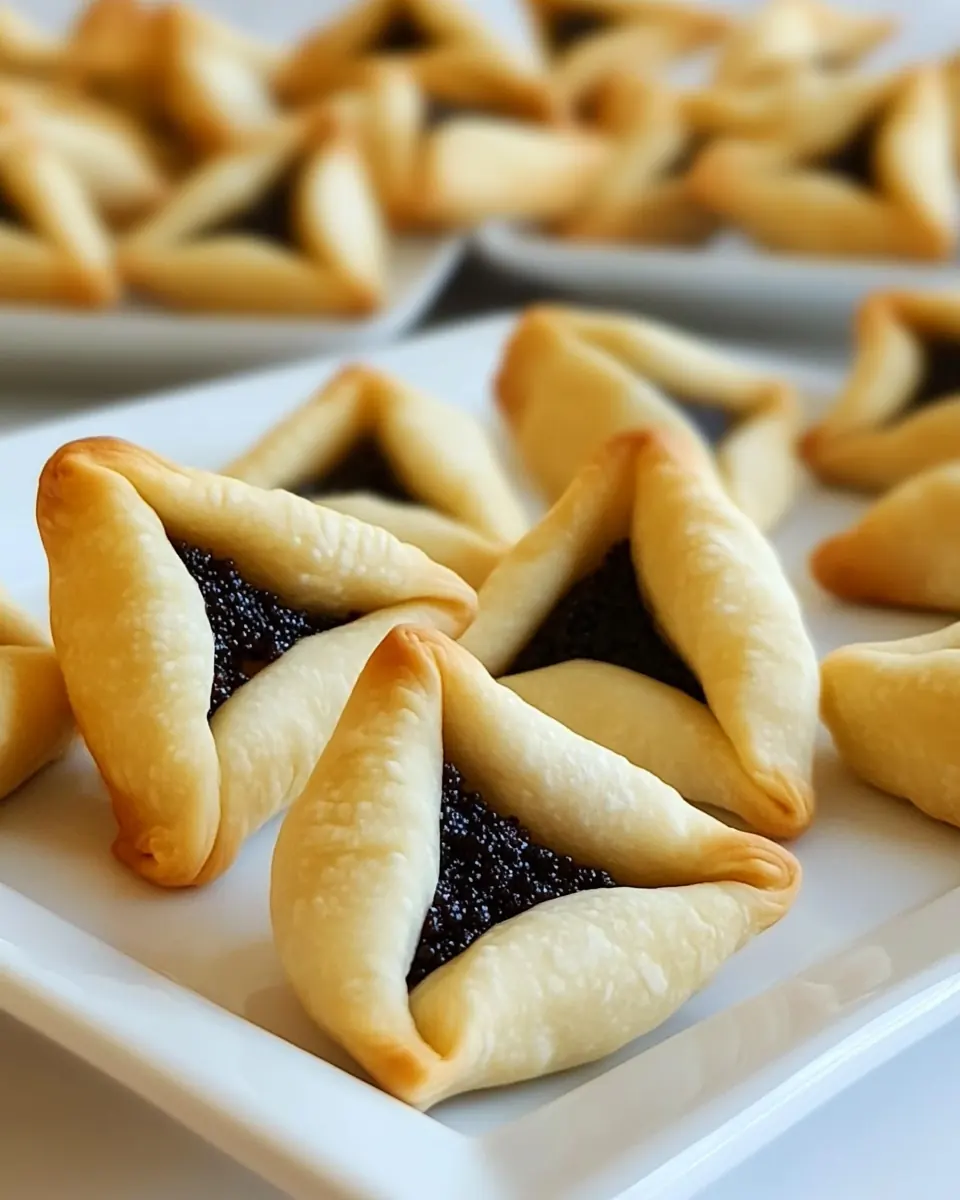
Roll dough between 1/8 - 1/4 inch thick and cut into circles with a cookie cutter or glass rim that is at least 3 inches wide. Place a teaspoon of filling (whichever filling you choose) into the center of each circle. Do not use more than a teaspoon of filling, or you run the risk of your hamantaschen opening and filling spilling out during baking. Cover unused circles with a lightly damp towel to prevent them from drying out while you are filling.: As you roll, pay attention to the texture under your fingertips, it should feel smooth and slightly cool, never sticky. You will see the dough thin uniformly when it is ready, and the sound of the rolling pin gliding will change as resistance eases. If you press too hard you risk a dense cookie, so lift and rotate the dough frequently to keep thickness even. A common mistake is rolling too thin in spots, which creates holes when filling; if you notice transparent patches, fold the dough and chill briefly before continuing. The visual cue is even color and no stretched or torn areas, plus the circles should release cleanly when you lift the cutter.
Assemble the hamantaschen in three steps. First, grasp the left side of the circle and fold it towards the center to make a flap that covers the left third of the circle.: The spoonful should sit like a small mound, glossy if it is jam, or matte if it is a nut paste, and you should be able to see the rim of dough around it. You will notice a gentle tension in the dough as it holds the filling, and the aroma of the chosen filling will be a helpful guide to portion size. Resist overfilling, because excess moisture will steam and push the dough open in the oven. One frequent error is adding too much, so keep a measuring teaspoon handy to ensure consistent portions for even baking and uniform cookies.
Grasp the right side of the circle and fold it towards the center, overlapping the upper part of the left side flap to create a triangular tip at the top of the circle. A small triangle of filling should still be visible in the center.: The danger here is structural, not flavor related; too much filling creates pressure as it heats and expands. You should be able to fold the corners without the filling oozing to the edges, and visually the center will remain slightly concave after folding if the quantity is correct. To avoid mess, wipe any stray filling from the rim before folding, because a sticky rim prevents proper adhesion. A common oversight is trusting visual size of the pile rather than measuring, so when in doubt scale back slightly and test bake one to confirm.
Grasp the bottom part of the circle and fold it upward to create a third flap and complete the triangle. When you fold this flap up, be sure to tuck the left side of this new flap underneath the left side of the triangle, while letting the right side of this new flap overlap the right side of the triangle. This way, each side of your triangle has a corner that folds over and a corner that folds under-- it creates a "pinwheel" effect. This method if folding is not only pretty-- it will help to keep the cookies from opening while they bake.: Texture here is key. Dry dough edges will crack when folded, so the towel keeps them pliable and workable. You'll notice the covered pieces stay soft to the touch and are more cooperative when you pick them up. Take care that the towel is only slightly damp, because too much moisture will make the dough sticky and tear easily. Many people forget this and end up with ragged edges mid session, so protect your dough and work in small batches if needed to keep everything fresh.
Pinch each corner of the triangle gently but firmly to secure the shape.: The folding sequence creates the classic triangular shape and secures the filling . Listen to the soft crinkle of the dough as you fold each corner, and watch how the edges nest together. This technique creates overlapping layers that seal the center, and it leads to an attractive, slightly pinched rim once baked. A mistake to avoid is pressing too hard when overlapping, which can squish filling outward; instead, use a gentle, guiding touch to align corners neatly.
Repeat this process for the remaining dough circles. Bake according to recipe instructions.: As you fold this flap, feel for an even thickness, and watch the edge form a clean arc. The sensory cue is a soft tug as the dough bends without cracking. This initial fold sets the geometry for the remaining two flaps, so take your time to position it exactly. If the dough tries to spring back, chill briefly to relax gluten, because overworking can make it elastic and stubborn. One common slip is misplacing the first flap, which throws off symmetry, so double check alignment before proceeding.
Grasp the right side of the circle and fold it towards the center, overlapping the upper part of the left side flap to create a triangular tip at the top of the circle: You will see a small triangle of filling remain visible, which is the classic look. The sound is minimal, but your fingertips will detect the overlap seating together. Overlapping helps maintain structural integrity while baking, and I like to ensure the overlap is snug without compressing the center. Avoid dragging the flap which can smear filling; instead lift and place with care. If you find gaps between flaps, a gentle press at the base will help them adhere.
Grasp the bottom part of the circle and fold it upward to create a third flap and complete the triangle: When this flap goes in place, tuck the left side under and allow the right to overlap as described, creating a tidy pinwheel effect. The tactile satisfaction of this step is great, because you can feel the three corners interlock. That interlocking is what prevents opening during oven rise, since each corner supports the others. A frequent mistake is rushing the tuck, which leaves unsecured corners, so take an extra second to ensure each corner is properly nested.
This way, each side of your triangle has a corner that folds over and a corner that folds under, creating a pinwheel effect: Visually the finished cookie will show a small window of filling at the center, with neatly layered dough around it. The layered corners brown slightly and crisp at the edges, offering textural contrast to the softer center. If you notice any seams that look weak, press them gently with a fingertip to encourage adhesion. Avoid using water as glue, because that can make the dough soggy; if needed, use a tiny dab of beaten egg to seal for a glossy finish.
Pinch each corner of the triangle gently but firmly to secure the shape: The pinch should feel decisive but delicate, creating a visible seal without cutting through the dough. You will hear a subtle change as the layers meet, and visually the corners will become defined. This pinch is crucial to prevent the cookies from unfurling, since oven expansion tests any weak spots. Common troubleshooting here is overpinching which can distort the shape, so aim for firm and small, rather than broad and forceful.
Repeat this process for the remaining dough circles: As you repeat, you will develop a rhythm and your hands will learn the exact motions needed. The sensory flow builds confidence, with each cookie showing progress in uniformity and appearance. Watch for consistent thickness, portion size, and pinch pressure to ensure a batch that bakes evenly. One pitfall is losing focus and varying sizes, so pause occasionally to realign your spacing and check a sample under a lamp to confirm evenness.
Bake according to recipe instructions: In the oven, watch for the edges to take on a light golden hue and for the center to look set, not wet or glossy. The aroma will shift from raw dough to warm, toasted notes, and you may hear a faint crackle as the edges crisp. Baking time matters to texture, so use visual cues rather than only relying on a timer. A typical error is underbaking, leaving centers doughy; if in doubt, test one cookie by cooling briefly to judge texture, and adjust the next batch accordingly.