In a large soup pot, over medium high heat, melt your butter and saute your chopped onion. Once the onion begins to brown, add the beef to the pot and cook for about 8 minutes, the beef should start browning. Add the garlic to the pot just before the beef browns and saute with the onion and beef.: The sizzling of the butter and the softening of the onion are your first cues, a sweet aroma rising as the edges turn translucent and then golden. Listen for a gentle sizzle that indicates the heat is right, not a furious roar which would brown them too fast. The why here is simple, this step builds a savory foundation; properly softened onion releases sugars that harmonize with the paprika later. A common issue is turning the heat up too high, which causes rapid browning and loss of the delicate sweet notes, so keep it steady and stir occasionally to ensure even cooking.
Remove the pot from heat and add your paprika, salt, and pepper. Toss to coat and pour in your beef broth and canned tomatoes. Return the pot to the stove over high heat and bring to a boil. Once it is boiling reduce the heat, cover and simmer for 30 minutes.: You will hear a louder sizzle when the beef hits the hot pan, and small brown bits will cling to the bottom creating rich fond. Browning amplifies savory flavor through Maillard reactions, which deepen the eventual broth. Pay attention to color, you want brown all over without an overcooked crust, and avoid moving the meat constantly, let it sear in place for a minute before turning. Overcrowding the pot cools the surface and causes steaming instead of browning, so brown in batches if needed to avoid that mistake.
Add in your carrots and potatoes, increase the heat to medium low and gently boil for another 30-40 minutes, until your carrots, potatoes and meat are tender and cooked through.: The garlic will give off a fragrant, nutty scent almost immediately, lifting the savory mix. Because garlic burns faster than onion, adding it toward the end preserves its sweet, aromatic quality rather than a bitter char. Its inclusion enhances the depth, making the stew smell homey and layered. Watch closely and stir frequently for only a minute or two, as letting it blacken will introduce harsh bitterness that is difficult to correct.
Serve hot and add additional salt and pepper to taste.: With the pot off the flame, sprinkle in the paprika so it gently releases its oils into the warm fat without scorching. This off heat step keeps the spice from turning bitter and allows its color to bloom, enriching the broth visually and aromatically. Salt and pepper blend into the mixture at this stage to start seasoning the base. If you skip removing from heat, the paprika can burn instantly, leaving a charred taste, so take that moment to pause and stir thoroughly.
Toss to coat and pour in your beef broth and canned tomatoes.: You will see the pan deglaze as the liquid lifts the fond, turning the bottom from sticky brown to a simmering, flavorful base. The aroma shifts as the broth and tomatoes mingle with the browned bits, promising depth and body. Stir gently to combine, scraping the browned bits so they dissolve into the liquid. Add just enough broth to create a balanced consistency, because too much will dilute the flavor and too little can lead to scorching during simmering.
Return the pot to the stove over high heat and bring to a boil.: The pot will bubble vigorously as it reaches a boil, the surface rolling and sending steam into the air. Boiling accelerates the melding of flavors, but it should be a brief stage to reach a simmer, as extended boiling toughens the beef . Once you see a full, active boil, lower the heat to maintain a gentle simmer; this ensures connective tissues break down tenderly. A frequent mistake is leaving it at a rolling boil, which can over reduce the liquid and toughen the meat, so adjust promptly.
Once it is boiling reduce the heat, cover and simmer for 30 minutes.: At this point the pot will whisper with small bubbles, and the kitchen will fill with a rich, meaty perfume. The covered simmer lets the beef relax and the connective tissue to soften into gelatin, enriching the broth. I use this time to peek occasionally, stirring to prevent sticking and checking the liquid level. Avoid lifting the lid too often which prolongs the time to tender; patience yields a silkier mouthfeel and deeper flavor.
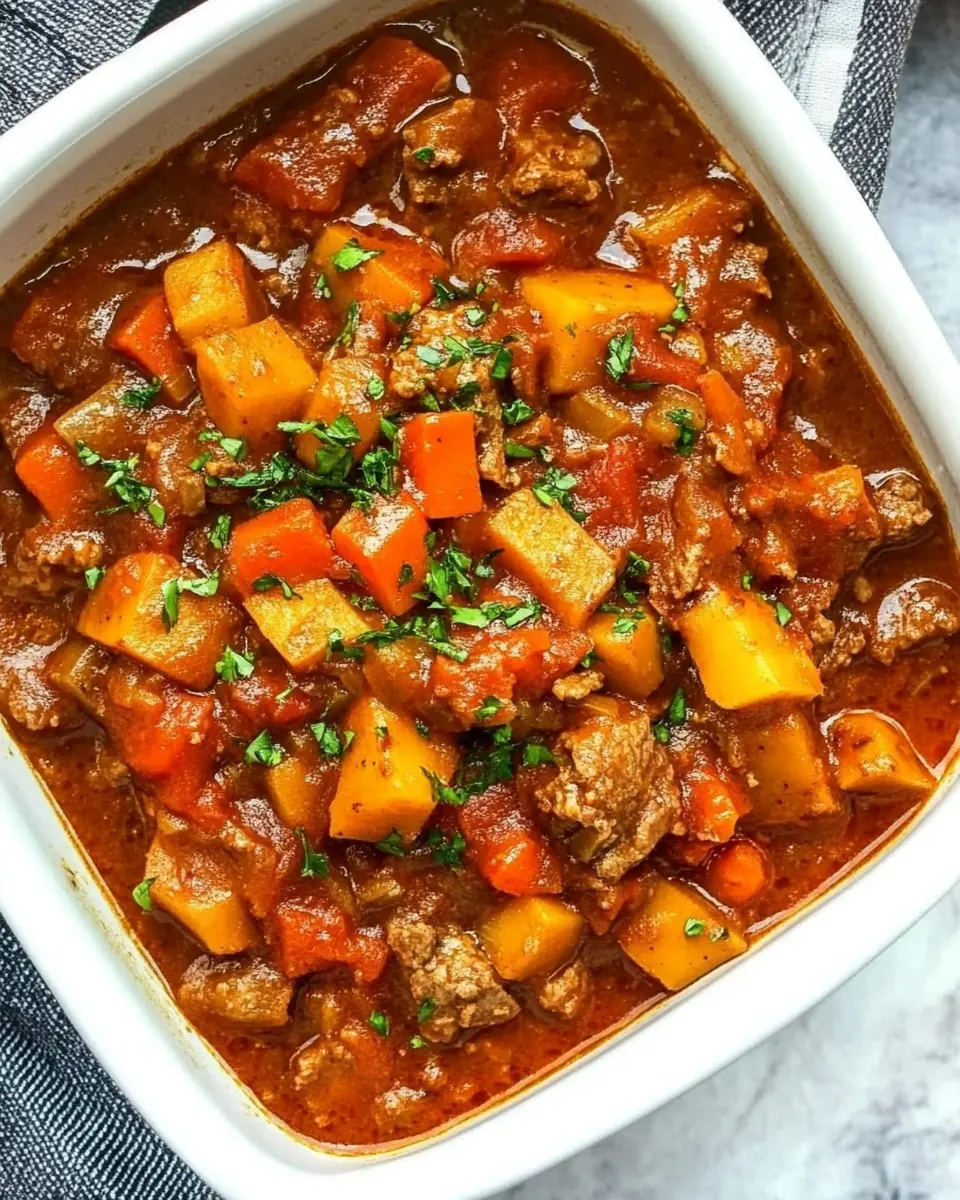
Add in your carrots and potatoes, increase the heat to medium low and gently boil for another 30-40 minutes, until your carrots, potatoes and meat are tender and cooked through.: When the roots join the pot, the stew becomes heartier and the aroma brightens with sweet vegetable notes. The gentle boil should produce consistent small bubbles, and you can test doneness by piercing the largest potato cube with a fork; it should glide through. These vegetables absorb flavor and slightly thicken the broth as they release starch. Avoid overcooking which will cause the potatoes to disintegrate, instead aim for tender but intact pieces for pleasing texture contrast.
Serve hot and add additional salt and pepper to taste.: At serving time steam will rise and the color will be a warm, paprika kissed red. Taste a spoonful and adjust seasoning with more salt or pepper if needed, balancing brightness and savor. Serving hot ensures the mouthfeel is comforting and the flavors are at their most expressive. A common finishing error is under seasoning, so a final taste test is key to bring everything into balance before it reaches the bowl.