Place the rice in a large bowl and add enough cold water to cover by 2-3 inches. Use your hand to gently turn the rice over, swishing it to release any excess starch. Carefully pour off the water, leaving the rice in the bowl. Repeat three times.: As you swish the basmati rice with your fingers the water will cloud with starch, then begin to run clearer after each rinse, and that visual cue is satisfying and crucial. You should feel the grains slide past your palm, and the action removes the powdery coating that would otherwise make the rice glue together. Pouring off the milky water might splash a bit, so go slow and steady with the bowl tilted. The goal here is a translucent rinse, not perfectly glass clear, which signals sufficient starch removal. A common mistake is scrubbing the rice vigorously which can fracture delicate grains, so be gentle. This gentle turning preserves the long grain integrity and prevents breakage, which keeps the cooked rice elegant and separate.
Cover the rice again and leave it to soak for 30 minutes. Then use a fine-mesh strainer to drain the rice.: During the soak the grains absorb water and plump up, which shortens the actual cooking time and helps achieve even tenderness. You will notice the individual kernels swell slightly and feel heavier in the bowl. After thirty minutes the rice should be pliant but still firm to the bite before cooking. Using a fine mesh strainer ensures you remove excess water without losing grains, and it helps the rice move quickly into the boiling pot. Avoid skipping the soak, as underhydrated grains tend to cook unevenly and can remain hard at the center. Soaking also reduces the likelihood of broken grains while stirring later, preserving the signature long, separate threads of basmati rice .
Bring a large pan of water to a boil, add the salt and the drained rice. Bring back to a simmer and cook for 10-12 minutes until the rice is tender. Start checking at 8 minutes.: As the pot returns to a rolling boil you will hear a lively, bubbling sound and see the rice moving gently, which tells you the water is doing its work. Once it calms to a simmer the surface will have soft ripples and the grains will begin to look translucent along the edges. At about eight minutes pierce a grain to check for doneness, because basmati rice should be tender with a slight bite, not mushy. The smell will be lightly nutty and clean. Overcooking will make the grains burst and lose their structure, while undercooking leaves them chalky. If you see the water becoming cloudy and very thick, that suggests too much starch remains; in that case, pour into a strainer and rinse briefly with hot water to stop cooking without gummy results.
When the rice is cooked, use a fine-mesh strainer to drain the rice - pour the cooked rice and remaining water carefully into the strainer and allow the excess water to drain.: Pouring into a strainer releases the hot pot liquid quickly and you will hear a cascade of boiling water drain away, leaving the rice sitting airy and steaming. The steam rising from the rice smells faintly sweet and clean, and letting it drain removes surplus moisture that would otherwise make the texture heavy. Shake the strainer gently to encourage excess water to escape, but avoid rough handling that can break grains. A frequent error is leaving the rice in the boiling pot to finish off the water without draining, which can lead to clumps. Straining preserves the distinct separated grains we all love in Indian Basmati Rice .
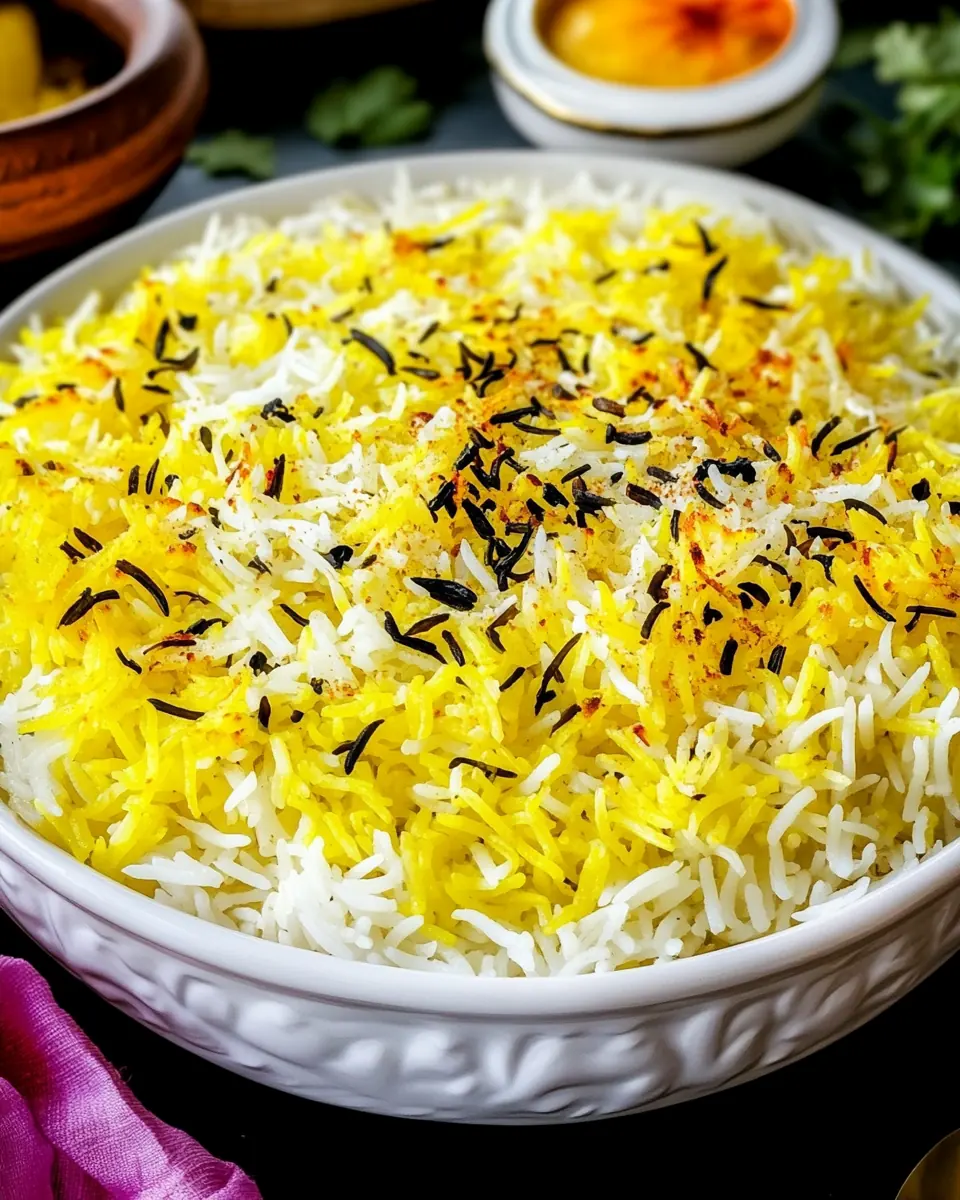
Mix the turmeric with the boiling water, and while the rice is still in the strainer, pour the mixture over the top. It will stain some rice yellow.: The heated turmeric solution will release a warm golden color on contact, and you will see dramatic ribbons of yellow staining some grains, which adds visual charm. Because you pour while the rice is still in the strainer, the colored water courses through and highlights a scattering of grains rather than dyeing every kernel uniformly. The aroma is faintly earthy, and the technique is more decorative than flavor altering. Avoid using too much liquid here, or the rice will rehydrate and clump. If the color seems uneven, that is intentional, and it creates a pretty contrast when you serve the rice.
Use a rubber spatula to gently turn the rice and distribute the colored grains. You aren't going to color all of the rice, just some of the grains.: The motion should be lifting and folding, not mashing, so that the fragile, steamed grains stay intact and the colored pieces disperse artistically. You will notice a soft rustling sound and the occasional steam puff as you fold, and the finished bowl takes on a mosaic of faint yellow and white. This gentle handling helps keep the texture light and airy. A mistake here is aggressive stirring, which crushes the grains and spoils the delicate presentation.
Transfer to a serving bowl.: As you bowl the rice the aroma will fill the kitchen with warm, nutty notes, and the grains will settle into a fluffy mound that holds its shape. Use a wide, shallow bowl to showcase the mixed colors and to make it easy for guests to serve themselves. If the rice sits a few minutes, it will steam and relax into an even loftier texture. Cover with a light cloth only if you need to keep it warm briefly, because trapping too much steam can make the surface sticky. One common slip is piling rice into a narrow container, which compresses the grains and ruins the presentation.
Heat the ghee/oil in a small frying pan over medium heat. Once the oil is shimmering, add the curry leaves and the mustard, cumin, and fennel seeds. Remove the pan from the heat and pour over the rice.: As the ghee or oil warms you will see it shimmer and hear a faint sizzle when the first seeds hit the surface, and the seeds will pop and perfume the oil with toasty, nutty aromas. The curry leaves will crisp and release a citrusy, savory fragrance. Removing the pan from the heat at the right moment prevents the seeds and leaves from charring, which would become bitter. Pouring this sizzling oil over the waiting rice adds glossy sheen and an immediate aromatic lift. If you are serving children or prefer a subtler profile, skip this final tempering step, because while it is bright and enticing, it is optional for the core texture and structure of the dish.