Parboil beef bones in a pot of water for 5 minutes to remove impurities, then rinse and set aside.: As you start this step you will notice the water turn cloudy and a scum rise to the surface, which is exactly what you want to remove to keep the final broth clear. The short parboil loosens coagulated proteins and surface impurities, and rinsing thoroughly prevents those bitter, off flavors from carrying over. You'll hear a gentle rolling simmer, and the bones will shift as they release marrow and surface proteins. One common mistake is skipping the rinse, which leaves a murky broth and an unpleasant metallic taste, so take the extra minutes to pour out that water, scrub the pot if needed, and rinse the bones until the water runs clearer.
Toast cinnamon sticks, star anise, coriander seeds, and cloves in a pan until fragrant, then set aside.: When toasting these spices you'll be hit by a warm aromatherapy burst of sweet and licorice notes, and you should watch closely because they will move from fragrant to burnt in moments. Use a dry skillet and stir constantly over medium heat until oils bloom and the scent is heady, roughly 1 to 2 minutes, then transfer them to avoid residual heat carrying them too far. Toasting unlocks essential oils that dissolve into the broth under pressure, adding brightness and depth. Avoid leaving them on high heat unattended, as charred spices taste bitter and ruin the delicate balance of the soup.
Char onion halves and ginger slices in a pan until fragrant, about 3-4 minutes.: As the onion and ginger meet the hot pan you'll hear a crackle and see browned edges form, releasing sweet and smoky compounds that deepen the broth. You want darkened, slightly blackened spots but not total blackness, because a touch of char adds complexity without bitterness. The visual cue is browned skin and an intensified aroma of caramel and smoke. A common error is burning them to ash, so move them around and lower the heat if the color accelerates too quickly.
Place toasted spices in a spice bag. Add beef bones, spice bag, charred onion and ginger, water, fish sauce, salt, and sugar to the Instant Pot.: When assembling everything into the Instant Pot the kitchen will immediately smell layered and promising as the spices and charred aromatics sit atop the bones in the water. The spice bag keeps the solids contained for easy removal while allowing full infusion, which helps maintain a clear broth. Adding fish sauce , salt , and sugar now lets those seasonings marry during pressure cooking, so the final broth is balanced. A frequent slip is overfilling the pot; ensure your bone and water levels are within the manufacturer's max fill line to avoid safety or spillage issues.
Seal the Instant Pot and set to high pressure for 1 hour. After cooking, release pressure and remove the spice bag.: During pressure cook you'll notice the pot build a low hum as steam accumulates, and that sealed environment extracts deep gelatin and flavor quickly from the beef bones . After the cycle finishes, use a natural or quick release as directed, then fish out the spice bag and any solids to stop further extraction and prevent bitterness. The broth should look rich and slightly viscous from dissolved collagen. A common mistake is leaving solids in too long after cooking, which over concentrates tannins and can make the broth harsh, so remove the bag promptly.
If using beef meatballs, add to the broth and set the Instant Pot to sauté mode, cooking until meatballs are heated through.: Adding pre cooked beef meatballs to the hot broth and switching to sauté will coax them warm through evenly, and you'll hear gentle bubbling and see steam rise as they reheat. This step integrates their seasoning into the broth and gives a firm, satisfying texture to some bowls. Stir gently to avoid breaking the meatballs, and simmer only until heated so they stay tender. A common issue is over simmering which toughens them, so watch closely and remove as soon as they are steaming hot.
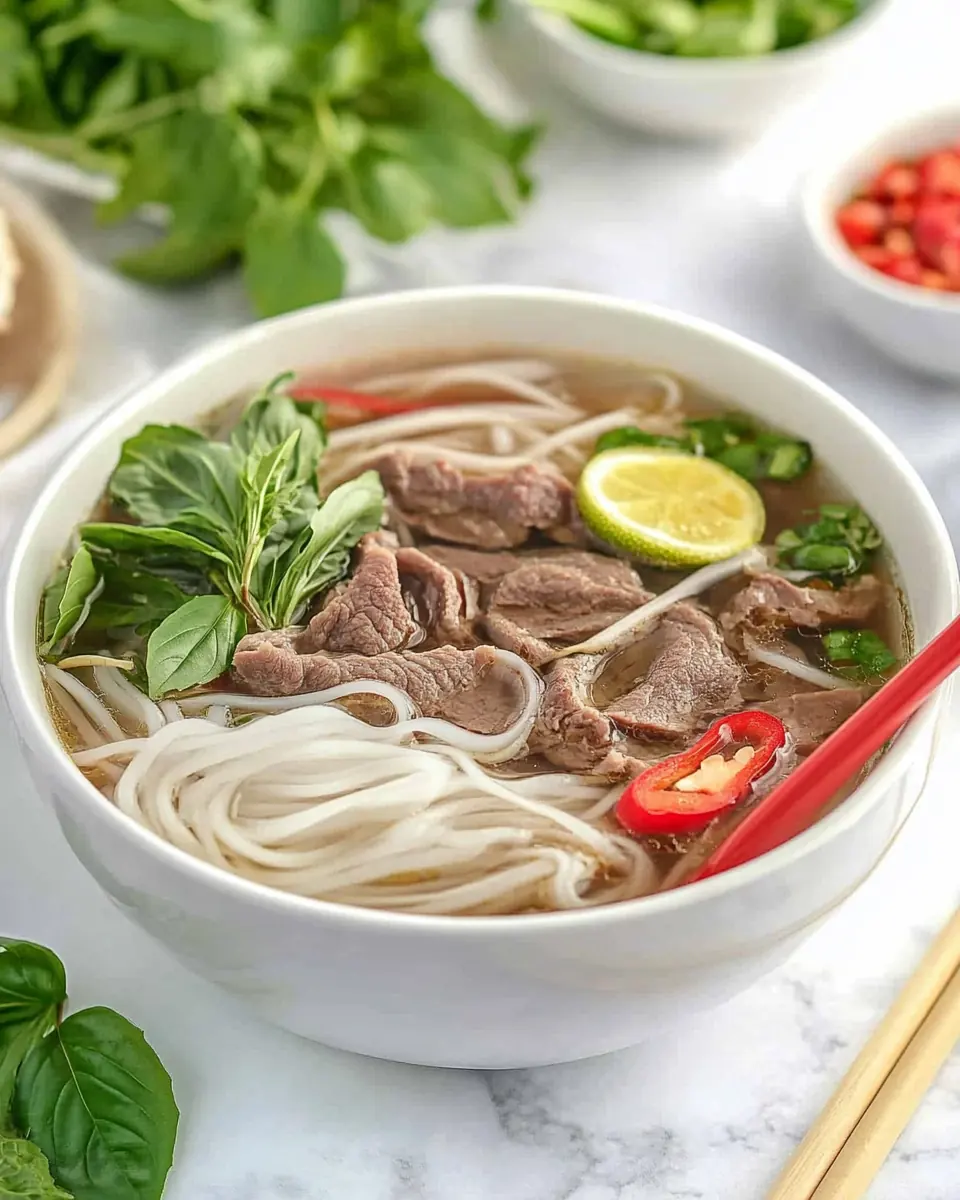
Assemble bowls with cooked rice noodles. Add thinly sliced raw beef to each bowl. Pour hot broth over the beef, along with the meatballs if using. The heat will gently cook the slices of beef. Garnish with green onions, cilantro, and other toppings as desired.: At plating time the visual magic happens as silky rice noodles nestle in the bowl and thin slices of raw beef blush when the hot broth is poured over them, creating tender, almost poached ribbons of meat. The sound of the ladle hitting the bowl and the steam lifting off the soup is part of the enjoyment. The key is piping hot broth so the thin steak cooks gently and evenly; if the broth is tepid the beef may remain undercooked. Avoid overcrowding the bowl, which can trap heat and cool the broth too quickly, resulting in improperly cooked steak.
Garnish with green onions, cilantro, and other toppings as desired: Once the hot broth has done its work, the final act is the garnish layer, where bright green onions and herbaceous cilantro cut through richness, and lime adds an acidic lift that wakes every component. Add bean sprouts for crunch, herbs for aroma, and sauces like hoisin or sriracha sparingly to customize. Taste a spoonful before heavy saucing so you can balance acidity and heat accurately. A misstep is over saucing right away, which masks the careful broth work, so let guests add condiments to their preference.