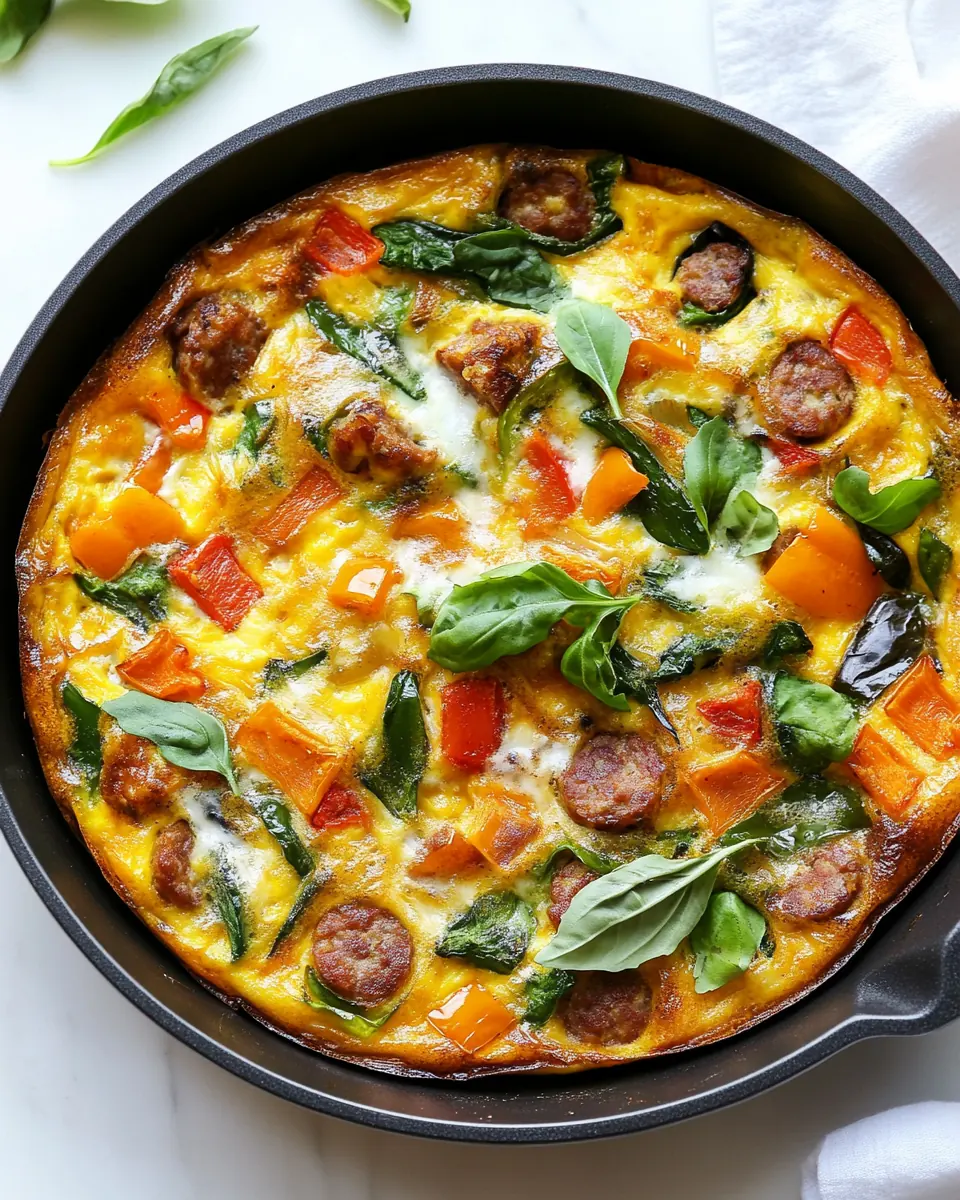
Preheat the broiler.: You will notice a warmth building at the top of the oven and the element will glow when ready, which helps the frittata finish with a light golden color. This step ensures the top sets quickly without overcooking the base, giving you that slightly toasted finish. A common mistake is skipping this and leaving the top pale and unset, so always allow the broiler to heat fully before transferring the skillet.
In a large (15-inch) oven-proof skillet, heat 1 tablespoon of the oil. Cook the sausage over high heat, breaking it apart with your spatula into 1-inch pieces (or smaller), until browned, about 5 minutes. Remove to a plate.: The oil should shimmer when it is hot but not smoke, which tells you it is at the right temperature for browning. When the oil heats, it sizzles as the meat hits the pan and aids in creating a deep crust on the sausage . If the oil smokes you likely overheated it, which can impart a bitter taste, so reduce the heat slightly and wipe the pan if necessary.
Add the remaining oil to the skillet. Saute the onion and peppers over medium heat, scrapping up any brown bits from the bottom of the pan, until very soft and caramelized, about 10 minutes.: You will hear energetic sizzling and see pieces go from pale to caramelized brown, releasing savory juices. Browning concentrates the meat’s flavor and introduces Maillard notes that lift the whole dish. Avoid overcrowding the pan, because that can trap steam and prevent browning; if pieces are steaming rather than searing, remove some to a plate and continue in batches.
Meanwhile, in a large mixing bowl, beat the eggs with 1/2 teaspoon salt until the yolk and whites are very well combined.: As you transfer the browned sausage , you will notice residual fond stuck to the pan, which is flavor gold. Removing the meat lets you use the same pan to soften vegetables without risking overcooking the sausage while caramelization proceeds. Do not discard the fond, since you will scrape it into the vegetables to build depth.
Add the sausage back to the pan and stir to combine. Season the mixture with the remaining 1/2 teaspoon salt and arrange the veggies in an even layer. Reduce the heat to low and pour the eggs over the sausage and vegetables, making sure the pan is evenly coated with eggs. Cook until the sides are set and there’s just a shallow layer of uncooked eggs on the top, about 5 minutes.: The second portion of olive oil helps recoat the pan and carry flavors from the fond into the vegetables, creating a cohesive base. When the oil warms it will capture the aromatics and prevent sticking. If you forget this step, the vegetables may stick and tear, resulting in less even caramelization.
Sprinkle the oregano over the top, if using, and transfer the pan to the broiler. Cook for 2 minutes, until the top is cooked and beginning to lightly brown. Remove from the oven and allow the frittata to sit in the pan for at least 5 minutes before slicing. Cut into wedges and serve warm alongside a simple salad as breakfast, lunch, or dinner.: You should see the vegetables soften, sweat, and then take on edges of deep golden color; they will smell sweet with a roasted note. Scraping the pan releases those browned bits so they mingle with the vegetables, boosting flavor. A common error is using too high heat, which will char the outsides before the centers soften, so stay patient and keep the heat moderate.
Meanwhile, in a large mixing bowl, beat the eggs with 1/2 teaspoon salt until the yolk and whites are very well combined: The eggs should become uniform in color and slightly frothy, which helps the frittata set evenly and yields a smooth custard. Properly beaten eggs incorporate air that lightens texture, but overbeating can introduce too much air and create an eggy sponge; stop when the mixture is homogeneous.
Add the sausage back to the pan and stir to combine: Reintroducing the browned sausage brings back savory juices and heat, allowing the flavors to mingle with the softened onion and peppers . Stirring helps distribute the meat so every bite has balance. Beware of returning cold meat that will lower pan temperature and extend cooking time; let the sausage warm through quickly before proceeding.
Season the mixture with the remaining 1/2 teaspoon salt and arrange the veggies in an even layer: Proper seasoning at this stage ensures the vegetables and meat are flavored on their own, creating depth before the eggs come in. Even layering prevents lumps or pockets so the eggs can flow and set uniformly. A frequent oversight is uneven distribution, which leads to some areas being dense while others are sparse.
Reduce the heat to low and pour the eggs over the sausage and vegetables, making sure the pan is evenly coated with eggs: As the eggs hit the hot pan you will hear gentle bubbling at the edges, and the sides will begin to set while the center remains softly jiggly. The low heat allows the eggs to cook slowly into a custardy texture, preventing rubberiness. Pour slowly and tilt the pan to let eggs fill gaps; rushing this can create uneven pockets and undercooked zones.
Cook until the sides are set and there’s just a shallow layer of uncooked eggs on the top, about 5 minutes: Look for the edges to pull slightly from the pan and appear firm, while the center should still wobble a little when you gently shake the skillet, signaling readiness for broiling. This timing gives a creamy interior and stable exterior. Avoid waiting until the top is fully set on the stovetop, which can overcook the interior under the broiler.
Sprinkle the oregano over the top, if using, and transfer the pan to the broiler: The broiler will act fast, creating a lightly browned surface and releasing the aroma of the fresh oregano . Watch closely because the top can go from golden to too dark in moments. A common mistake is leaving the oven door closed and not monitoring; broilers require attention to prevent burning.
Cook for 2 minutes, until the top is cooked and beginning to lightly brown: You will notice a toasty fragrance and slight bubbling on the surface when it is done, with a pleasing light brown tint. This brief high heat finish gives texture contrast and a visual cue that the frittata is ready. Overbaking here will dry out the interior, so remove promptly when the top shows a gentle brown.
Remove from the oven and allow the frittata to sit in the pan for at least 5 minutes before slicing: Resting helps the custard finish setting and makes slicing neater, as the interior firms slightly without losing creaminess. You will feel the residual heat continue to cook gently. Cutting too soon causes the eggs to slump and become ragged, so patience pays off.
Cut into wedges and serve warm alongside a simple salad as breakfast, lunch, or dinner: Serve when the frittata is warm, not piping hot, so the texture is at its best and flavors are balanced. The contrast of a crisp salad against the soft frittata is delightful. Reheating from cold is possible but it will not have the same fresh texture as when first served.