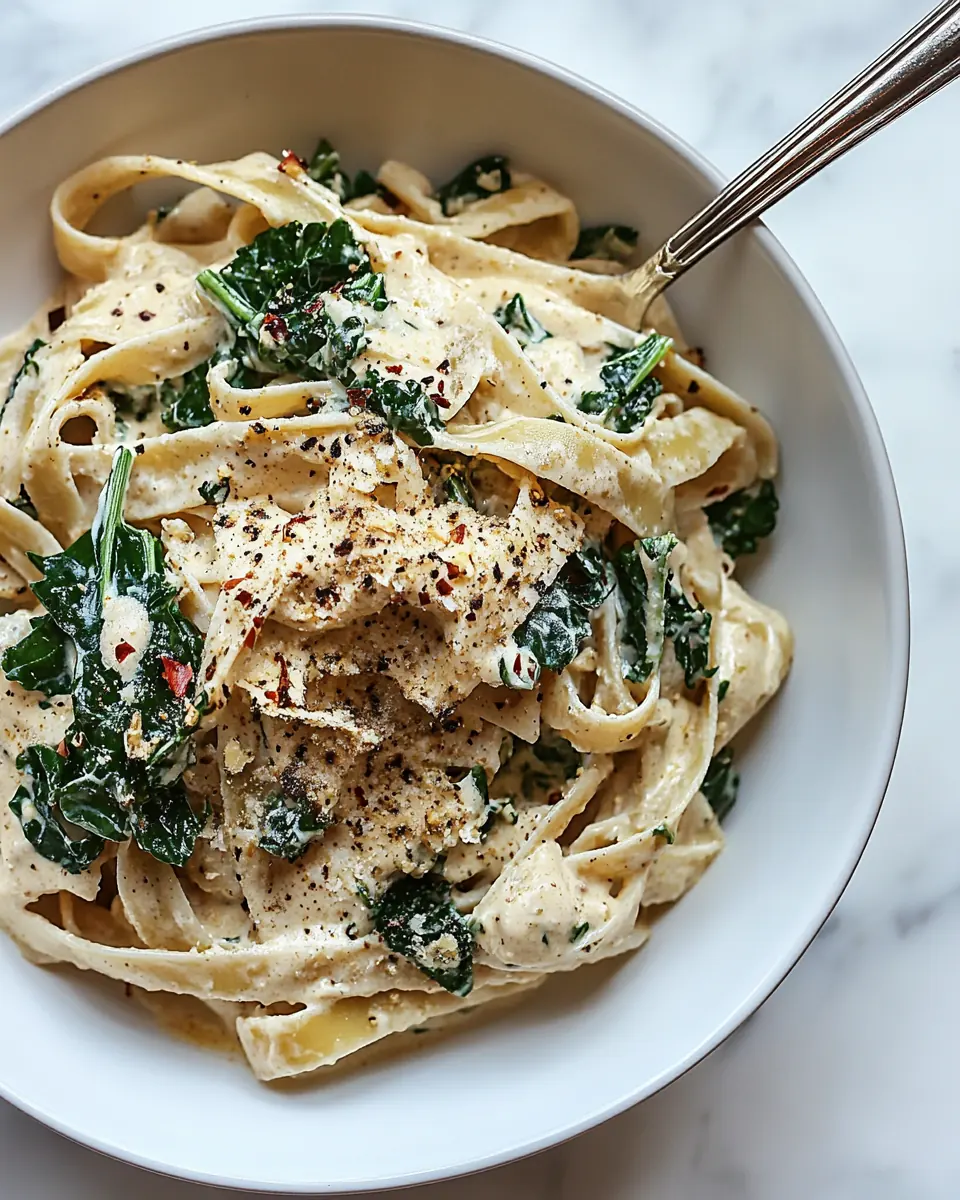
Cook pasta according to direction, drain, reserving the liquid, and set aside.: As the pot of pasta reaches a lively, rolling boil, the scent of starch will fill the kitchen and you will see the water swirl with movement. Cooking to al dente gives the best texture, with a slight chew when you bite into the pasta . When you drain, keep a cup of the salty cooking water because it acts like liquid gold for adjusting the sauce, helping it cling and become glossy. A common mistake is overcooking the pasta ; it will turn mushy and will not hold up when tossed with the creamy sauce.
Heat a large pan over medium-low heat. Add the garlic and cook for a minute, just until fragrant. Add the kale to the pan and continue to cook for a minute or two, just to start the kale wilting. Once the kale has wilted slightly, remove from the heat and add the pasta.: You want the pan to warm gently so when you add garlic it releases aroma quickly without browning. That soft sizzle and fragrant lift are signals you are on the right track. Once the garlic softens, add the shredded kale and allow it to begin wilting. The kale will collapse and darken slightly, and you should be able to smell its green, vegetal sweetness. Turn the heat down if anything starts to brown, as scorched garlic tastes bitter and will overpower the sauce.
Combine the soaked sunflower seeds with the water, lemon juice, lemon zest, smoked paprika, and salt in a high-speed blender. Puree until smooth. Add to the pan and toss. Add a splash or two of reserved pasta water as needed to thin and coat the noodles. Serve with a sprinkle of chili flakes as needed.: The moment you add minced garlic you will hear a gentle popping and smell a bright garlicky perfume. That quick step is about building a base aroma rather than creating color. It wakes up the olive oil and prepares the pan for the kale . The main mistake to avoid here is leaving it unattended; garlic can go from fragrant to burnt in seconds.
Add the kale to the pan and continue to cook for a minute or two, just to start the kale wilting: The kale will hiss softly as it hits the warm oil, and you will notice its volume shrink dramatically. Stirring helps it wilt evenly while preserving a little chew. This brief cook just softens the leaves so they are pleasant to eat, while leaving enough texture to contrast the creamy sauce. Overcooking will make the kale limp and lose its bright color.
Once the kale has wilted slightly, remove from the heat and add the pasta: The moment to combine the pasta with warm, slightly wilted kale is when both are still vibrant, and the retained heat helps the sauce adhere. The pasta will steam softly as it meets the greens, and you will see a nice sheen when tossed. Keep some reserved cooking water handy to loosen the mixture if it seems stiff; adding water also helps the flavors marry.
Combine the soaked sunflower seeds with the water, lemon juice, lemon zest, smoked paprika, and salt in a high-speed blender: Blending releases the toasted, nutty fragrance of the sunflower seeds and the citrus perfume of the lemon zest . A good blender will transform soaked seeds into a smooth, luminous cream with a slightly sweet, nutty aroma. Texture is everything here; if the puree is gritty, the sauce will feel chalky. Soak seeds adequately and blend on high for a silky result. A common pitfall is under blending, leaving a coarse texture.
Puree until smooth: As the blender whirs, watch for the mixture to become homogenous and glossy, with tiny air bubbles that indicate lightness. Taste for seasoning and adjust the pinch of salt and lemon juice to achieve a bright, balanced flavor. If it seems too thick, add more of the reserved water sparingly until it reaches a sauce like consistency. Over thinning will make the sauce watery and it will not cling to the pasta .
Add to the pan and toss: When you pour the sunflower cream over the warm pasta and wilted kale , you will see the sauce melt into the grooves of the noodles and coat them beautifully. Tossing is key to creating a cohesive dish; the heat helps the cream swell slightly and the starch from the pasta binds everything together. If the mixture looks dry, add a splash or two of reserved pasta water and continue tossing until glossy. A common error is adding too much water at once, which can dilute the flavors.
Add a splash or two of reserved pasta water as needed to thin and coat the noodles: That starchy water is the secret to a silky sheen and proper coating. You will notice the sauce become smoother and cling to the pasta as you add small amounts. Go slowly and use just enough to achieve the texture you want. Adding too much will create a loose sauce that will not stick to the noodles.
Serve with a sprinkle of chili flakes as needed: The final touch of chili flakes provides a sharp contrast to the nutty sauce and adds a pleasant warmth. It should arrive as a finishing flourish so that each bite can be adjusted to taste. A sprinkle or two is often enough; overspicing can mask the delicate lemon and sunflower notes.