Preheat the oven to 350 degrees Fahrenheit and line a 9-inch square pan with parchment paper.: Warmth fills the kitchen as the oven comes to temperature, and lining the pan with parchment ensures clean removal later. The preheated oven creates an even environment so the crust begins setting right away, preventing it from becoming soggy under the filling. If your oven runs hot, use an oven thermometer to avoid overbrowning. A common mistake here is skipping parchment, which makes removing the bars messy and causes edges to stick.
Mix the melted (and cooled) coconut oil and egg together in a mixing bowl or large bowl until combined (wet ingredients). Add in the almond flour, sugar-free sweetener, and sea salt (dry ingredients) and mix until a crumbly dough forms.: You will notice a glossy sheen as the coconut oil and beaten egg come together, forming the wet base for the crust. Cooling the oil first prevents it from cooking the egg, which would create lumps. Stir until uniform so the next additions incorporate easily. If the oil is too warm it can scramble the egg, and if you under-mix the dough will be unevenly hydrated.
Transfer the crust mixture to the prepared baking pan and press it into an even layer.: As you fold these dry elements in, the mixture should clump into coarse crumbs that hold together when pressed. The almond flour absorbs the wet components, producing a sandy texture that compresses into a crust. If the dough feels too dry, a teaspoon of additional melted coconut oil can help; if too wet, add a tablespoon of almond flour . Overworking at this stage can make the crust dense instead of tender.
Poke the crust several times with a fork and bake on the center rack of the preheated oven for 15 minutes, or until the edges are slightly golden-brown. Once out of the oven, allow crust to cool for 5 to 10 minutes before adding the filling.: Pressing evenly ensures consistent bake and texture across the pan. I press with the bottom of a measuring cup to get a smooth surface and even thickness, which helps the filling bake uniformly. You should feel the crust compact under your palm, but not be overly compressed. If you leave thin spots, the filling may seep through and burn at the edges.
Add all of the ingredients for the pumpkin pie filling to a blender or a food processor. Blend until completely combined.: Docking the crust with a fork lets steam escape so it bakes crisp rather than puffing. Watch for a subtle golden tint at the edges as the sign of doneness, and the aroma will become nutty and toasted. Pull it promptly when the edges show color, because overbaking dries the crust. A frequent error is leaving it in too long and ending up with a brittle base.
If you don't own a blender or food processor, you can combine the pumpkin mixture in a large bowl using an electric mixer.: The brief rest lets the crust set so it can better support the filling without mixing. You will feel the surface firm slightly and the heat will dissipate, making it safe to pour the filling. If you add filling while the crust is piping hot it can alter the texture and cause separation. Don’t skip the rest; impatience leads to a soggy margin between crust and filling.
Pour the pumpkin pie filling over the crust and spread it into an even layer.: The mixture will become glossy and uniformly smooth, with the pumpkin and coconut milk melding into a thick custard. Blending aerates slightly, which can help create a lighter mouthfeel after baking. If you do not have a blender, continue to the next step for an alternative. Overblending can introduce too much air, which may cause the filling to crack as it cools.
Bake on the center rack of the preheated oven for 45 to 60 minutes, or until the pumpkin filling has set up.: Whipping by hand with an electric mixer will still produce a silky filling, though it may take a minute longer to dissolve the sweetener fully. Watch the texture as you mix, aiming for a consistent sheen and no visible streaks of unmixed spice or sweetener. Under mixing leaves grainy or lumpy spots in the finished bars. A common slip is not scraping the bowl sides, which leaves pockets of unmixed ingredients.
Remove the pan from the oven and allow the bars to cool at room temperature before moving it to the refrigerator. Chill in the refrigerator until completely cold, at least 2 hours.: The filling should glide over the crust and settle into a smooth surface. I use an offset spatula to achieve a level top, eliminating air pockets that could cause uneven baking. The contrast of the pale filling against the golden crust is a pleasant visual cue that you are ready for the oven. If you leave ridges, they may brown more noticeably, so smoothness matters for even set and appearance.
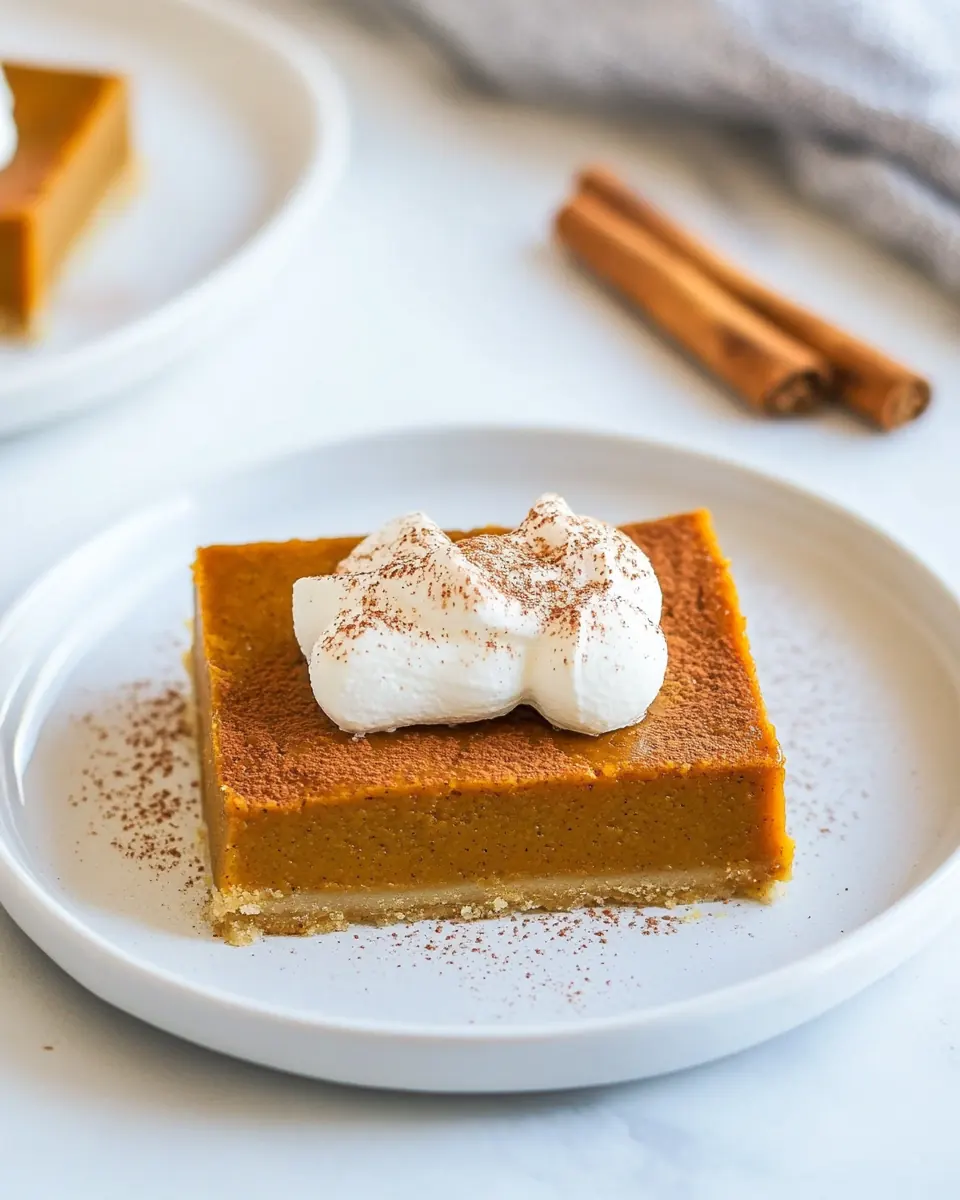
Slice the low carb pumpkin bars into squares and serve with sugar-free whipped cream.: As it bakes you will notice the filling firming and the center becoming only slightly jiggly when nudged, similar to a firm custard. Edges may pull away a touch from the pan and the top will no longer look wet, which signals readiness. Avoid underbaking, as the center will not set, and avoid overbaking, which can cause cracks and a dry texture. If the top browns too fast, tent with parchment or foil.
Remove the pan from the oven and allow the bars to cool at room temperature before moving it to the refrigerator: Cooling gradually helps prevent cracks and allows the filling to finish setting. You will notice the aroma deepen as residual heat carries spice notes. Once cooled to room temperature, chilling makes slicing cleaner. Rushing this step often results in smeared or collapsing slices.
Chill in the refrigerator until completely cold at least 2 hours: The chill time firms the custard fully so you can cut neat squares. After sufficient chill, the texture becomes dense yet creamy, and the flavors knit together. If you try to slice too early the bars will be soft and fall apart. Plan ahead so they can rest long enough for best results.
Slice the low carb pumpkin bars into squares and serve with sugar-free whipped cream: When you slice, use a sharp knife warmed briefly under hot water for the cleanest edges, and wipe between cuts. The contrast of the cool filling and the tender crust is delightful, and a dollop of sugar free whipped cream complements without adding sugar. Cutting with a dull knife or while bars are still cold can cause crumbling, so warm the blade slightly for precise slices.