Preheat the oven to 180 C/350 F. Grease a 9 x 13-inch baking dish and set it aside.: You'll notice the oven warming and a faint hum as it reaches 350 F , which ensures even baking and melting later on. Greasing the baking dish prevents sticking and helps the edges brown slightly; I use a quick swipe of olive oil or a light coating of nonstick spray. If you skip preheating, the casserole will bake unevenly and the layering might not set correctly, so always wait for the oven to signal it's at temperature. Check the dish size, because a smaller dish will make the layers thicker and take longer to heat through.
In a non-stick pan, add the olive oil. Once hot, add the ground beef and cook until no longer brown. Remove excess liquid. Add the taco seasoning and water, and let it simmer for 5 minutes, until thick. Stir through the salsa.: As the olive oil heats you will hear a confident sizzle when the ground beef hits the pan and smell the meat as it begins to brown. Proper browning provides caramelized notes that deepen the casserole flavor. Remove any excess liquid after initial cooking to avoid a watery filling, then add the seasoning and water so the spices bloom and form a glossy coating. Simmering for about 5 minutes concentrates flavors and reduces raw spice bite; aim for a thick, clingy consistency so the mixture adheres to the tortillas . A common error is rushing the simmer, which leaves an underdeveloped sauce and a raw spice taste, so take the time to thicken. After adding the salsa you should see a cohesive saucy mixture that glistens, and this signals you're ready to layer. If the meat mixture seems too dry, add a splash more water , but be cautious so you do not overthin the filling.
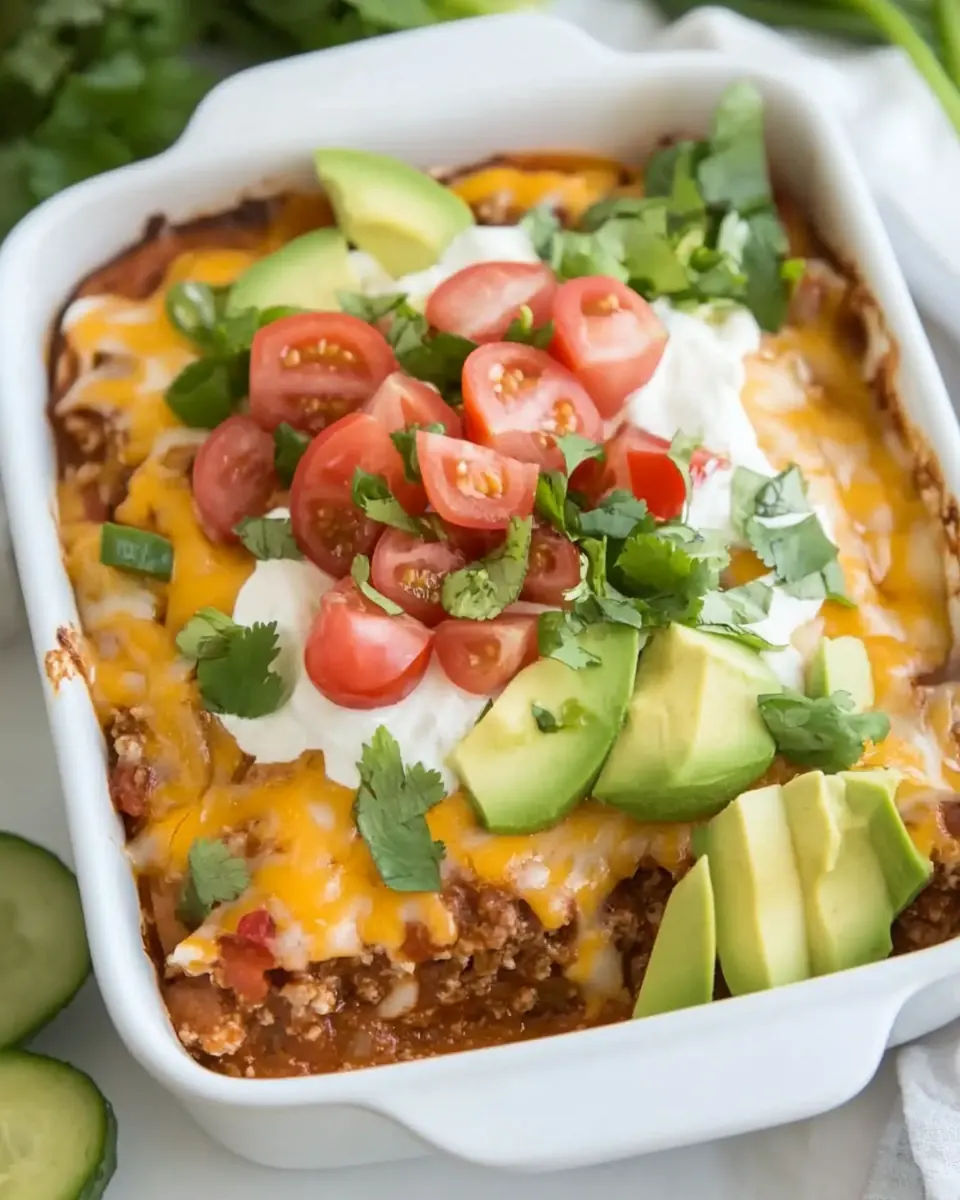
Lay half the sliced tortillas into the bottom of the baking dish. Top with half the beef mixture and half the shredded Mexican cheese. Add the remaining sliced tortillas, followed by the beef, then the remaining cheese.: When layering, notice how the tortillas create a base that soaks up flavors while the cheese melts between layers, binding everything together. Press lightly so the layers nest but avoid compressing them into a solid block, which can lead to dense texture. Even distribution ensures each serving has balanced meat and cheese , and the top layer of cheese will bubble and brown pleasingly. A mistake I sometimes see is piling ingredients unevenly, which results in slices that fall apart, so take a moment to spread each layer thoughtfully. If you prefer more crispness, position some tortillas near the edges where heat concentrates.
Cover the baking dish with tin foil and bake for 15-20 minutes, until the cheese has melted.: While baking you will hear an almost inaudible settling and see steam escape when you peek. The foil trap keeps moisture in so the casserole heats through and the cheese melts uniformly; remove the foil in the final minutes if you want the top to brown more. Watch for bubbling around the edges and a uniformly melted top as visual cues that it is ready. Baking too long can dry the casserole, while too short a bake leaves the center cool and the cheese unmelted. Aim for a balance and check at about 15 minutes to avoid overbaking.
Remove the casserole from the oven and let it for five minutes, before serving.: Resting lets the layers set and the steam redistribute, which makes slicing neater and prevents juices from running. During this short rest you will notice the steam soften and the aroma intensify as flavors mingle; the cheese settles into a cohesive texture that is easier to plate. Cutting too soon is a common mistake that yields a loose casserole that falls apart, so be patient for roughly five minutes. If you want cleaner slices, run a sharp knife under hot water and dry it before slicing; the warmed blade will glide through the set layers smoothly.