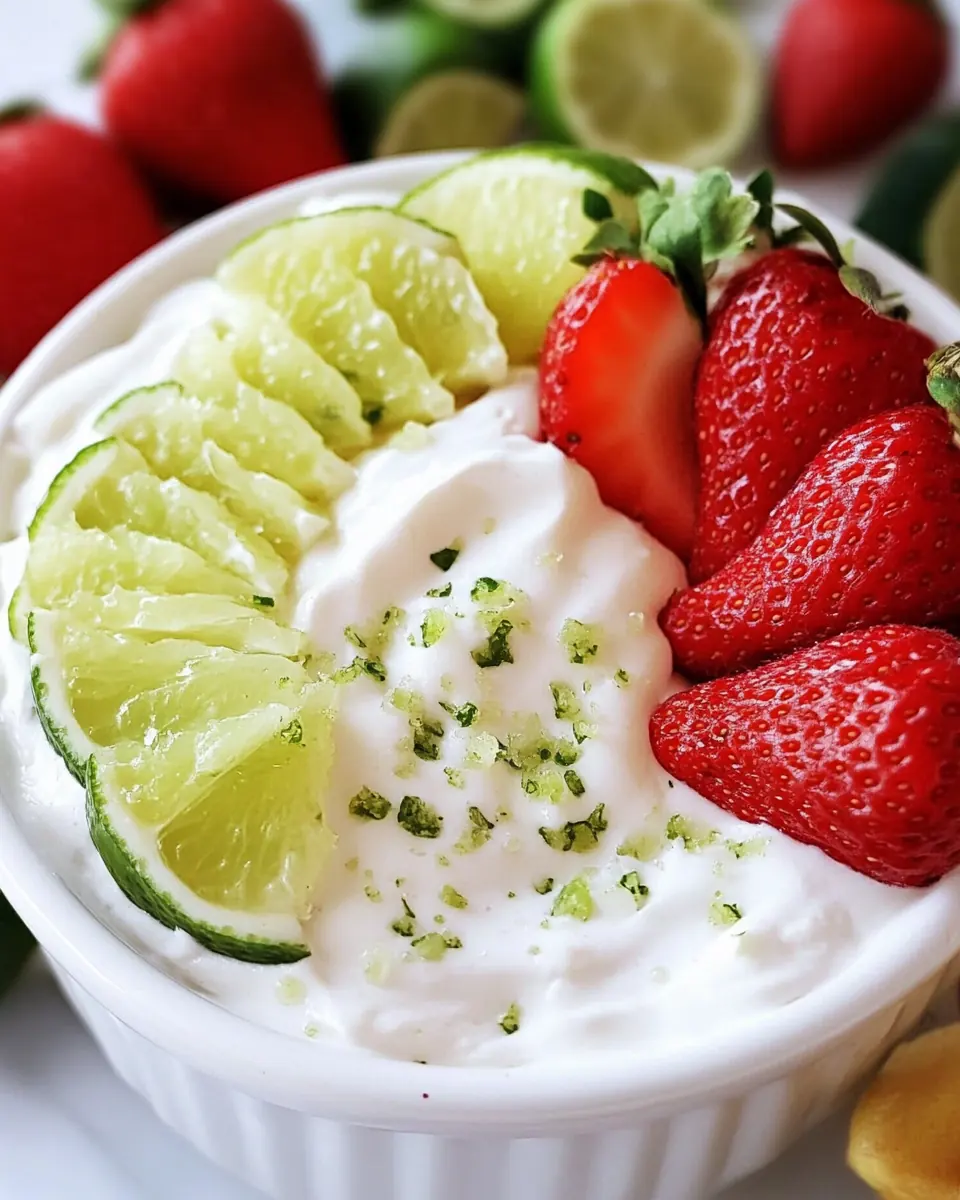
Add cream cheese to a large mixing bowl and beat until very creamy. Beat in sweetened condensed milk, yogurts, vanilla, lime juice and 1 tablespoon lemon juice and continue to beat until the mixture is light and smooth, about 1 minute. Stir in lime zest. Taste and add additional lemon juice if desired. Dip will thicken as it chills.: You will notice the cream cheese transform from dense and slightly tacky to smooth and glossy as air is incorporated, which gives the dip a lighter mouthfeel. Use a hand mixer on medium speed, scraping down the sides periodically so lumps do not remain. The sound will change from a strained whir to a steady, airy hum, and visually you should see a uniform pale surface. If the cheese was cold and chunky, it will take much longer to smooth out, and a common mistake is to overwork a cold block which creates an uneven texture. If that happens, pause, let the bowl sit at room temperature for a few minutes, then continue gently.
Time permitting, refrigerate overnight up to 24 hours for best results.: As you add the sweetened condensed milk and both yogurts , the mixture will loosen and become silkier, and the aroma will brighten, with sweet dairy notes and a hint of citrus. Mixing in vanilla and the initial citrus will help the flavors marry quickly. Blend until the surface looks uniformly glossy and there are no streaks of dairy left. Be mindful that overbeating can introduce too much air and make the dip overly fluffy, which changes the intended texture. If the dip seems too loose after adding liquids, refrigerating will firm it up, so do not panic; chilling is part of the design.
Store leftovers in an air-tight container in the refrigerator for up to 5 days.: When you fold in the fresh lime zest you will get bursts of aromatic citrus oil that hit your nose before the taste arrives, which elevates the whole bowl. Use a microplane to get fine zest that disperses evenly rather than strips which can create chewy flecks. Mix gently so you distribute the zest without deflating the whipped texture. A frequent slip is adding too much zest which can lend bitterness, so one lime's zest is usually sufficient unless you prefer an assertive citrus character.
Taste and add additional lemon juice if desired: Tasting at this stage is crucial because sweetness and acidity must be balanced to suit your fruit and audience. The dip should feel lively but not puckering, and adding lemon juice in small increments lets you steer the tang. I always taste with a small spoon and adjust by the quarter teaspoon, because overacidifying can shut down the sweet notes. If you overshoot on acid, a tiny extra drizzle of sweetened condensed milk can soften it, but it is better to build slowly.
Dip will thicken as it chills: Once chilled, the ingredients settle and the mixture firms to a scoopable consistency that adheres well to fruit , crackers , and cookies . Refrigeration allows the fats in the cream cheese to solidify slightly and the structure to set, which improves mouthfeel. The sound of chilling is subtle, but visually you will notice the edges pull away from the bowl more cleanly. A common mistake is serving immediately; while you can, the texture will be softer and less cohesive.
Time permitting, refrigerate overnight up to 24 hours for best results: Allowing the dip to rest overnight amplifies flavor melding, and the citrus notes blend into the dairy, producing a rounded, integrated profile. When I plan ahead I always make it the day before because it develops depth and the texture becomes pleasantly dense. Store in an airtight container so it does not pick up other fridge odors. Avoid leaving it beyond the recommended time, as prolonged storage can dull the vibrancy of the citrus and change texture.
Store leftovers in an air-tight container in the refrigerator for up to 5 days: Proper storage preserves both safety and quality. Keep the dip sealed to maintain moisture balance and protect the bright flavors. When scooping leftovers later, check the aroma and texture; if the mixture separates slightly, a gentle stir restores the original consistency. A common oversight is leaving serving utensils in the container which introduces contamination and shortens fridge life.