Heat a large skillet over medium high heat and sear your short ribs on all sides, for just a minute on each side. Add your short ribs, potatoes, carrots, and sesame seeds to a crockpot.: The pan will hiss when the short ribs first hit the surface, and you should see a quick browning, not a slow gray sweat. Enjoy the nutty aroma that develops from that brief Maillard reaction, which gives the finished dish a deeper, savory backbone. If you overcrowd the pan the meat will steam instead of sear, so work in batches if needed. A common mistake is moving the ribs too soon; wait for a visible crust before turning, and use tongs to protect the crust when flipping.
In a medium bowl, combine all your ingredients for the sauce, except the cornstarch, and stir to mix. Pour the sauce over your short ribs and vegetables. Turn your crockpot to low and cover, allow everything to cook for 8 hours.: As you stack the browned short ribs with the baby potatoes and carrots , notice how the aromas settle into the layers. The sesame seeds will toast a bit from residual heat and release a faint nutty perfume. This arrangement allows the vegetables to slowly infuse with meat juices, creating a unified flavor. Avoid placing everything in an uneven layer that leaves some pieces dry; arrange so liquid can circulate freely around each item.
Once the 8 hours is up, remove the meat and vegetables from the crockpot, skim as much of the fatty oil off the top of the sauce as you can, and add the cornstarch to the liquid and whisk to incorporate evenly. You can trim some fat off the meat at this point as well.: When you whisk together soy sauce , brown sugar , black vinegar , beef stock , chopped apple , minced garlic , chopped onion , and seasonings, you will notice a bright, complex aroma that hints at the final glaze. This emulsion brings salty, sweet, and tangy notes into balance so they can slowly meld with the meat. A typical misstep is not dissolving the sugar fully, so stir until uniform and taste briefly to confirm balance; adjust if one element feels too sharp.
Add the meat and vegetables back to the crockpot and allow it to cook for another 30 minutes. Just to thicken the sauce.: As the sauce cascades over the layered ribs and vegetables, it should coat each piece evenly, pooling slightly at the bottom where it will reduce and concentrate. The visual cue to look for is that all surfaces glisten, and you can smell the sauce beginning to marry with the seared meat. If you notice dry spots, tilt the crockpot or use a spoon to spread the liquid; insufficient coverage can cause uneven cooking and drier meat.
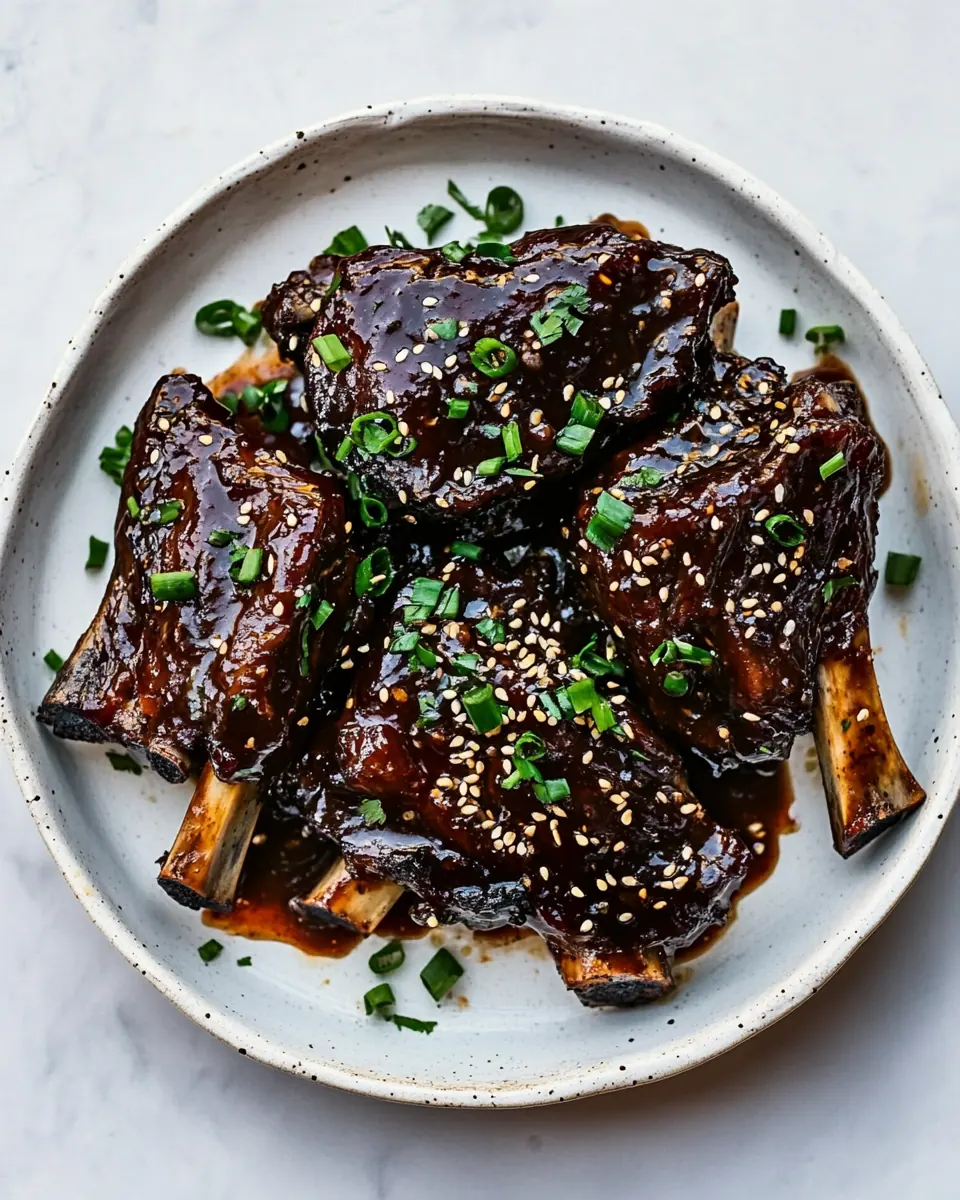
Serve fresh, sprinkled with sesame seeds and sliced green onions.: Over several hours the kitchen fills with a deep meaty perfume and the connective tissue in the short ribs dissolves into a silky mouthfeel. You will see the liquid reduce slightly and the vegetables soften until fork tender. Patience here is rewarded with an indulgent texture, and the long cook time prevents the meat from becoming tough. A common error is using high heat to rush things, which can dry the meat and prevent proper collagen breakdown.
Once the 8 hours is up, remove the meat and vegetables from the crockpot, skim as much of the fatty oil off the top of the sauce as you can, and add the cornstarch to the liquid and whisk to incorporate evenly: The sauce at this point carries concentrated flavors and fat; skimming reduces greasiness and lets the sauce shine. When you whisk in the cornstarch , do so gradually so the liquid becomes smooth and there are no clumps. The visual cue is a glossy consistency that coats a spoon. If you fail to whisk thoroughly, you may end up with a lumpy or pasty finish, so take the time to mix well and taste for seasoning before proceeding.
You can trim some fat off the meat at this point as well: Trimming excess fat after the long cook is easier because the meat holds together and renders slightly, making it simple to remove large pockets. This reduces heaviness and allows the sauce to cling to leaner surfaces. Use a small knife and remove only the obvious excess; cutting away too much can strip flavor. A mistake I see is overtrimming, which sacrifices the succulence provided by moderate fat.
Add the meat and vegetables back to the crockpot and allow it to cook for another 30 minutes: During this final simmer, the thickened sauce melds with the meat and vegetables, coating them in a glossy finish. You should hear a gentle bubbling and smell a concentrated, balanced aroma as the sauce tightens. This short finishing period ensures the sauce adheres and the flavors unify, producing a cohesive dish. Avoid skipping this step; without it the sauce may feel loose and not cling effectively.
Just to thicken the sauce: As the sauce cooks, you will notice it become more syrupy and cling to the ribs, creating that restaurant worthy sheen. Pay attention to the viscosity, stirring gently to distribute the thickened liquid. If the sauce gets too thick, you can stir in a splash of beef stock to loosen it slightly, but do so sparingly to maintain intensity. A common pitfall is over reducing until the sauce becomes gummy; aim for a rich coat that still moves easily on the plate.
Serve fresh, sprinkled with sesame seeds and sliced green onions: The final presentation matters; a scattering of toasted sesame seeds and bright sliced green onions provide contrast in texture and a fresh aromatic lift. You will see the sheen on the ribs and the tender vegetables nestled beneath, and the first forkful should deliver a combination of silky meat, sweet soft carrot, and melt in your mouth potato. Be mindful that garnishes should be added last to remain vibrant; adding them earlier will dull their texture and color.