Preheat the oven to 350°F (180°C), or 160°C if using a fan oven. And line two baking sheets with parchment paper or silicone baking mats and set aside.: As the oven warms, you will notice a dry, warm scent that signals readiness, and the prebaked air helps cookies bake evenly. The lined baking sheets prevent sticking and promote even browning at the base. A common mistake here is skipping the lining, which can cause tearing when you remove cookies; take the extra minute to prepare the pans.
In a medium bowl, whisk together the flour, baking soda, baking powder, and salt; set aside.: When you sift or whisk the dry flour and leaveners, the mixture looks uniform and light, and you reduce lumps that would create uneven pockets in the dough. This step ensures the leavening ingredients are evenly distributed, so the cookies rise consistently. Avoid vigorous over mixing here, which can activate gluten prematurely and make the final cookie tough.
In a separate bowl, cream together the butter, granulated sugar, brown sugar and lemon zest until light and fluffy. Add the egg and vanilla and beat again until the egg is well incorporated.: As you cream, the texture becomes pale and airy, the sugars dissolve into the softened butter , and the bowl fills with a fresh citrus perfume from the lemon zest. When the egg goes in, the mixture smooths and slightly loosens, which helps incorporate the dry ingredients more evenly. A frequent pitfall is using cold butter, which will not cream properly and leaves a lumpy batter; be sure the butter is soft to the touch but not melted.
Add the flour mixture in 2-3 smaller additions, mixing well after each addition. Gently fold in the blueberries, trying not to squish them as they get mixed into dough.: The dough will come together in stages, and mixing in smaller portions avoids overworking the gluten in the flour . Folding in the blueberries should be gentle, using a spatula to preserve their shape and prevent bleeding. You will see streaks disappear as the dough becomes uniform; stop when there are no dry bits. Squeezing or over stirring here will burst berries and release moisture, which can make the dough too wet.
Using a small cookie scoop (1.5 tablespoon) drop cookie dough 2 inches apart on prepared baking sheets.: The scooped dough should feel slightly tacky but hold its shape. When placed on the pan, each mound will settle a bit but keep a domed profile that bakes into a tender center. Spacing them 2 inches apart ensures air circulates and prevents merging. A common error is scooping inconsistent sizes, which leads to uneven baking; use a consistent scoop for uniform results.
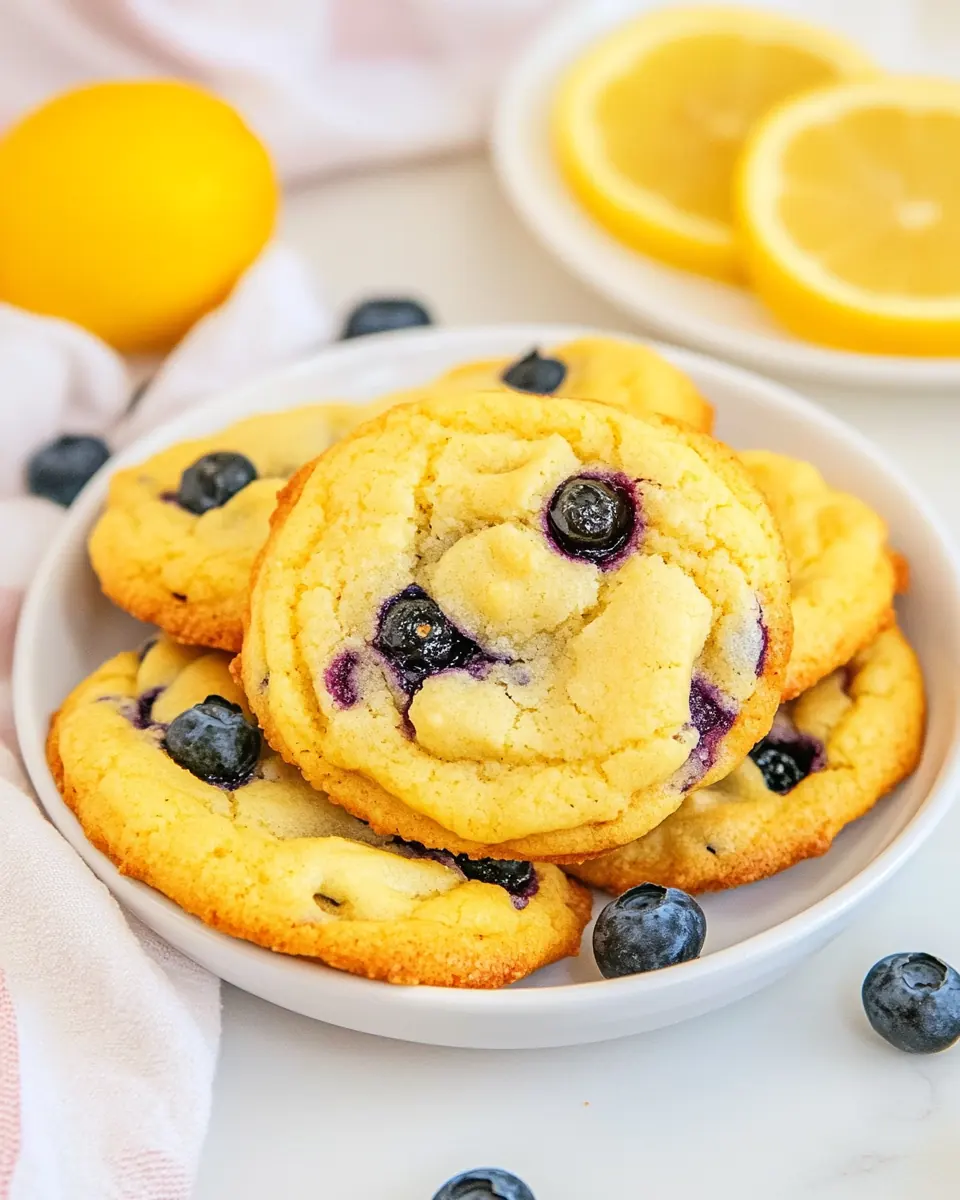
Bake in the preheated oven for 8-10 minutes, or until lightly golden and no longer wet looking.: As the cookies bake, you will smell butter and lemon, and the edges will slowly take on a faint golden hue while the centers remain pale and soft. The surface should no longer appear glossy or wet, signaling the internal structure has set. If you bake too long, the centers will dry out and the cookies become hard, so start checking at the shorter time and remove when the visual cues match.
Allow to cool 5 minutes before transferring to a wire rack to cool completely.: During the brief rest on the hot sheet, the cookies finish setting and firm slightly, which makes transferring easier without breaking them. The bottom will crisp a touch from residual heat while the center stabilizes. Moving them too soon can cause them to collapse, and waiting too long makes them stick to the paper. Aim for that five minute window for clean transfers.