Preheat the oven to 350°F. Place the pie crust in a pie pan and crimp edges.: You will notice a warm, anticipatory smell in the kitchen as the oven comes to temperature, and the visual cue of a uniformly heated oven is essential for even baking. Pressing the crust into the pan and crimping the edges not only creates an attractive rim, it helps the crust maintain shape as the filling sets. Warm ovens produce gentle heat that sets the custard evenly, preventing overbrowning. A common mistake is skipping the crimping or pressing the crust too thin, which can lead to tears or uneven rising. If the crust looks puckered or has thin spots, press gently with your fingers to redistribute the dough for a consistent thickness.
In a large bowl, use an electric mixer to combine the butter and sugar. Mix in the flour, lemon juice and lemon zest. Beat in the egg yolks, then milk.: The butter and sugar creaming will sound slightly airy and will change texture from grainy to smoother as the sugar dissolves, releasing the butter's fragrance. Adding the flour early helps it disperse and prevents lumps later. When you add the lemon juice and zest , their citrus oils will perfume the bowl, offering a clean, bright aroma. Beating in the egg yolks yields a glossy, thickened batter, and adding the milk loosens it into a silky custard base. The technique matters because even mixing yields a uniform set and prevents pockets of flour or sugar. One error to avoid is overbeating after adding the milk, which can incorporate too much air and change the texture; stop when the mixture looks cohesive and smooth.
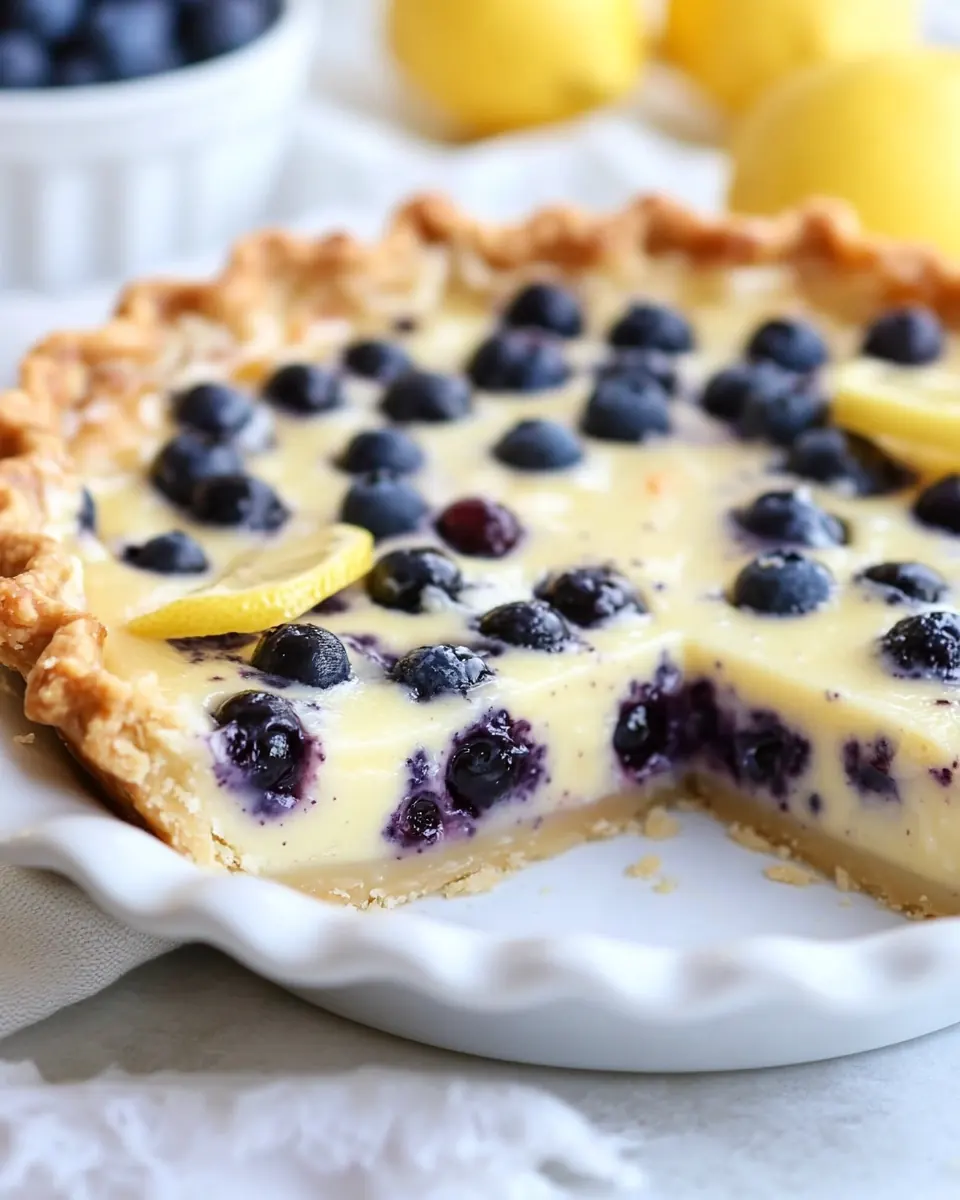
In a large glass or metal bowl, beat the egg whites with an electric mixer until stiff peaks form. Gently fold the stiff egg whites into the lemon mixture. Pour the filling into the pie crust. Scatter the blueberries evenly on top.: When whipping the egg whites , you will hear a progressively higher pitch as the foam tightens, and the peaks should stand straight when the beaters lift. Folding is a slow, deliberate motion, and you will see ribbons of pale white fold into the yellow custard before fully integrating, creating a light, airy body. Pouring the filling should produce a quiet, flowing sound as it settles into the crust, and scattering the blueberries gives contrast and color against the pale custard. The reason for folding and not stirring vigorously is to preserve the air for a tender texture. A frequent mistake is deflating the whites by using a circular blender motion, so always use a gentle under and over fold, and stop when the mixture is evenly streaked and uniform.
Bake for 20 minutes, then cover with foil to avoid browning. Bake an additional 15 to 25 minutes, or until the filling is set. Allow to cool slightly before serving.: In the first 20 minutes the oven will coax the custard to rise slightly and the surface will begin to set, giving off a warm, oven scent that signals progress. Covering with foil prevents the top from coloring too quickly while the center continues to cook, preserving an even, pale finish. During the final bake, look for a gentle wobble in the center rather than a liquid jiggle, which indicates proper set. You will notice subtle changes, like steam escaping from edges and a slight firming under a fingertip on the crust. The purpose of the two stage bake is to ensure the exterior sets and the interior cooks through without overcooking. Avoid pulling the pie too early; an underdone center can collapse when cooling. If you see dark spots or rapid browning, lower the oven temperature slightly and extend the time for a gentler finish.
Allow to cool slightly before serving.: Cooling brings the pieces into sharper focus, as the custard transitions from a soft gel to a sliceable texture, and the kitchen will smell faintly of citrus and baked dough. I recommend letting the pie rest on a rack so air circulates beneath, preventing a soggy bottom and helping the filling finish setting. As it cools you will observe the surface tightening and the blueberries nestling slightly into the custard, signaling readiness. The why is simple, patience yields cleaner slices and a better mouthfeel. A common misstep is slicing while the pie is too warm, which causes the custard to spill and the presentation to suffer, so resist the urge to cut immediately.