Preheat the oven to 350°F. Line a 9×9-inch square glass baking dish with parchment paper and set it aside.: Warmth fills the kitchen right away, and the faint hum from the oven signals the start of baking, creating an even heat that helps the brownies rise and set uniformly. You should feel the oven warming and notice a dry, hot air sensation when you open the door, which means the temperature is stabilizing. This step matters because an accurately preheated oven ensures the batter begins cooking evenly at the moment it enters, avoiding an underbaked center or overcooked edges. A common mistake is sliding the pan into an oven that is not fully hot, which can lead to uneven texture and extended baking time. To troubleshoot, give your oven the full 10 to 15 minutes to reach temperature, and use an oven thermometer if you suspect inaccuracies.
Mix together the oil and sugar in a large mixing bowl. Use a hand mixer or stand mixer to combine.: You will feel the grainy texture of the sugar dissolve slightly into the oil as you whisk, and the mixture takes on a glossy sheen that hints at the tender crumb to come. The mixing releases sugar granules into the oil, helping to aerate the batter for subtle lift. This technique matters because proper integration of oil and sugar creates a uniform base that carries the lemon flavor throughout. Avoid overmixing at this early stage, or you may create an overly aerated batter that bakes unevenly. If you see distinct pockets of oil or sugar, scrape the bowl and continue mixing just until smooth.
Beat in lemon extract, vanilla extract, lemon zest, and lemon juice. Add one egg at a time and then the egg yolk, mixing well between each one.: The moment the lemon oils meet the batter you will notice a bright perfume, and each egg incorporation will thicken the mixture into a silky emulsion. Adding eggs slowly lets them blend smoothly without separating, and the yolk contributes extra richness and a satiny texture. This matters because a well emulsified batter yields tender, cohesive brownies instead of a greasy or curdled loaf. A common error is dumping eggs in all at once, which can produce streaks and uneven texture. If the batter appears curdled, continue mixing gently until it smooths out, or add a tablespoon of flour to help stabilize the emulsion.
Stir together the flour, salt, and baking powder and add to the wet mixture.: When you add the dry ingredients, you will see the mixture thicken and become more structured, with visible streaks that signal it is ready to fold. The scent shifts to a sweeter, baked-note as the flour integrates, which is a visual and olfactory cue that the batter is approaching readiness for the pan. This step is important because the dry ingredients provide the framework that holds moisture and creates the final crumb. A common pitfall is vigorous stirring, which can develop gluten and produce a tougher brownie. To avoid this, fold the dry ingredients in gently until no streaks remain.
Beat together 1 to 2 minutes until fluffy and well combined.: As you beat, the batter becomes slightly lighter and smoother, with tiny air bubbles forming and a glossy finish developing, indicating good incorporation. The texture should feel cohesive and a bit elastic, not runny, which lets it spread evenly in the pan. This brief beating encourages even distribution of leavening so the brownies rise uniformly in the oven. One common mistake is extending this step too long, which can introduce too much air and result in a cakier texture. If you notice the batter thinning too much, stop and proceed to the next step.
Spread the batter into the prepared baking dish. Bake for 25 minutes. Remove from the oven and allow them to cool for 30 minutes before preparing the glaze.: Spreading the batter evenly gives the brownies a uniform thickness, and once in the oven you will hear a gentle quiet as the top sets, sometimes with a faint crackle as microbubbles pop. After baking, the edges will pull slightly from the parchment and the top should be set with a hint of spring when pressed lightly. Cooling is crucial because warm brownies absorb glaze differently and can collapse or create a runny finish. A frequent error is glazing too soon, which melts the glaze into the warm crumb. To prevent that, wait the full cooling period; if in doubt, touch the center to ensure it feels set to the touch.
Whisk together the powdered sugar, water, lemon extract, and lemon juice until a smooth paste-like glaze forms.: As you whisk, the powdered sugar transforms into a silky, glossy mixture that should slowly ribbon from the whisk when ready, smelling sharply of lemon oils. The consistency is important because too thin a glaze will run off and will not set, while too thick will be clumpy and hard to spread. This step matters because the glaze adds a sweet counterpoint and visual shine, sealing in the lemon aroma. A typical mistake is adding all the liquid at once, which can make the glaze too thin. To fix over-thinned glaze, add a bit more powdered sugar, or if too thick, add water drop by drop.
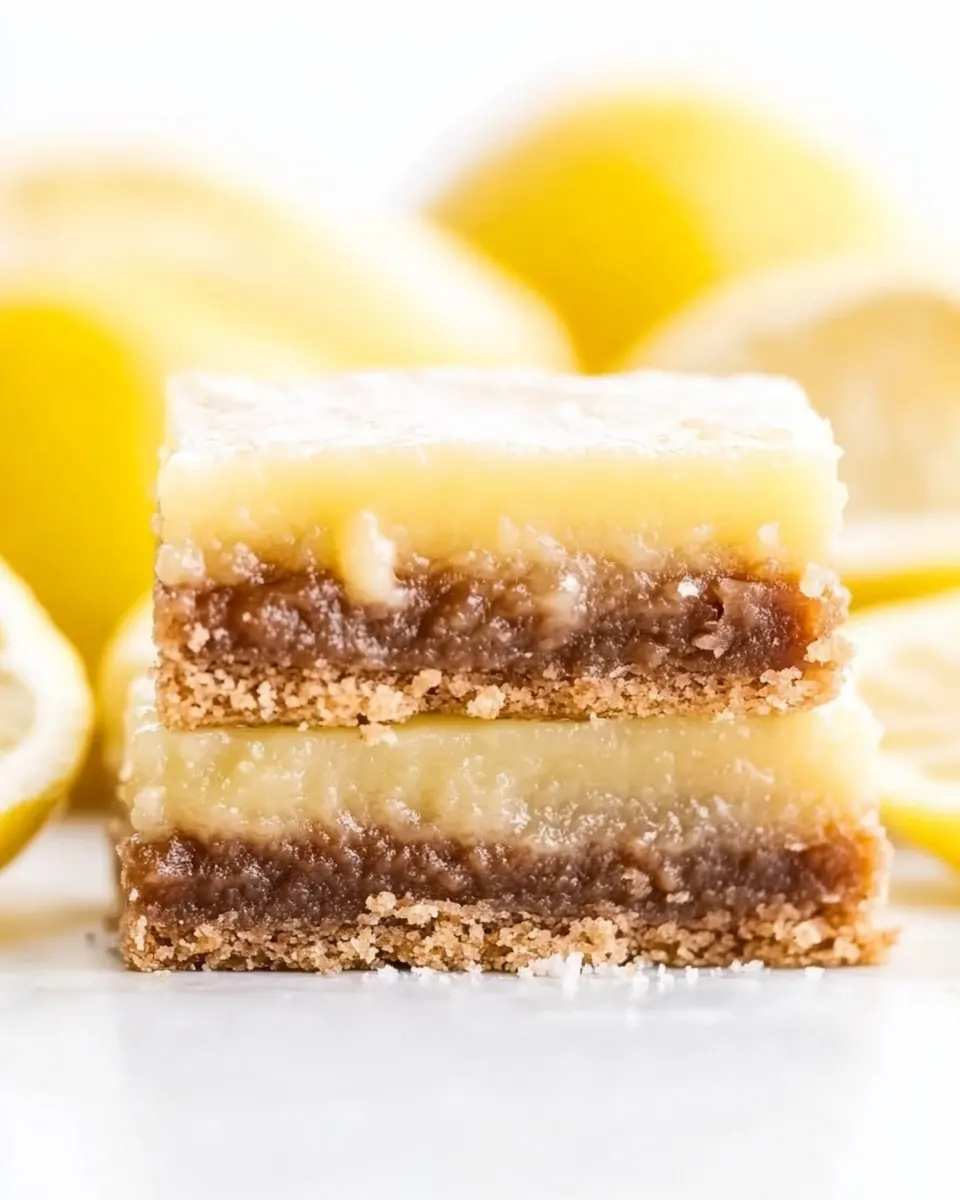
Spread glaze over the brownies. Allow brownies to cool completely and the glaze will set so that it’s dry to the touch. Garnish with lemon zest.: Spreading the glaze creates a smooth, reflective surface that picks up the zest sparkles as decoration, and once it sets it gives a slight crackle when you slice through it. The contrast between the opaque white glaze and the yellow crumb looks wonderful, and the tiny flecks of zest add aroma and texture. Letting the glaze set completely is essential so slices are neat and the surface does not stick to your knife. A common issue is slicing too early, which drags the glaze; use a sharp knife wiped between cuts to keep edges clean.
Cut into pieces and serve.: When the brownies are fully set, the knife glides through with a satisfying sound, revealing squares with a glossy top and tender interior. You will notice a burst of lemon aroma as you lift a piece, and the texture should be moist but held together. This final step is when all the elements come together, and the presentation can be simple or dressed up for guests. A frequent mistake is using a dull knife, which tears the glaze and creates rough edges, so use a sharp blade and clean it between cuts for the best look.