Preheat oven to 325 degrees F. Generously and thoroughly grease and flour a 10-inch (12-cup) Bundt pan (I also sugar the pan.) Please see Notes.: The oven aroma of warming air and a hint of buttered pan is the first signal that baking is about to transform the batter. When greasing the pan with softened butter , you should feel a silky smear across every nook, then sprinkle sugar to create a fine granular coat that will give a delicate crust. This helps release the cake and creates a slight sparkle on the surface. A common mistake is skimping on the grease or flour, which makes sticking likely; test by running a finger over the pan after greasing to ensure even coverage.
In a medium bowl, whisk together flour, baking powder, baking soda and salt. Set aside.: As you whisk, notice the flour clouds and the gentle shifting of pale powder, which indicates even distribution of leaveners. This step prevents pockets of rising agent that could produce tunnels or uneven rise. Sifting is optional but gives an extra airy texture. Avoid packing the flour into the cup when measuring, because too much will produce a dry, heavy cake.
Whisk buttermilk with 2 tablespoons lemon juice, 2 tablespoons lemon zest and 1 tablespoon vanilla in a liquid measuring cup; set aside.: This liquid smells bright and fragrant from the zest, a fresh citrus perfume that contrasts the creamy tang of buttermilk . The acid in the lemon juice will react with the baking soda to create lift, so preparing this mixture ahead keeps everything flowing. If your buttermilk is cold, it may cause the batter to seize slightly, so use room temperature as the recipe suggests.
Add butter and sugar to a stand mixer fitted with the paddle attachment and beat on medium-high speed for at least 3-4 minutes (no less!), until light and fluffy, scraping down sides occasionally. Reduce speed to medium and add eggs, one at a time, beating just until the yellow disappears after each egg.: When creaming butter and sugar , look for a pale, voluminous mixture that whips slightly and smells sweet and buttery. The sound of the mixer should shift to a softer hum as air is incorporated. Adding eggs one at a time ensures the emulsion remains stable; if added too quickly, the mixture can break and look curdled. If that happens, scrape the bowl and mix slowly until uniform before continuing.
Reduce speed to low and gradually add flour mixture to butter mixture in thirds, alternately with buttermilk mixture in between each third. Beat just until combined, giving the batter a final stir by hand to get any flour at the bottom.: The batter will become glossy and ribbon like when mixed properly, smelling faintly of lemon and vanilla. Alternating avoids overworking the gluten in the flour , which keeps the cake tender. Stop mixing as soon as dry streaks disappear, then fold gently by hand; overmixing creates a tough crumb. A typical pitfall is rushing this step and overbeating, which leads to a denser texture.
Transfer batter to the prepared Bundt pan and tap the pan on the counter a few times to get rid of any air bubbles. Bake at 325 degrees F until a wooden pick inserted near the center of cake comes out with a few crumbs, 55-70 minutes.: As the cake bakes the kitchen will fill with a warm, citrusy butter scent and the edges will pull slightly away from the pan, signaling readiness. The top should be a gentle golden color, not overly dark. Using a wooden pick and seeing a few moist crumbs is better than a wet batter smear, which indicates more time is needed. A common error is opening the oven too often, which can cause the cake to sink in the center.
Place cake on a wire rack and let rest 5 minutes then poke holes all over the cake, going about 3/4 of the way down using the thin end of a chopstick. You may also use the back of a utensil or a skewer, but you’ll want wiggle it around so the holes become larger.: The cake will emit a warm, buttery steam as it rests, and poking allows the syrup to sink in. Make holes that are evenly spaced so the syrup distributes uniformly and you get moist pockets throughout. Avoid poking too deeply into the pan or removing the cake while piping syrup, which can tear the structure. If the holes are too shallow, the syrup will sit on the surface rather than infusing the crumb.
Immediately after poking holes in the cake, make the Lemon Butter Syrup. Add sugar, butter, lemon juice, water and salt to a medium saucepan. Heat on low until the butter is melted, stirring occasionally. Cook until the sugar is mostly dissolved, without letting the mixture boil, then stir in the vanilla.: The syrup smells intensely of lemon and warm butter as the sugar dissolves, and you should see a glossy liquid with tiny ribbons of melted butter . Keep the heat low to prevent boiling, which can create a grainy texture or harden the syrup. If the syrup begins to bubble vigorously, remove it from heat and stir; simmering is unnecessary here.
Slowly pour or spoon the Syrup all over the bottom of the cake (which is currently the top), moving slowly so it has time to seep into the holes. Tilt the cake as needed so the syrup doesn't run over the edges of the cake or it will act like glue in the pan. Brush any extra glaze into the holes.: You will hear a soft soaking sound as the syrup is absorbed, and the cake will darken where the liquid sinks in. Work methodically so the syrup penetrates rather than pools. If you pour too quickly the liquid may run off and pool at the bottom, making the cake stick in spots, so patience matters. Use a spoon to guide the syrup into stubborn spots.
Let the cake cool for 15 minutes (no longer or the glaze can stick and harden like glue) then run a knife around the edges of the cake, shake a few times until loose then invert the cake onto a plate or cake stand. Take note that if you have extra glaze on the bottom of the cake, you should invert the cake onto a parchment paper lined plate otherwise it can stick to the plate when serving.: Fifteen minutes lets the syrup settle into the crumb without fully adhering to the pan, creating a glossy, tender surface. Run the knife gently to avoid tearing the crust, and when inverting you should hear a soft release as the cake comes free. If the cake resists, wait a few more minutes rather than forcing it, because tearing is hard to repair even with glaze.
Let the cake cool to room temperature before adding the Glaze in the next step. You can also tightly wrap the cooled cake in plastic wrap and store at room temperature then add the Glaze the next day.: Cooling to room temperature allows the crumb to set and prevents the glaze from sliding right off. As it cools the aroma mellows into a balanced butter and lemon note. If you plan to glaze the next day, the cake will be easier to slice thinly and the glaze will sit cleanly on the surface. Glazing too soon can cause the topping to become runny and not set properly.
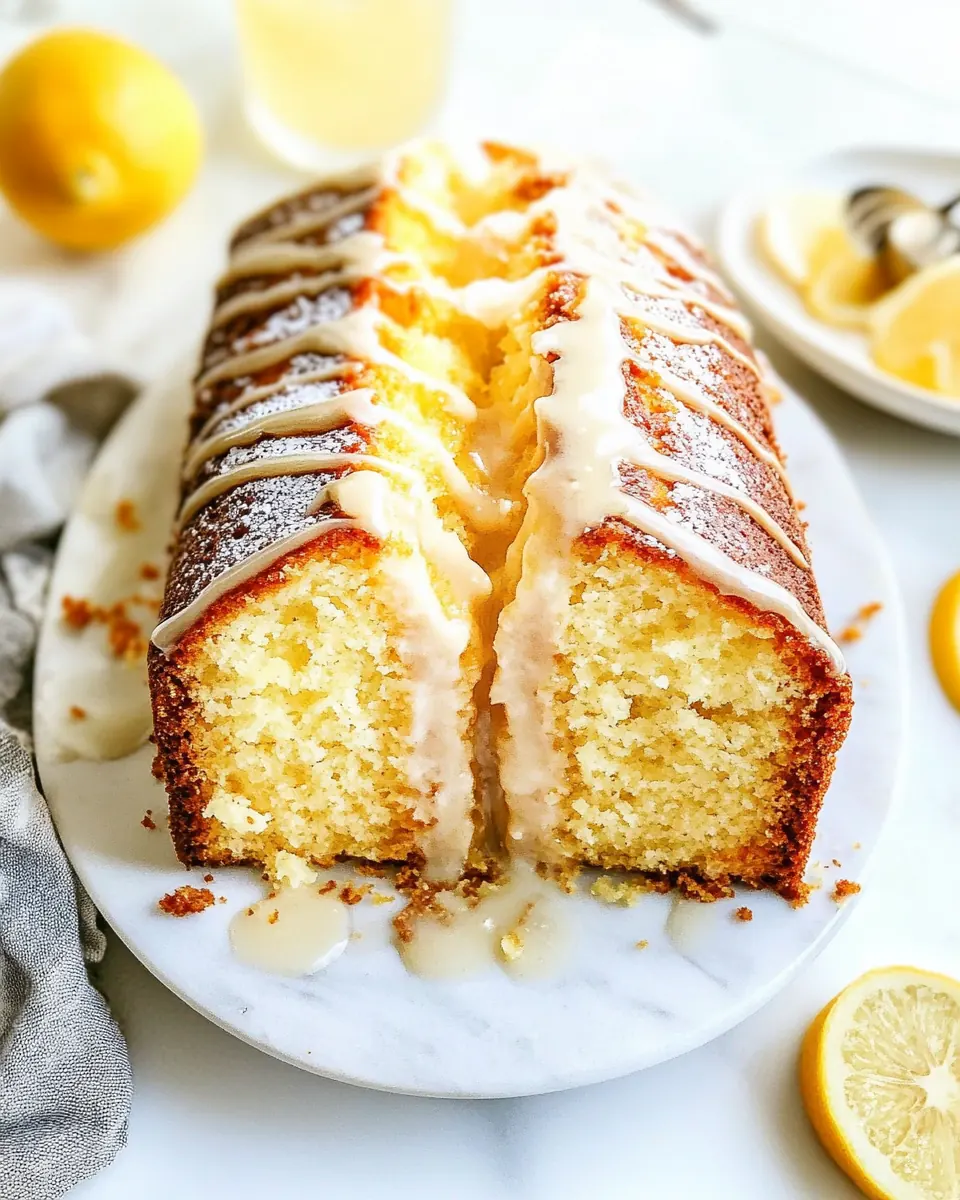
In a large mixing bowl, beat cream cheese, powdered sugar and 3 tablespoons lemon juice until smooth. Taste and add additional lemon juice if you would like a tangier glaze. Drizzle the Glaze all over the cake, letting it drip down the sides. Enjoy!: The final glaze should be smooth and glossy, smelling fresh and tangy from the lemon and creamy from the cream cheese . Spoon it down the center and use a spatula to coax drips down the sides for an elegant finish. If the glaze seems too thin, chill it briefly to thicken; if it is too stiff add a splash of lemon juice. Avoid overheating the cream cheese or it may become too loose.