Preheat oven to 325 degrees. In a food processor or blender, combine cold butter, flour, brown sugar and salt. Pulse until it is incorporated and the pieces are tiny and coarse.: Warm air fills the kitchen and you can feel the anticipation building, that subtle heat prepares the pan so the crust starts to set as soon as it hits the oven. You want the oven fully up to temperature before the crust goes in, otherwise the texture will be off and the edges may bake unevenly. A common mistake is placing the pan in while the oven is still coming to temperature, which can result in a soggy base; use an oven thermometer if yours is unreliable. The correct temperature will produce a faint toasty aroma within ten to fifteen minutes, a cue the oven is ready.
Press into the bottom of a 9×13 inch pan and bake for 12 minutes. Remove from oven.: When you pulse this mixture, listen for short bursts and watch the mixture break into pea sized crumbs that glisten slightly, those small pieces of butter are what create the tender flake in the crust. The cold butter should not warm or melt as you work; if it does, pop the bowl in the fridge for a few minutes. Avoid over processing into a smooth dough, as that will yield a denser crust rather than a delicate crumb.
Combine cream cheese and sugar. Beat until smooth and creamy. Add the egg, milk, lemon juice, and vanilla. Pour cheesecake over warm crust and bake for 15 minutes. Remove and reduce oven to 300 degrees.: Press the crumb mixture firmly and evenly into the pan so it bakes into a cohesive layer, you should feel resistance under your fingers as you compact it. After twelve minutes of baking the surface will take on a light golden hue and release a warm, toasty aroma; that is your signal to remove it. If the crust browns too quickly at the edges, your oven rack may be too close to the heat; rotate the pan and tent edges with foil on subsequent bakes to avoid burning.
Whisk together eggs, sugar, lemon juice, lemon zest and flour until combined. Pour CAREFULLY over the warm cheesecake layer. If you pour too fast the cheesecake layer will lift. If it does lift a little, (mine did) it is ok! It will still taste amazing.: The cream cheese mixture should become glossy and free of lumps, and you will smell a faint sweet dairy aroma as the sugar dissolves. Pouring this over a warm crust helps the layers adhere, and fifteen minutes of baking sets the filling so it is slightly jiggly but not liquid. After baking, reducing the oven temperature to three hundred degrees prevents the delicate lemon layer from overcooking. A pitfall is using cold cream cheese , which leads to lumps, so always bring it to room temperature and scrape the bowl to ensure smoothness.
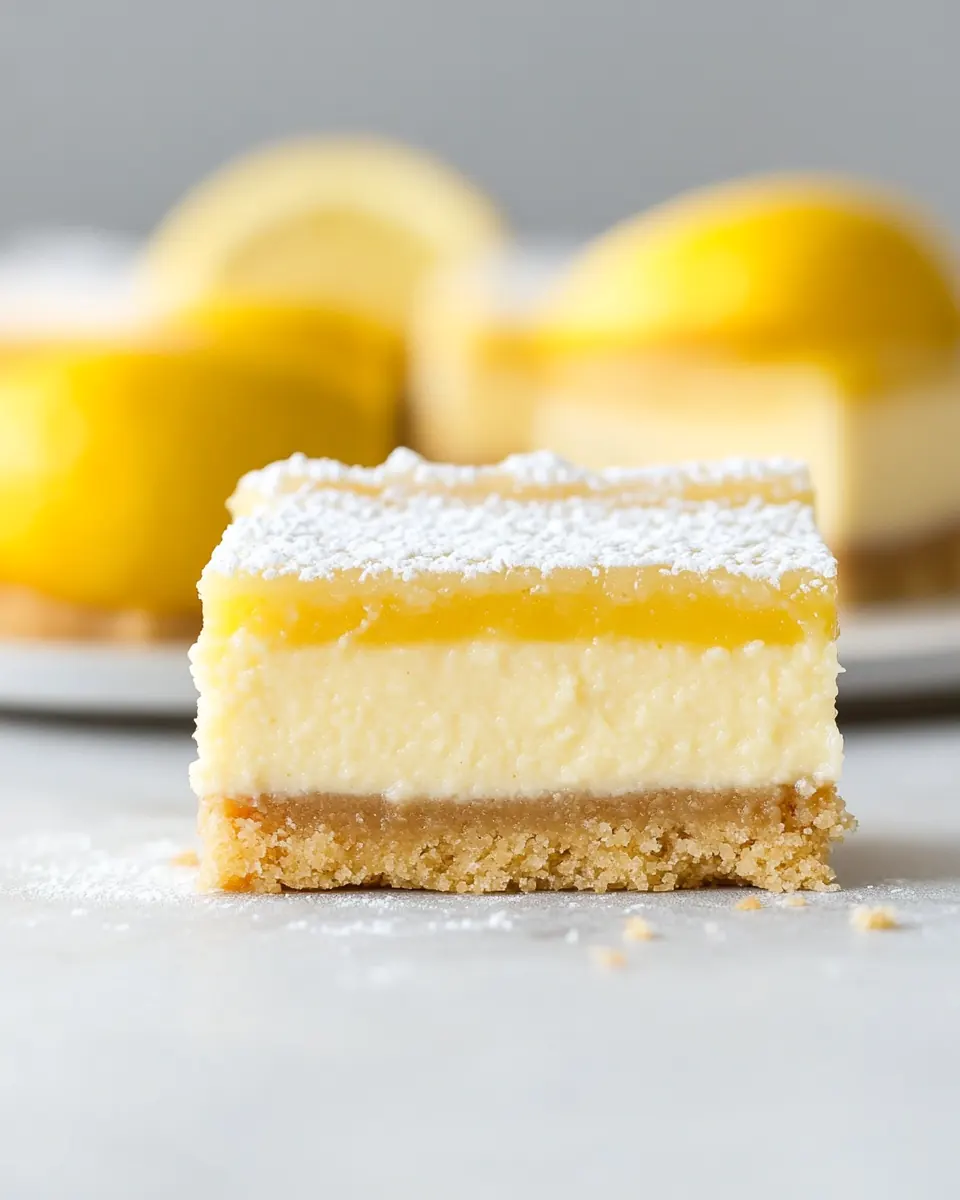
Bake for an additional 25-30 minutes until lemon layer is set. Remove from the oven and let cool. You can refrigerate for 3 hours and serve cold if desired. I think that way is best. Sprinkle powdered sugar on top and enjoy!: When you whisk these ingredients, the mixture should look glossy with tiny flecks of zest , and you will smell bright citrus oils. Pour slowly and aim for the center, allowing the lemon custard to flow evenly; a gentle stream prevents disturbing the cheesecake beneath. If you pour too quickly, you may see a slight separation as the bottom layer lifts, which can be disconcerting but does not ruin flavor. To minimize air bubbles, tap the pan gently on the counter once after pouring to settle the liquid.
Bake for an additional 25-30 minutes until lemon layer is set. Remove from the oven and let cool. You can refrigerate for 3 hours and serve cold if desired. I think that way is best. Sprinkle powdered sugar on top and enjoy: As the lemon layer bakes, it will firm from the edges toward the center and the surface will become matte rather than glossy; that matte finish is your visual cue that the custard is set. You should see a slight jiggle but no liquid wobble when gently shaken, and the aroma will shift from raw citrus to baked, floral lemon. Remove the pan and cool on a wire rack so steam escapes and condensation does not soften the top. Refrigerating for at least three hours firms the bars for clean slicing and intensifies the melding of flavors. A common oversight is slicing while still warm, which causes the bars to collapse or smear, so patience here ensures neat, attractive squares.