NOTE: if you are making the lemon curd from scratch, start with that first! It takes 2 to 4 hours to chill in the fridge. I suggest making it a day or two ahead of time.: if you are making the lemon curd from scratch, start with that first It takes 2 to 4 hours to chill in the fridge I suggest making it a day or two ahead of time : The kitchen will smell intensely of bright lemon as the curd cooks, a warm citrus perfume that signals the sugars and eggs are melding. Why this matters is simple, the curd needs time to cool and set so it swirls without melting into the batter during baking. A common mistake is rushing the cooling, which leaves the curd runny and it will sink into the cake rather than creating pockets of concentrated flavor. When the curd is done, its surface will look glossy and slightly thickened, and it will hold a gentle mound when scooped. Cover it with plastic pressed to the surface to prevent a skin from forming while it chills. If your curd seems too thin after chilling, brief additional chilling will firm it up.
Preheat the oven to 350 degrees F. Spray a 9 x 9 inch baking dish with nonstick baking spray.: You should feel the steady, even warmth when you open the oven, and using a 350 F setting gives a predictable rise and browning. Preparing the pan is more than convenience, spritzing and lining prevents sticking so the delicate crumb lifts cleanly after baking. A common oversight is not letting the oven fully preheat, which can alter the cake's rise, causing uneven texture. I like to place the rack in the center to allow even browning on top and bottom. The pan edges should feel warm but not hot when handled briefly with protection.
Whisk together the flour, sugar, lemon zest and salt. Add the cold butter and rub it into the flour with your fingers. You want to combine it for a few minutes until the butter is throughout all the flour and the texture almost resembles sand.: The aroma of lemon zest will bloom as you rub in the butter , releasing fragrant oils that scent the mixture. The goal here is a sandy, coarse texture where small flecks of butter remain. This creates the crumb's desirable little pockets of fat that melt and crisp in the oven. If you warm the butter with your hands too much, the mixture becomes greasy and the topping will not be crisp, so work briskly and chill if it heats up. When the mixture resembles coarse sand and holds a loose clump when pressed, it is ready to sprinkle over the batter later.
In a bowl, stir together the flour, baking soda and salt.: You will notice the dry mixture smells neutral, but this step ensures even distribution of leavening so the cake rises uniformly. The fine baking soda must be evenly incorporated to avoid metallic pockets or uneven texture. A common slip is dumping baking soda directly onto the wet ingredients where it can clump; pre-mixing avoids that. The visual cue is a homogenous pale mixture with no streaks of soda or clumps of flour .
In the bowl of your electric mixer, beat the butter and sugar together on high speed until creamy, about 3 to 4 minutes. Beat in the egg yolks one at a time. Beat in the extracts and lemon zest until combined.: As you cream softened butter and sugar , the mixture will lighten in color and develop a soft, pillowy texture. This aeration traps tiny air pockets that assist in lift. Adding the egg yolks one at a time ensures they emulsify smoothly, preventing separation. The scent will become richer as you beat, with bright citrus notes from the zest. A common problem is undercreaming, which yields denser cake, or overcreaming, which can cause collapse later. Stop when the mixture looks pale and holds soft peaks.
Beat in half of the flour mixture until just combined. Beat in the greek yogurt. Beat in the remaining dry ingredients until just combined.: After adding the first portion of dry ingredients, the batter will thicken and smell of sweet butter and subtle lemon . The greek yogurt adds moisture and a slight tang that interacts with the leavening, creating tenderness. When you add the remaining dry ingredients, mix only until streaks disappear to avoid developing gluten. Overmixing is the usual pitfall here; the batter should be smooth but still soft and slightly thick. The batter's surface will be glossy and fall in a slow ribbon from the spoon.
In a bowl, beat the egg whites with an electric hand mixer until foamy. Gradually add in the 2 tablespoons of sugar, beating until stiff peaks form. Fold the egg white mixture into the cake batter.: Whipping egg whites introduces air, and the addition of sugar stabilizes those soft peaks into glossy, stiff peaks that will lighten the final texture. The whites should look glossy and hold a firm tip when you lift the whisk. Folding is delicate work, use a gentle motion and scrape the sides to maintain volume. A common error is deflating the whites by stirring vigorously; use a gentle lift and turn motion until just integrated. The batter should now be noticeably lighter in feel.
Spread the batter into the greased baking dish. Dollop the lemon curd on top and gently swirl it in with a knife.: As you spread the batter, it should move smoothly and hold slight ridges from your spatula. Dropping spoonfuls of chilled lemon curd across the surface and using a knife to swirl creates marbled pockets that stay distinct after baking. If the curd is too warm, it will sink and run, so ensure it is chilled. The swirl should be gentle, showing soft ribbons of curd without overmixing into the batter.
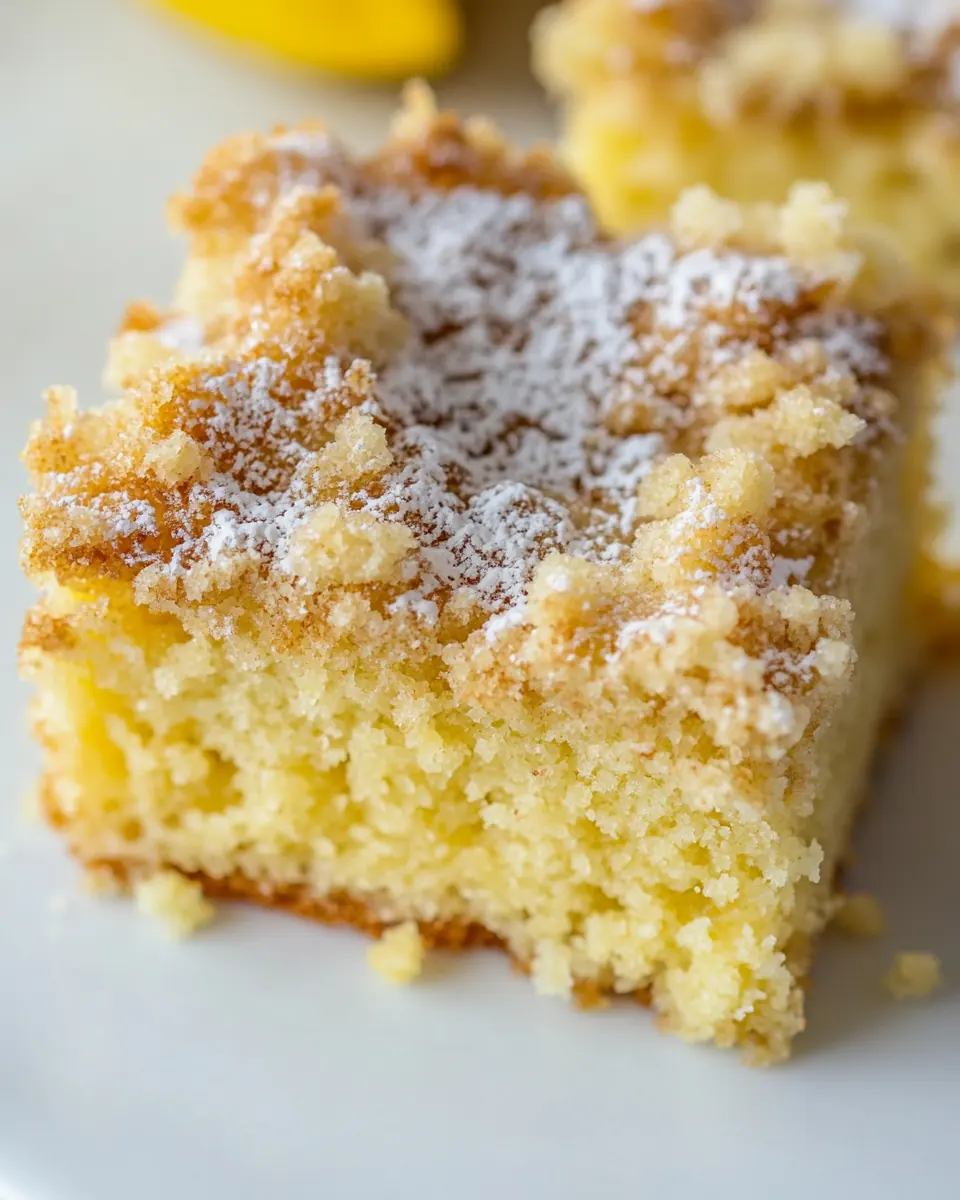
Sprinkle the crumb mixture all over the batter. Bake for 40 to 45 minutes, or until a tester inserted in the center comes out clean. Remove from the oven and sprinkle the top with powdered sugar.: When you scatter the crumb, aim for even coverage so every slice has crunchy topping. As the cake bakes the kitchen will fill with a toasty, citrus buttery aroma, and the crumb will turn golden brown. The surface should spring back slightly and a toothpick in the center should come out clean or with a few moist crumbs. If the top browns too quickly, tent with foil to prevent overbrowning. After cooling briefly, a dusting of powdered sugar gives a soft finish and a hint of sweetness.
Beat the butter and sugar in the bowl of your electric mixer until creamy. Add the eggs one at a time, beating until each is combined. Beat in the lemon zest. Stream in the lemon juice with the mixer on medium-low speed. The mixture will look curdled.: This instruction refers to making the curd, where butter and sugar are creamed until smooth, creating a base that feels velvety under whisking. Adding whole eggs gradually ensures a stable emulsion. When you stream in the fresh lemon juice , the mixture may appear curdled; that is normal because the acid interacts with the fats and proteins. Continue whisking and warming as directed to bring it together. A common worry is scrambling the eggs, so keep the speed moderate and keep heat gentle in the next step.
Transfer the mixture to a microwave-safe bowl. Microwave for 5 minutes, stirring every 1 minute. Then microwave for 1 to 2 more minutes, stirring after each 30 second increment, until it coats the back of a spoon.: Heating in short intervals while stirring builds a thick, glossy curd without overheating. The sound will be quiet bubbling rather than vigorous boiling, and the texture should transform from thin to custardy. The back of a spoon should show a thick coating that leaves a clean line when wiped with a finger. If overheated, the curd can split or scramble, so use short bursts and stir thoroughly between intervals to distribute heat evenly. If it looks slightly lumpy, keep stirring off heat and the residual warmth often smooths it out.
Place a piece of plastic wrap over the bowl, pressing it directly into the curd. Refrigerate for 2 to 4 hours, or until chilled and thick.: Pressing plastic wrap to the surface prevents a skin and keeps the curd silky. In the fridge the curd will cool and thicken, taking on a glossy, spoonable consistency. The aroma will mellow from sharp to rounder citrus notes. Avoid skipping this chill time, because warm curd can run into the batter and lose its distinct pockets. When fully chilled, it should hold shape and be easy to dollop onto the cake before baking.