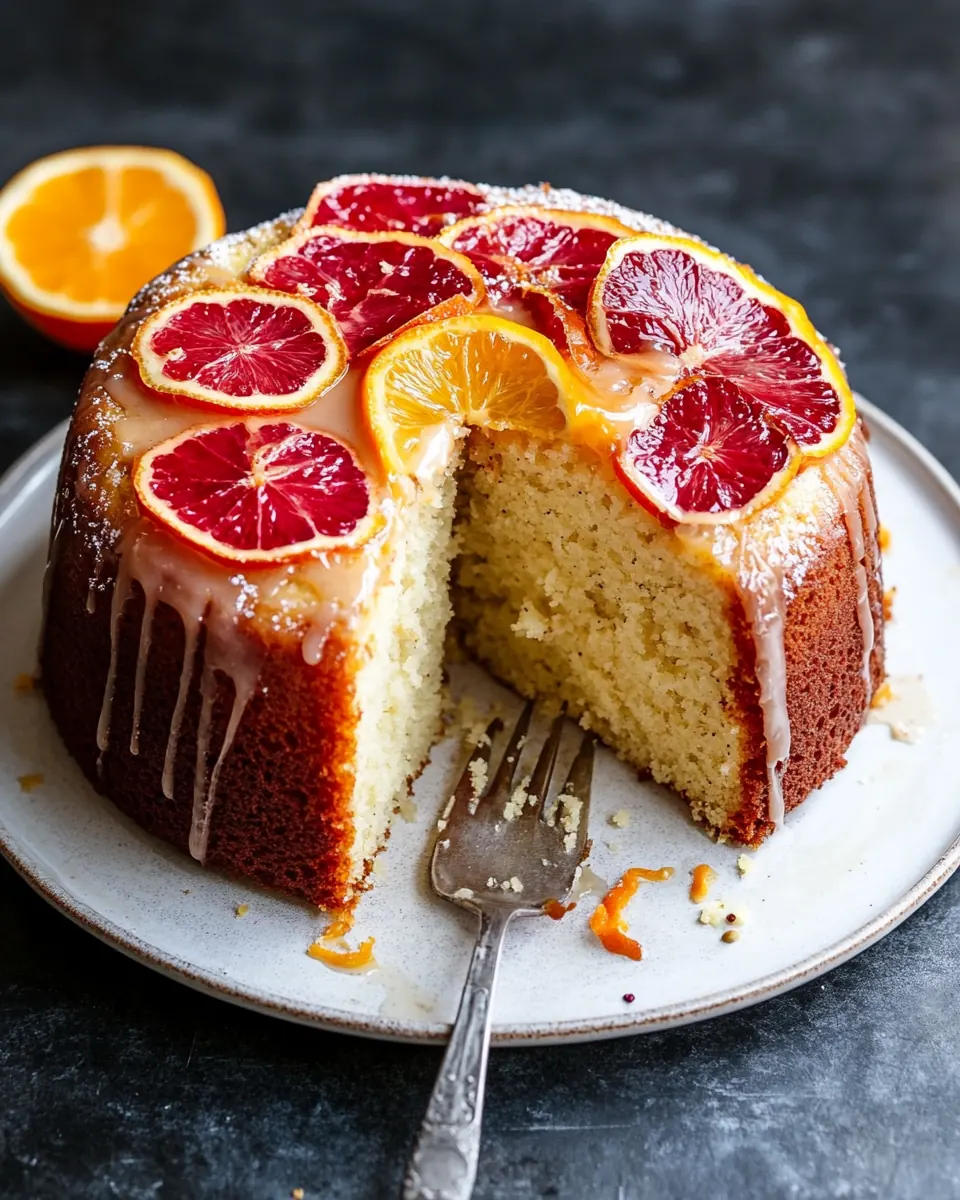
Preheat the oven to 350 degrees F. Line a 9 x 5 inch loaf pan with parchment paper. In a large bowl, whisk together the olive oil, honey, eggs, yogurt, vanilla, lemon zest, and juice, mix until smooth and creamy. Add the all-purpose flour, almond flour, baking powder, and salt. Mix until just combined, being sure the batter is completely mixed. Stir in the poppy seeds. Pour the batter into the prepared bread pan. Bake for 40-45 minutes or until a toothpick inserted into the center comes out clean. Meanwhile, make the glaze. Remove the zest from the remaining lemon and the blood orange with a vegetable peeler in wide strips. Then thinly slice the strips. Alternately, you can just zest the lemon and orange on a Microplane. In a medium bowl, mix together the honey and about 1/4 cup lemon juice. Drizzle 1/2 the glaze over the warm cake. To the remaining glaze, add 1 tablespoon blood orange juice and the powdered sugar, whisk until smooth. Stir in 1/2 the lemon zest and 1/2 of the orange zest. If needed, thin the glaze by adding additional citrus juice, 1 tablespoon at a time, until drizzly. Pour the glaze over the cake, letting it fall down the sides. Let set 5 minutes, slice and enjoy warm or at room temp.: The air should feel warm and steady as the oven reaches temperature, and you may hear the faint hum of the heating element. Preheating ensures even rise and proper crumb set, so place the rack mid oven for best circulation. A too cool oven can produce a dense interior, while an overheated one browns too fast. If your oven runs hot, use an oven thermometer to confirm accuracy.
Line a 9 x 5 inch loaf pan with parchment paper: The parchment should sit snugly with a little overhang to lift the loaf out easily, and the pan will feel room temperature until filled. This step prevents sticking and helps the loaf release cleanly. Skipping parchment risks tearing the cake surface when you remove it, so always prep the pan first.
In a large bowl, whisk together the olive oil, honey, eggs, yogurt, vanilla, lemon zest, and juice, mix until smooth and creamy: As you whisk, the mixture should develop a homogeneous sheen and the aroma of lemon and honey will become pronounced. This emulsion is crucial, because it helps distribute fat and moisture evenly for a tender crumb. Overzealous whisking is less risky here than undermixing, but ensure all streaks of yogurt are blended.
Add the all-purpose flour, almond flour, baking powder, and salt: Once the dry ingredients meet the wet, the bowl will shift from glossy batter to a thicker, cohesive mixture. The flours provide structure while the baking powder gives lift. A common error is adding too much flour, so spoon and level when measuring to avoid a dry, crumbly cake.
Mix until just combined, being sure the batter is completely mixed: The batter should show no large streaks of flour and should fall from the spatula in a ribbon that holds for a moment. Gentle mixing prevents gluten overdevelopment, which keeps the texture tender. Be careful not to under mix either, as pockets of dry flour will cause uneven texture.
Stir in the poppy seeds: As you fold in the poppy seeds you will notice tiny black flecks spreading through the batter, adding visual contrast. These seeds add subtle crunch and a pleasant nutty note. Distribute them evenly so every slice has a consistent texture; uneven stirring can clump them in one area.
Pour the batter into the prepared bread pan: The batter should glide into the pan with a glossy surface and small air bubbles visible at the top. Smooth the top lightly for even rise, but avoid heavy pressing. Overfilling will cause spillover during baking, so leave a little headspace for expansion.
Bake for 40 to 45 minutes or until a toothpick inserted into the center comes out clean: While baking you will notice a gentle golden color forming at the edges and a fragrant citrus scent filling the kitchen. The top should spring back slightly when touched, and the toothpick should emerge without wet batter. A common mistake is removing the loaf too early, which yields a gummy center, so err on the side of a few extra minutes if uncertain.
Meanwhile, make the glaze: The glaze starts to take shape as you whisk honey with lemon juice , and it should be glossy and pourable. Preparing the glaze while the cake bakes means it is ready to soak in while the loaf is still warm, which helps the flavors meld. If the glaze is too thick, thin with additional citrus juice; if too thin, add a touch more powdered sugar.
Remove the zest from the remaining lemon and the blood orange with a vegetable peeler in wide strips then thinly slice the strips: The peels will have a bright citrus perfume and pretty ribbons of color, and thin slicing makes them delicate garnishes. If you prefer, microplane zest instead for a finer texture. Avoid the bitter white pith when peeling, as that will impart an unpleasant taste.
In a medium bowl, mix together the honey and about 1/4 cup lemon juice: This initial glaze will be glossy and slightly viscous, with the acidity of lemon juice cutting through the sweetness of honey . The mixture should smell lively and sweet, signaling readiness. If it seems overly sweet, add a teaspoon of additional lemon juice to balance.
Drizzle 1/2 the glaze over the warm cake: As the glaze meets the warm loaf it will sink slightly into the crumb and release a burst of citrus aroma. This step soaks the top and edges, enhancing moisture and flavor continuity. Avoid pouring all the glaze at once, as the cake may become soggy in places; target even coverage.
To the remaining glaze, add 1 tablespoon blood orange juice and the powdered sugar, whisk until smooth: The added blood orange juice introduces color and complexity, transforming the glaze into a thicker, more decorative topping. The powdered sugar should dissolve into a silky mixture, free of lumps. If it resists blending, add juice one teaspoon at a time to reach the right drizzly texture.
Stir in 1/2 the lemon zest and 1/2 of the orange zest: This infuses the decorative glaze with flecks of citrus oil and bright flavor, making the finished cake both aromatic and pretty. The zest should be evenly dispersed, and the glaze will pick up little pops of color. Overzesting can make the glaze bitter, so use the specified amounts.
If needed, thin the glaze by adding additional citrus juice, 1 tablespoon at a time, until drizzly: You want a glaze that flows in ribbons but still clings to the loaf. Adding juice in small increments keeps you from over thinning, which would make the glaze run off the cake entirely. If it becomes too thin, stir in a touch more powdered sugar to rescue the consistency.
Pour the glaze over the cake, letting it fall down the sides: As the glaze cascades, it will create glossy drips and a sheen that highlights the loaf. The contrast between the warm cake and cool glaze is part of the appeal, and the aroma will intensify. Be mindful to pour slowly for neat coverage and to reserve some glaze for topping after slicing if desired.
Let set 5 minutes, slice and enjoy warm or at room temp: During these minutes the glaze sets slightly and the cake finishes cooling to a sliceable temperature. The crumb should be moistened but not soggy, and the aromas will have settled into the loaf. Cutting too soon can cause tearing, so allow a brief rest for the best presentation.