Preheat oven to 350 degrees F. Line a baking sheet with parchment paper and set aside.: The oven warming fills the kitchen with a dry heat that helps create an even bake, and the scent of warm air signals readiness. You should feel the warmth near the oven door when it reaches temperature, and the parchment prevents the bottoms from sticking while promoting even browning. A common mistake is placing the sheet in before it is fully heated, which can lead to uneven rise, so wait until the oven registers 350 degrees F . If your rack is too low the rolls may brown on the bottom too quickly, so position the rack in the center for balanced color.
In a medium bowl beat together the cream cheese, sugar, lemon zest and lemon juice until smooth and creamy. Fold in the raspberries.: As you beat, you will notice the cream cheese loosening and becoming glossy, while the sugar dissolves and the lemon zest perfumes the mixture. The sound is a soft whipping, and the texture should be silky rather than grainy. Folding in the raspberries gently keeps some whole for bursts of juice; over stirring will crush them and create a runny filling. If lumps remain, beat a bit longer but avoid overbeating which can warm the cream cheese too much.
Unroll the tube of crescent dough and spread the cream cheese mixture over the dough, leaving 1/2 inch edge clean around. Starting at the long edge, roll up the dough into a tight tube. Use a serrated knife to cut 12 equal size discs.: You will feel the tacky give of the crescent roll dough sheet as you work, and the visual of a neat, even layer of filling is satisfying. Leaving a 1/2 inch border prevents filling from oozing during baking, which helps the spiral hold its shape. Rolling tightly keeps the layers compact; a loose roll will unfurl and bake flat. A serrated knife makes clean cuts, and wiping the blade between slices avoids dragging filling. If the dough tears, gently press it back together at the seam to seal.
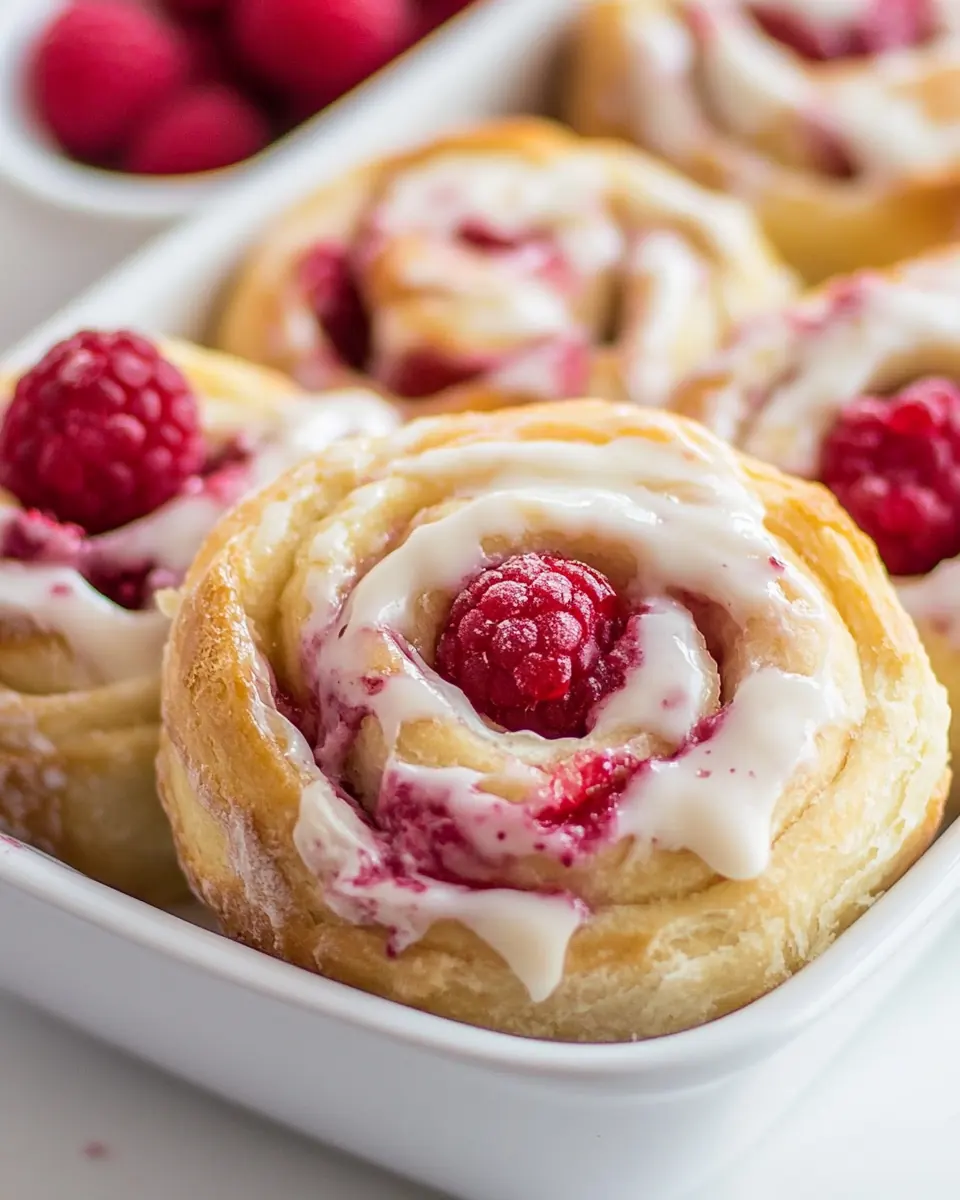
Arrange the discs in an overlapping, circular pattern on the prepared baking sheet. Bake for 20 to 25 minutes, or until golden brown.: Placing the discs slightly overlapping allows them to support each other and creates an attractive wreath like presentation. As they bake, you will see edges turn a warm golden tone and smell a buttery, slightly toasted aroma. The centers will set and the filling will look slightly puffed. Opening the oven too often lowers temperature and risks uneven browning, so peek only near the end of the time window. If they brown too quickly, lower the oven temperature by a few degrees to let the centers cook without burning the edges.
Mix the powdered sugar and milk together until smooth. Drizzle over the warm danish rolls. Enjoy!: The glaze should be glossy and pourable, and mixing it creates a satin sheen that catches the light on the warm rolls. Drizzling while the rolls are warm lets the glaze set with a delicate crust, but wait a minute if the rolls are sizzling hot so the glaze does not melt away completely. A common slip is adding too much milk and ending up with a runny glaze, so start with the lower note of 2 tsp and add up to 3 tsp milk only as needed. Once drizzled, the cool of the glaze against warm pastry offers a contrast that highlights the creamy filling and fruity bursts.