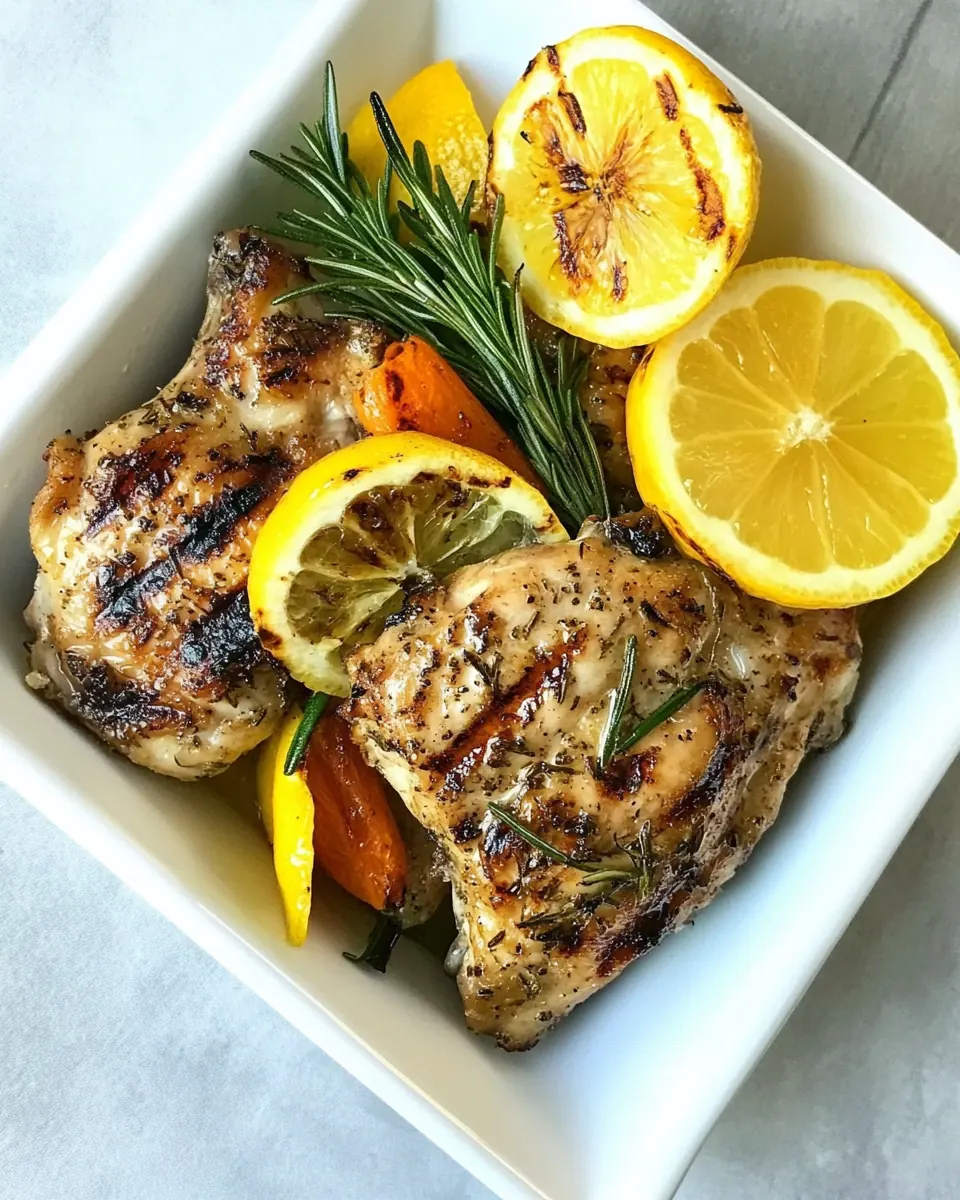
In a small bowl, whisk together the lemon zest, juice, rosemary, oil, salt and pepper. Put the marinade in a large zip baggie. Add the chicken to the marinade and let marinate at room temperature. Turn the bag occasionally.: As you whisk, inhale the bright citrus and herbaceous steam that will rise, signaling the oils and acids are marrying. The mixture should look slightly emulsified with flecks of rosemary suspended in glossy olive oil . This emulsification helps the marinade cling to the chicken so flavors penetrate during resting. A common mistake is under whisking, which leaves the salt settled and creates uneven seasoning, so whisk until combined and the salt appears dissolved.
Prepare the grill to medium heat. Lightly oil the grates. Remove the chicken from its marinade. Place the chicken on the grill, cover and cook until lightly browned. Turn the chicken and cook on the other side until cooked through (total time 8 to 10 minutes).: The sound of the bag as you press air out gives immediate feedback that the marinade will tightly contact the meat. Using a sealed bag ensures full surface contact so every thigh soaks in flavor. Pressing out excess air also reduces oxidation. Avoid leaving too much air, which can cause uneven marination and sliding of the meat inside the container.
Add the chicken to the marinade and let marinate at room temperature: As the chicken sits, you may notice the lemon scent becoming more pronounced, and the meat will yield a little to touch, indicating the acid is gently tenderizing. Marinating at room temperature for a short spell helps the thighs reach equilibrium so they cook evenly. Don’t overmarinate, as extended acidic contact can make the texture mealy; keep to a modest time to avoid that issue.
Turn the bag occasionally: Turning the bag helps redistribute the marinade visually and texturally, ensuring each piece develops even color and flavor. You’ll see the marinade clinging and then settling back, so periodic flipping prevents patches from missing seasoning. One pitfall is forgetting this step, which can leave one side less flavored, so aim to turn the bag every 10 to 15 minutes while it rests.
Prepare the grill to medium heat: When the grill reaches medium heat you should feel steady warmth if you hover your hand a few inches above the grate, and the grates will radiate a gentle, even heat. This temperature allows the outside to caramelize without overcooking the interior. Too high heat will char the surface before the center cooks, so aim for medium and adjust vents or burners to maintain it.
Lightly oil the grates: Brushing or wiping a high smoke point oil on the grates will prevent sticking and promote even searing. You should hear a soft sizzle when the chicken touches the grate, which signals immediate contact and the start of Maillard reaction. If you skip oiling, thighs can bond to the grate and tear when turned, so take this quick precaution to keep the surface intact.
Remove the chicken from its marinade: As you lift the thighs, drain excess marinade back into the bowl so it does not drip and cause flare ups. The surface should glisten but not be drowning in liquid. Leaving too much marinade on the meat can cause burning and bitter char, so allow a brief drip off before placing on the grill.
Place the chicken on the grill, cover and cook until lightly browned: On first contact you should hear a steady, satisfying sizzle and see the surface begin to darken into small golden brown patches as sugars and proteins caramelize. Close the lid to trap heat and smoke, which helps develop flavor through gentle convection. Opening the lid too often cools the grill and slows browning, so resist the urge to check constantly.
Turn the chicken and cook on the other side until cooked through (total time 8 to 10 minutes): After flipping, listen for that same confident sizzle and watch for juices to run clear near the center edge, with the internal color shifting to opaque. The surface should be evenly browned with slight char lines if using a grate. Use an instant read thermometer to confirm doneness at 165 F, and avoid cutting early which releases juices and dries the meat, a common mistake that diminishes juiciness.