Measure the lentils and pick over to remove debris or shriveled lentils, then thoroughly rinse with water. Add to a bowl, cover them in room-temperature water and let soak for 15–20 minutes. Prep the veggies: finely dice the onion and carrot; finely mince the garlic cloves and ginger.: When you start here you will notice the sound of running water and the visual clarity of rinsed lentils as the cloudy water clears, which is your cue that they are clean. Soaking softens them slightly and shortens the eventual simmer, which helps them cook evenly and produce a creamier finish. While the lentils rest, prepping the onion , carrot , garlic , and ginger saves time later and means you can add everything in rhythm without pausing. A common mistake is skimping on the pick over step and later finding a tiny stone, so spread the lentils on a plate and inspect them under good light.
Add the butter or oil to a large pot. Heat to medium and once butter is melted or oil is shimmering, add the diced onion, garlic, and ginger. Cook and stir for 3–4 minutes. Add diced carrot. Cook, stirring occasionally, for another 6–8 minutes or until everything is golden. Nothing should be overly browning or burning; if so, turn down heat. While everything is cooking, measure out the spices.: As you heat the butter or coconut oil , watch for that shimmer or melted foam which tells you the fat is ready. The pan will release soft sizzles once the onion hits the surface and you will smell a gentle sweetness as it softens. Adding the garlic and ginger early perfumes the oil, creating an aromatic base. The carrot will add texture and sweetness, and you should see a light golden gloss on the vegetables when they are ready, not deep browning. If the pan shows dark bits quickly, lower the heat to avoid bitterness. Measuring spices while the veggies cook keeps everything flowing smoothly so you can add them without delay.
Add the red curry paste, yellow curry powder, garam masala, paprika, ground coriander, cumin, and turmeric. Season with salt and pepper; I add 1 and 1/4 teaspoon salt and 1/2 teaspoon pepper. Increase heat to high, stir constantly, and cook for 1–2 minutes or until very fragrant. Add the tomatoes and reduce heat to medium. Stir and cook for 1 minute, scraping the bottom of the pot to release any browned bits. Add in sugar.: When you introduce the spice blend and red curry paste to the hot oil the fragrance should bloom; inhale a warm, complex perfume of toasted spice and chili. Stir constantly so the spices bloom evenly and do not char, which could create a bitter edge. Adding the crushed tomatoes loosens the mixture and the act of scraping the pot loosens any caramelized fond that carries flavor into the sauce. The pinch of sugar softens tomato acidity and smooths the overall profile. A frequent error is rushing this step, which prevents the spices from developing fully, so give it the brief high heat attention it needs.
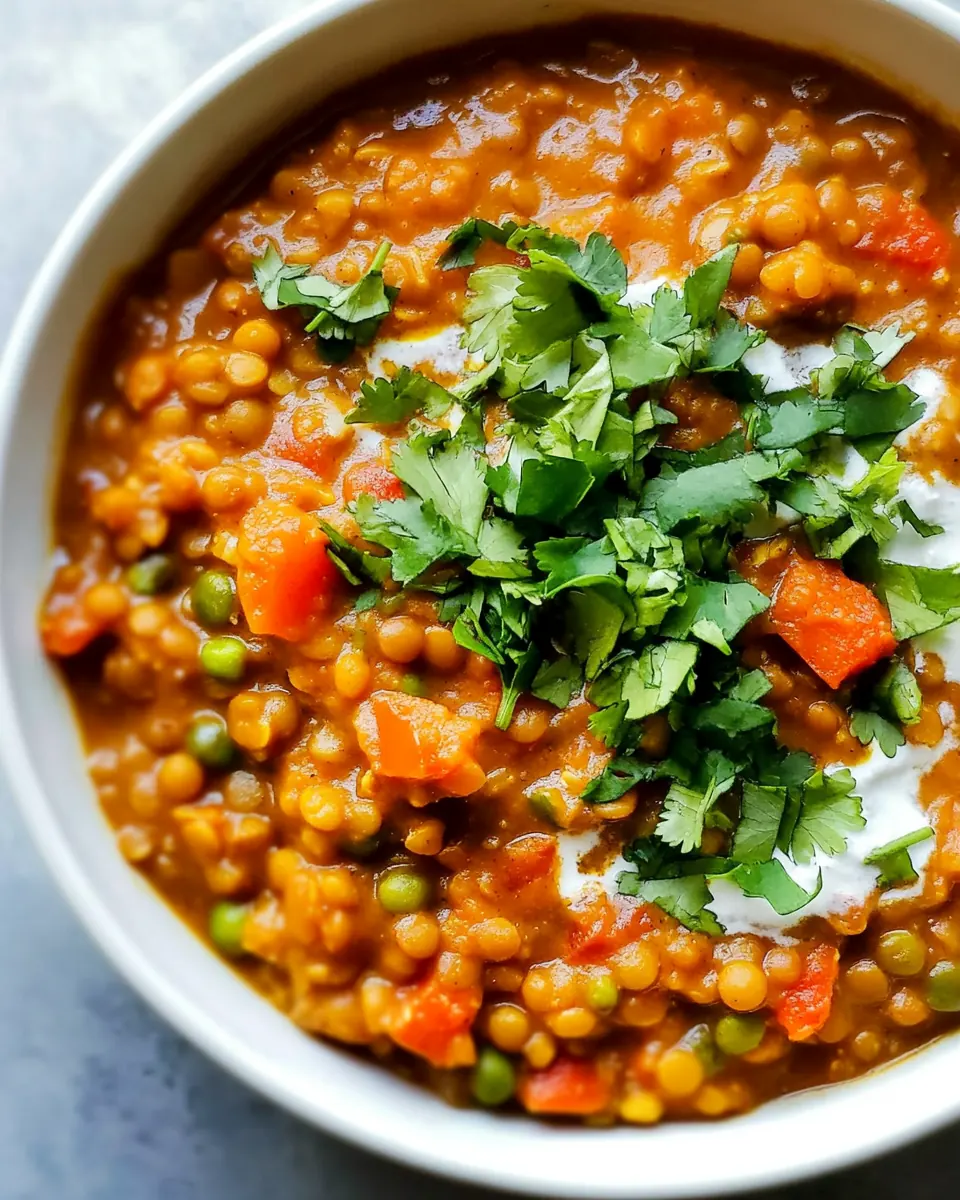
Thoroughly drain the lentils. Add to the pot along with the coconut milk and chicken or vegetable broth/stock. Bring to a boil, then reduce to a gentle simmer. Cover with a lid and cook for 30 minutes, stirring every 8–10 minutes. Remove the lid and simmer another 5–8 minutes or until curry is thick and creamy and lentils are completely tender. If the mixture thickens too much, add a splash of broth or stock, and if it’s too thin (or lentils aren’t tender yet), increase the heat a bit and simmer without the lid.: Adding the drained lentils with the coconut milk and vegetable broth transforms the pot into a slow simmering stew. Bring it up to a rolling boil to ensure even heat distribution, then lower to a gentle simmer where soft bubbling indicates steady cooking. You should smell a melding of spices and coconut as the pot reduces, and the surface will show small soft bubbles rather than aggressive rolling. Stirring every so often prevents sticking and helps you monitor thickness, which is essential because lentils can go from tender to mushy quickly. If the curry becomes very thick before the lentils are done a little extra broth rescues the texture, while if it is too thin, uncovered simmering concentrates the flavors. A common misstep is not watching the simmer closely and overcooking the lentils until they lose all texture, so check for a tender but intact bite.
Add in finely chopped cilantro, and if desired, stir in the zest and juice of a lemon. Taste and adjust any seasonings; flavors should sing, so add extra salt, pepper, or lemon juice if needed. Serve over cooked basmati rice if desired (see note 2) and enjoy hot.: The final addition of chopped cilantro and an optional squeeze of lemon brightens the whole dish, cutting through the richness and highlighting the spices. At this stage you will notice a lively citrus brightness and fresh herb aroma that lifts the curry. Taste carefully and adjust seasoning, because simmering can concentrate flavors and you may need a touch more salt or a squeeze of lemon to balance. Serving over hot basmati rice allows the grains to soak up the curry, creating the ideal ratio of sauce to starch. One common mistake is adding too much acid at once, so add lemon gradually until you reach the balance you love.