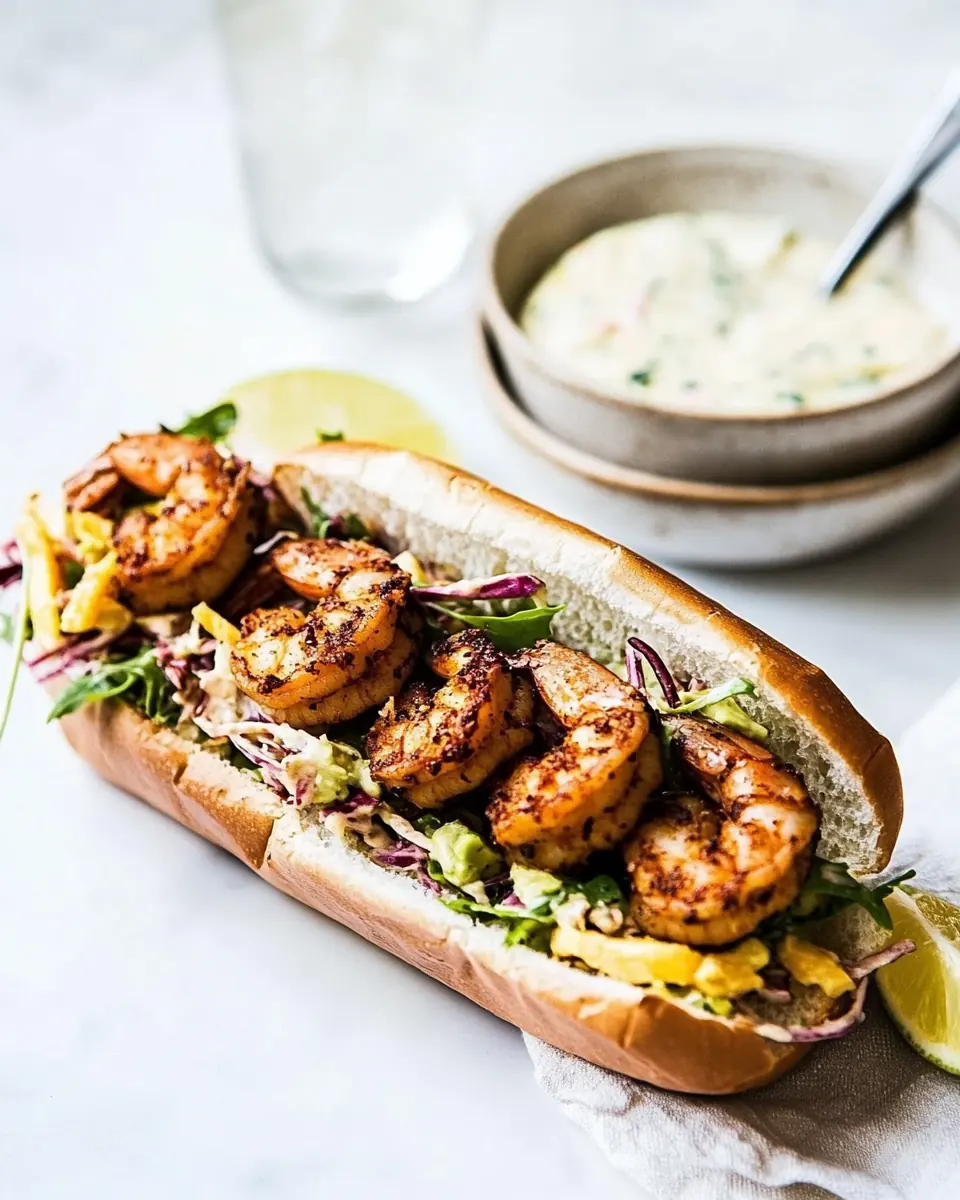
In a medium bowl, combine the shrimp, creole, paprika, cayenne, garlic powder, onion powder, thyme and olive oil. Let sit while you make the slaw or place in the fridge up to overnight. Make the slaw. In a small bowl, combine the yogurt, hot sauce, lemon juice, paprika, and a pinch each of salt and pepper. Taste and adjust spices to your liking. In a large bowl, toss together the cabbage, mango, avocado, and cilantro. Add 2-3 tablespoons of the yogurt sauce, gently tossing to combine. Reserve the remaining yogurt for serving. Heat a large skillet over medium high heat. Add the shrimp in a single layer and cook, stirring once or twice until the shrimp have turned pink and are cooked through. To assemble. Divide the shrimp among the hoagie rolls and drizzle with yogurt sauce. Top with slaw. Enjoy!: Warm spice aromas should bloom the moment you mix them, releasing a peppery, smoky bouquet that coats the shrimp . You will notice the oil helps the spice cling, creating an even coating that promotes quick searing and caramelization. The reason this matters is that an even rub yields consistent color and cook time across all pieces, so none overcook while others finish. A common mistake is undercoating, which causes uneven flavor and dry spots, so be sure every shrimp is lightly coated and move them with clean hands or tongs to avoid tearing the seafood.
Let sit while you make the slaw or place in the fridge up to overnight: As the spices rest on the shrimp , they continue to penetrate, so you'll get more depth if you allow time. If refrigerated, the cold pulls flavors inward and firms the shrimp slightly, which helps maintain texture during cooking. Avoid leaving them too long uncovered, because they can dry at the edges; use a covered container to preserve moisture and prevent cross aromas from the fridge.
Make the slaw: The slaw stage is all about balancing textures and temperatures, so you want the shredded cabbage crisp and the fruit cool and juicy. Tossing gently but thoroughly helps the yogurt coat without crushing the avocado or bruising the mango . The slaw provides a temperature contrast to the warm shrimp , which is crucial for a sandwich that feels lively rather than one note. A typical slip is overdressing too early, which softens the cabbage prematurely, so hold back some sauce until right before assembly.
In a small bowl combine the yogurt hot sauce lemon juice paprika and a pinch each of salt and pepper: When you whisk these, expect a tangy, spicy fragrance with creamy body from the plain greek yogurt . The acid from the lemon brightens everything and keeps the sauce from tasting flat. This mixture binds the slaw and serves as an extra drizzle, adding moisture and a cooling counterpoint to the spice. Taste and calibrate: too much lemon can make it sharp, too little and it becomes dull.
Taste and adjust spices to your liking: Sampling gives you control over heat and acidity. I often add a touch more hot sauce if the rub was mild or a pinch more salt to make flavors pop. Tasting helps you avoid a final sandwich that feels imbalanced; that little adjustment can transform the whole experience. One mistake to avoid is correcting only after assembly, which can lead to uneven distribution of seasoning.
In a large bowl toss together the cabbage mango avocado and cilantro: This is the moment textures meet; the crisp cabbage , juicy mango , creamy avocado , and herbaceous cilantro should look vibrant and distinct. Toss gently so the avocado doesn’t become mush, and make sure flavors are evenly distributed so each bite has sweetness, herb lift, and crunch. A common error is overmixing, which bruises the fruit and flattens the visual appeal.
Add 2 to 3 tablespoons of the yogurt sauce gently tossing to combine: Start with a small amount of sauce to avoid soggy slaw and keep the texture bright. You should see the dressing cling in thin ribbons, coating rather than drowning ingredients. Reserving extra sauce lets guests add moisture at the table, preserving the roll structure. Overdressing is the main pitfall here, so err on the side of less when tossing.
Reserve the remaining yogurt for serving: This reserved sauce will be a finishing touch and a cooling foil for the spicy shrimp . Having it separate means sandwiches stay crisp until served. It also provides a visual flourish when drizzled at the end. A frequent oversight is mixing all the sauce into the slaw at once, which saps crunch.
Heat a large skillet over medium high heat: You want a pan that responds quickly so the shrimp sees high contact heat for good sear. When the skillet is hot, it will hiss when oil hits the surface, and you may see first wisps of color on the spices. This step matters because proper pan temperature yields caramelization without overcooking. Avoid adding shrimp to a cool pan, which causes steaming rather than searing and leaves them limp.
Add the shrimp in a single layer and cook stirring once or twice until the shrimp have turned pink and are cooked through: Listen for a gentle sizzle and watch the edges color first, then the bodies will change from translucent to opaque and pink. The visual cue is a firm curl and uniformly opaque texture. Cook only until just done, because shrimp tighten and dry quickly. A common mistake is overcooking, which results in rubbery texture, so remove them the instant they finish changing color.
To assemble Divide the shrimp among the hoagie rolls and drizzle with yogurt sauce: The noise here is satisfying, a soft crackle as warm shrimp meet toasted roll. Drizzling the sauce adds glossy contrast and a cooling counterpoint to the spices. Layer consciously so every bite contains protein, sauce, and slaw. Avoid piling too high which can cause the sandwich to fall apart when eating.
Top with slaw Enjoy: The final bite should combine heat, cool creaminess, and crunchy sweetness. Take a moment to check balance and, if needed, offer extra sauce at the table. Serving immediately preserves texture; waiting will soften the roll and collapse contrasts.