Line a baking sheet with parchment paper and scatter the Oreos, pretzels, peanuts, and toss with your hands to mix. The dry ingredients should be touching but not overlapping; set aside.: The first thing you should notice is the visual mosaic forming on the lined tray, with dark cookie fragments, pale pretzel shards, and golden peanuts . As you toss with your hands you will hear a satisfying rustle and feel the pieces settle into a jumbled carpet, which helps the chocolate adhere later. The reason you want the dry ingredients touching but not overlapping is to ensure even coverage when the chocolate is drizzled, allowing the melted chocolate to thread between pieces and lock them together. A common mistake is piling ingredients too closely so when the chocolate is added everything sinks into a single clump. If that happens gently redistribute pieces so there are small gaps for the chocolate to thinly coat. The aroma at this point is mostly the roasted note from the peanuts and the neutral baked scent of cookies; it sets a rustic base for the sweet layer to come.
To a large, microwave-safe bowl add the chocolate and heat on high power for 30 seconds to melt. Stop to check and stir. Reheat in 15 second bursts until chocolate can be stirred smooth.: When you start melting the chocolate , pay attention to texture and movement. After the initial 30 seconds, remove the bowl and stir: you should see some glossy melting at the edges and some solid chunks in the center. Reheating in 15 second bursts allows residual heat to finish the melt as you stir, producing a smooth, shiny ganache-like pour. The glossy sheen is your visual cue that the chocolate has emulsified correctly, which translates to a clean snap when it sets. Overheating will cause the chocolate to become grainy and dull, so always use short bursts and stir. If you prefer, a double boiler works too, and yields a slower, more controlled melt. The sound here is subtle, a quiet scrape as you stir, and the smell grows richer and more cocoa heavy, signaling readiness.
Evenly drizzle the chocolate over the dry mixture on baking sheet. If there are stray dry ingredients around the perimeter that didn’t get coated with chocolate, it’s okay to toss them on top of the chocolate so they adhere.: As you pour or drizzle the warm chocolate over the arranged pieces, watch how it flows and pools. The visual should be a thin, even web of glossy chocolate connecting the bits rather than a single thick puddle. Using a spoon or offset spatula helps you guide the flow so there are complex ribbons of chocolate weaving through the Oreos , pretzels , and peanuts . This webbing is important because it creates many brittle joints that break into satisfying shards. If you notice the chocolate thickening too quickly before it covers the tray, rewarm it briefly in 15 second increments to regain fluidity. Avoid pouring from too high above the tray, which can cause splatters and uneven coverage.
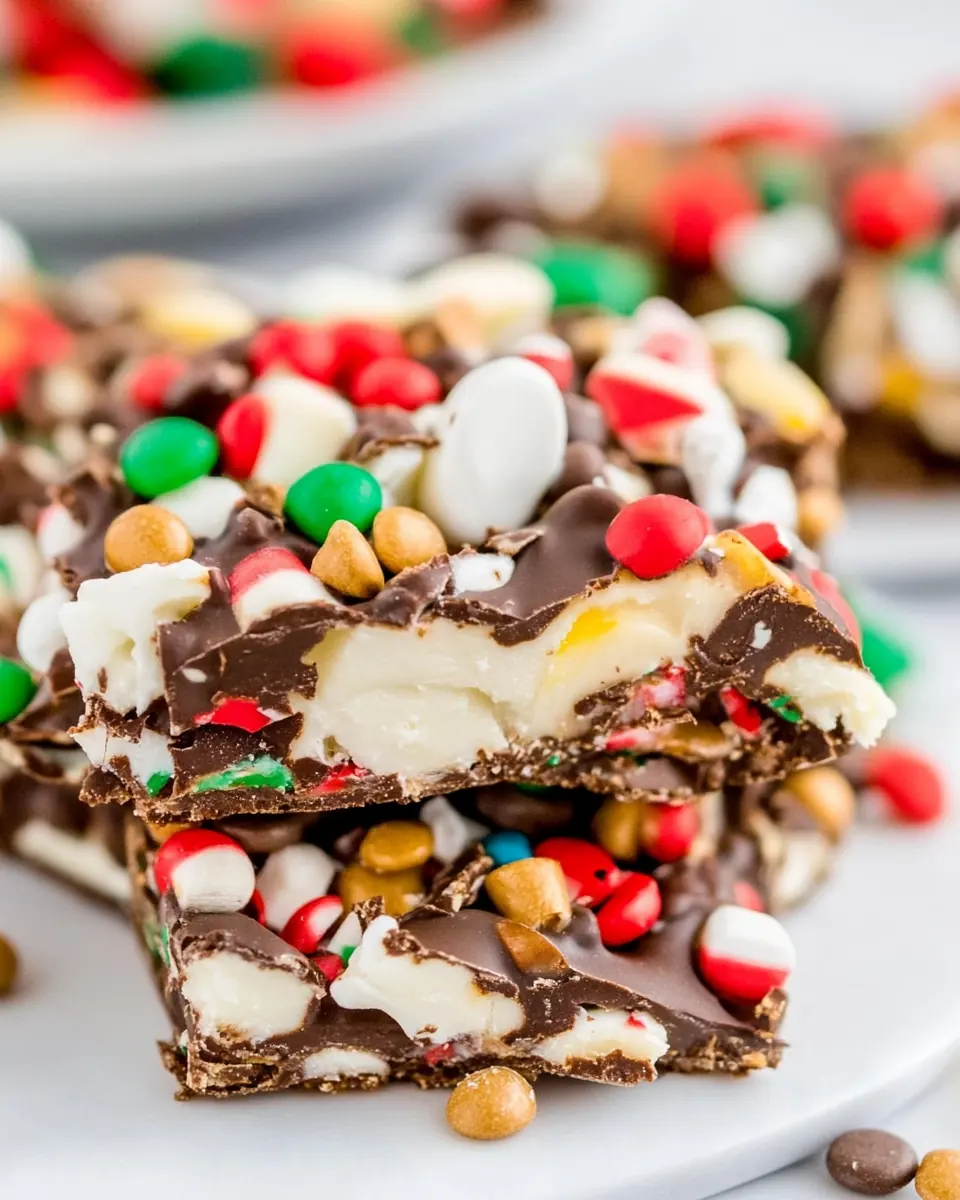
Before chocolate sets, evenly sprinkle the M&Ms, white chocolate chips, and sprinkles.: Timing is everything here. The chocolate should still be glossy and tacky so the M&Ms , white chocolate chips , and sprinkles adhere without sinking completely. Distribute them to achieve balanced color and texture, placing a bit more toward the center so each broken piece has some variety. The tactile sensation of pressing a few pieces lightly into the surface ensures they won’t fall off later. One trap is waiting too long, which results in toppings that sit loosely on the surface; they can fall off when you break the bark. The smell at this stage is a full cocoa note tempered by the sugary pop of candy shells.
Place tray in fridge or freezer until chocolate sets before breaking into pieces and serving.: Chilling firms the chocolate quickly and gives the bark a clean snap when broken. In the fridge you will wait until the surface loses its glossy sheen and becomes matte and solid, while the freezer speeds this process. The sound of breaking the bark is rewarding, a crisp fracture that lets you portion rustic shapes. If you chill too long in the freezer and then let it sit out, condensation can form on the surface, so bring it to near room temperature for 10 to 15 minutes before serving to avoid moisture. A common mistake is breaking it before it sets fully, which yields sticky, soft pieces; be patient and wait for the firm, cool texture.