Bring a very large pot of water to a boil, and when it's boiling, add in the baby spinach. Cook the spinach for 1 or 2 minutes, or until it turns a bright green color and has started to wilt, then drain the pot and transfer the spinach to a colander.: Right away you will notice the kitchen filling with a fresh green scent as the water returns to a vigorous boil, and the spinach should go from dull to vivid green very quickly. The visual cue to stop boiling is when most leaves have lost structure and look glossy, usually within one to two minutes, which keeps them tender rather than waterlogged. If you leave them longer the leaves will collapse and become excessively soft, so work quickly and have your colander ready. A common mistake is using too small a pot, which prevents even wilting and traps cooler pockets, so use a pot that allows the spinach to move freely.
In the same pot, lower the heat to medium and begin to melt the butter. Add in the onion and garlic and cook until slightly golden brown, about 3 minutes.: The sound here is subtle a soft rush as the leaves hit the strainer, and you want to immediately stop the cooking to preserve that bright color and fresh flavor. Drain thoroughly so the spinach does not water down the sauce later; I press with the back of a spoon to remove surface water. A useful trick is to run cold water briefly to halt cooking if you will not finish the dish immediately, but avoid soaking. Leaving too much water in the spinach will make the sauce thin and bland, so squeeze as much out as possible.
Add in the cream cheese, almond milk, nutmeg, and salt, and whisk until the mixture is smooth and melted. Continue to cook, stirring frequently, until the sauce has lightly thickened, about 2 to 3 minutes.: The butter should foam gently and give off a nutty, creamy aroma as it warms, which sets the stage for the aromatics. Keep the heat at medium to avoid browning too quickly, because you want a soft, sweet base rather than a roasted flavor. If the butter starts smoking, remove the pot from heat briefly and cool it down to prevent burnt notes. Using the same pot captures any residual spinach flavor left behind, which layers the dish subtly.
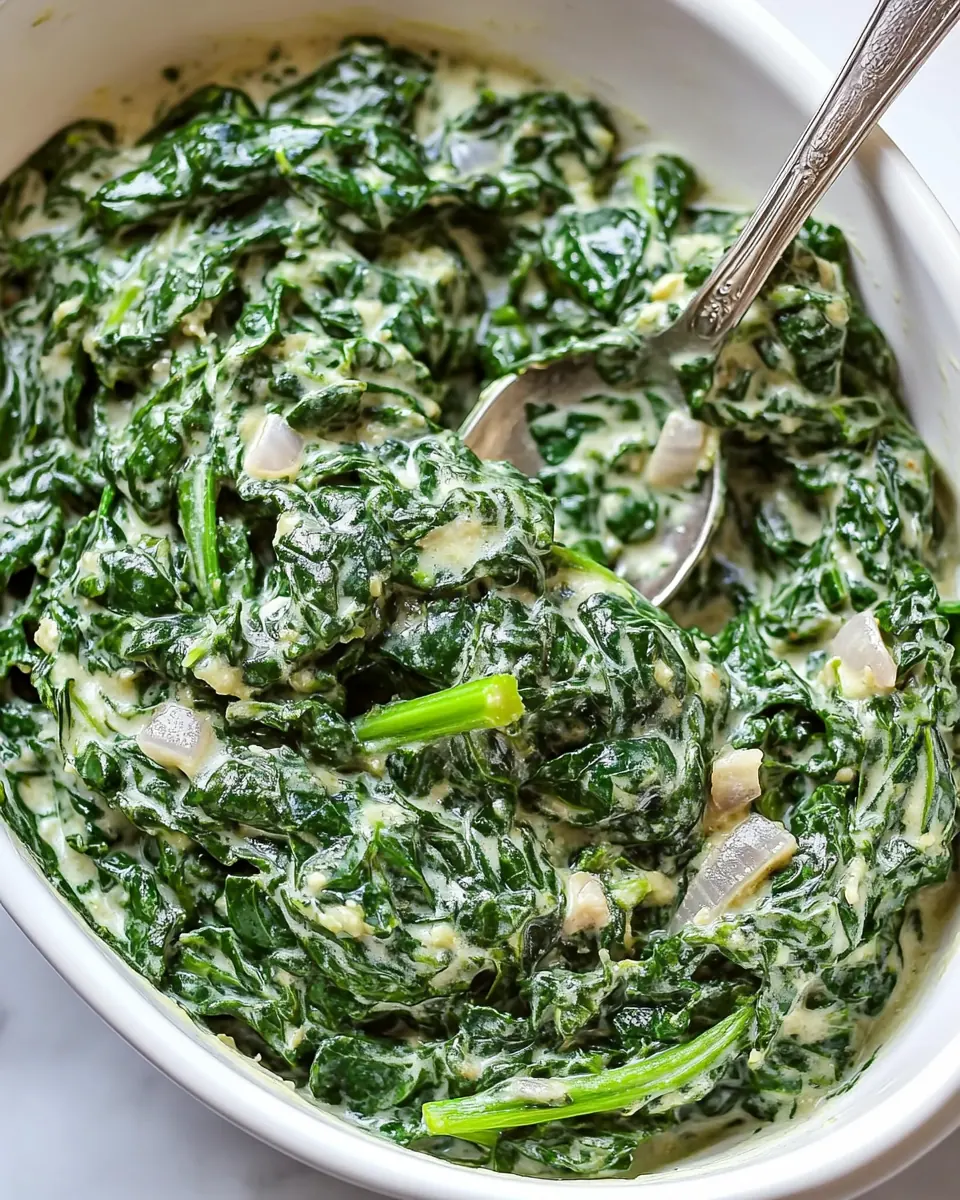
Squeeze out as much water from the spinach as possible and then stir it into the pan until well coated in the sauce. Taste and adjust seasonings as needed.: As the onion softens you will smell a gentle caramel sweetness that mellows the sharpness of the garlic . Watch the garlic closely once added because it can go from fragrant to bitter in seconds; stirring constantly and keeping the heat moderate prevents this. The visual cue is when the onion edges become translucent and just starting to take on a pale gold, which indicates they have released their sugars. If the pan seems dry, add a tiny splash of the almond milk to keep things moving, but avoid overwetting the aromatics.
Add in the cream cheese almond milk nutmeg and salt and whisk until the mixture is smooth and melted: The aroma will become richer and more dairy forward as the cream cheese softens and emulsifies with the almond milk . You should see a glossy, uniform sauce with no lumps if the cream cheese is at room temperature; if small clumps remain, lower the heat and whisk patiently until smooth. The warm hint of nutmeg will rise and balance the savory base, adding depth without sweetness. A common issue is overheating which can break the emulsion and create a grainy texture, so maintain moderate heat and steady whisking.
Continue to cook stirring frequently until the sauce has lightly thickened about 2 to 3 minutes: During this short simmer the mixture reduces slightly and the sauce will coat the back of a spoon, an important tactile cue that shows you have the right consistency. You may hear a gentle bubble and see a soft shimmer on the surface as moisture evaporates, concentrating flavor. Stirring prevents sticking and keeps the sauce silky; neglecting to stir can lead to localized overheating and scorch marks. If it thickens too fast, lift the pan off heat and let residual warmth finish the process gently.
Squeeze out as much water from the spinach as possible and then stir it into the pan until well coated in the sauce: When you squeeze the spinach , the scent becomes more concentrated, and the texture changes from wet strands to a cohesive mass that will happily accept the sauce. Work in batches if needed, folding the leaves so the sauce clings to each piece and puddles of liquid disappear. The visual sign you want is even glossy coating with no watery pools in the pan. A frequent error is adding the spinach while it is still dripping, which dilutes the sauce and flattens the flavor profile.
Taste and adjust seasonings as needed: This is the moment to fine tune salt level and the warmth from the nutmeg . Use a small spoonful to test the balance, because the concentrated flavors of the sauce and squeezed spinach will read differently than a watery sample. If it lacks brightness, a tiny pinch of salt can open the flavors; if it seems too rich, a brief simmer can help reduce and concentrate sweetness. Overseasoning is easy to do, so add incrementally and taste after each adjustment.