Preheat oven to 350°F.: The room fills with a warm, anticipatory scent as the oven approaches temperature, and that even heat is crucial for consistent baking. I can tell the oven is ready when the interior feels steady to the touch of the forearm, though I use an oven thermometer for accuracy. This step ensures cookies bake evenly, preventing centers from being underdone while edges overbrown. A common mistake is skipping preheating, which causes uneven spreading and longer bake times.
In a stand mixer, cream together granulated sugar, brown sugar, butter, and oil.: As you cream, you should hear a soft, rhythmic hum from the mixer and see the mixture turn lighter in color and slightly fluffy, indicating air has been incorporated. This aeration helps create tender yet structured cookies. If you notice any greasy separation, your butter may have been too warm; chill briefly and continue. Avoid over creaming which can create too much air and cause excessive spreading during baking.
Add eggs and beat until fluffy.: When the eggs are incorporated, the batter will become silkier and slightly increase in volume, with a faint glossy sheen. This shows the proteins are blending with the fats to stabilize the dough. If the mixture looks curdled, it likely needs a little more beating at medium speed to come together. A mistake here is rushing and under-mixing, which can leave streaks of egg and inconsistent texture.
Add flour, baking soda, baking powder, salt, and vanilla. Mix until combined.: You will see the dough transform from glossy to a thicker, pliable mass that pulls away from the bowl slightly. The aroma will become more bready and less sweet, a sign the dry ingredients are integrated. Mixing just until combined avoids developing too much gluten, which would toughen the cookies. Overmixing at this stage is a frequent error, leading to dense, chewy results when you want tenderness.
Mix in chopped M&Ms (we chop about 1/2 cup M&Ms using a nut chopper).: The sound of candy bits hitting the bowl is satisfying, and you will spot colorful flecks throughout the dough. Chopped M&M's distribute chocolate more evenly, while leaving some whole provides pops of texture. If the candy coats the dough too much, it can bleed color during baking, so balance chopped and whole pieces. One pitfall is adding too many mix ins, which can make the dough crumbly and hard to scoop.
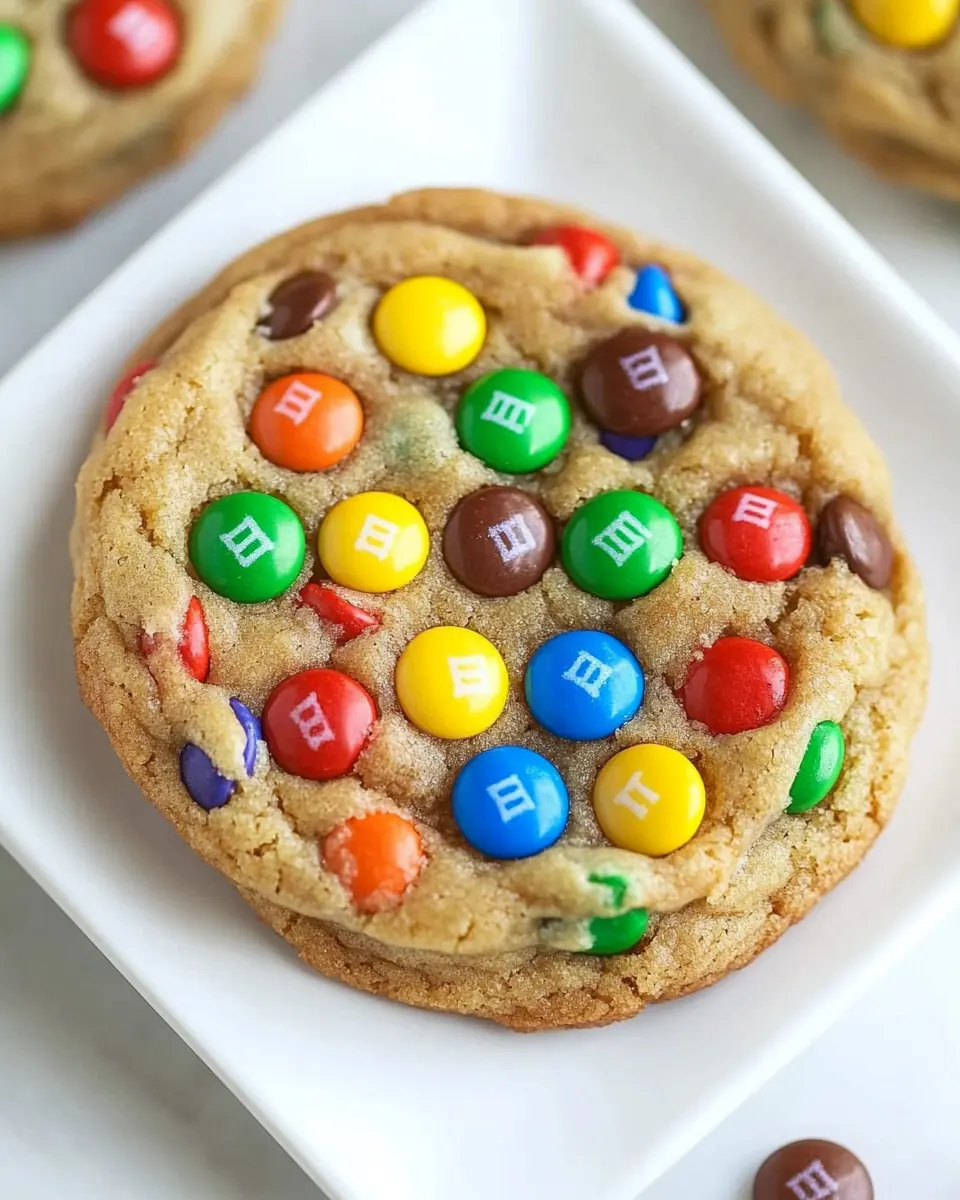
Using a medium cookie scoop, scoop dough balls onto a lightly greased pan and insert 6-9 M&Ms (regular and plain) on top before baking.: When scooped, the dough should hold shape without sagging; it will feel slightly tacky but not wet. Pressing whole M&M's on top creates a gorgeous finished look and gives candy that remains intact. If the dough spreads too quickly on the pan, your oven temperature may be low or the dough too warm; chilling the balls briefly can help. A common error is overcrowding the pan, which prevents proper air circulation and even browning.
Bake for 8-10 minutes.: You will notice edges turning a warm golden brown while centers look set but soft; that is the cue to remove them. The cookies continue to firm as they cool, so pulling them slightly early preserves chewiness. Listen for a muted crackle as they finish; it signals moisture leaving. Baking too long is a classic mistake, leading to dry, hard cookies, so err on the shorter side and check visually.
For picture-perfect cookies: Before the cookies cool, use a silicone spatula to gently press the circumference of the cookies into a perfect circle.: Before the cookies cool, use a silicone spatula to gently press the circumference of the cookies into a perfect circle. : Right after the oven, the tops are warm and pliable, and a gentle nudge smooths edges and centers, giving a clean, bakery look. The tactile warmth helps the candy embed without cracking, and the scent of toasted sugar is at its peak. If you wait until they cool, the surface becomes firm and resists reshaping. A misstep is pressing too forcefully, which can flatten the cookie excessively, so be light handed.