Heat the oven to 325 degrees Fahrenheit. Line two rimmed cookie sheets with parchment paper.: The kitchen will fill with a faint warm, dry scent as you preheat, which sets the stage for even toasting. Using parchment prevents sticking and encourages easy flipping as you stir, and lining two sheets ensures an even single layer for consistent browning. A common mistake is overcrowding the pans, which causes steaming instead of toasting, so spread the mixture thin. If your oven runs hot, check a few minutes early and rotate the sheets midway for uniform color.
In a large bowl, mix the rolled grains and/or oats, nuts, and seeds. (The dried fruit is added after it’s baked).: As you combine these dry components, notice the contrast of textures raw grains and raw nuts bring, and how the volume changes once they are joined. This dry toss ensures the binder will coat every piece evenly, which produces cohesive clusters during baking. Avoid adding any wet ingredients now, otherwise you risk clumping before baking and uneven toasting. If nuts are different sizes, chop larger ones to match the smaller pieces so everything toasts at the same pace.
In a saucepan over low heat, combine the honey, butter, and vegetable oil, stirring occasionally, until butter is melted and ingredients are well combined.: You will see the mixture go from separated liquids to one glossy, smooth syrup, and the aroma will turn rich and warm. Low heat is critical, because it melts the butter gently and keeps the honey from scorching, which preserves its sweet, floral notes. Stir slowly to blend and prevent localized overheating. A frequent pitfall is cranking the heat, which can cause the binder to boil and darken, producing a burnt flavor.
Pour the honey/butter/oil mixture over the grain/nut/seed mixture, and stir with a wooden spoon until evenly coated.: Once combined, the dry ingredients should glisten and clump lightly, and you should be able to pinch a little cluster between your fingers. This glossy coating is what creates those coveted crunchy clusters during baking. Use a wooden spoon or spatula to scrape the bottom so no dry pockets remain, and don’t overmix or you can break up the forming clusters. If you notice puddles of binder, pour slowly and mix to distribute it evenly across the bowl.
Bake for 30-40 minutes, stirring every 10 minutes, until the granola turns golden brown.: The sound is subtle, but you may hear a faint crackle as moisture leaves and clusters firm. Visually, the oats and nuts will turn a warm golden hue, and a deep amber at the edges signals caramelization. Stirring every ten minutes prevents hot spots and promotes even browning, and rotating the pans helps if your oven bakes unevenly. Avoid skipping the stirs, because unmixed areas can either undercook or burn while others look perfect.
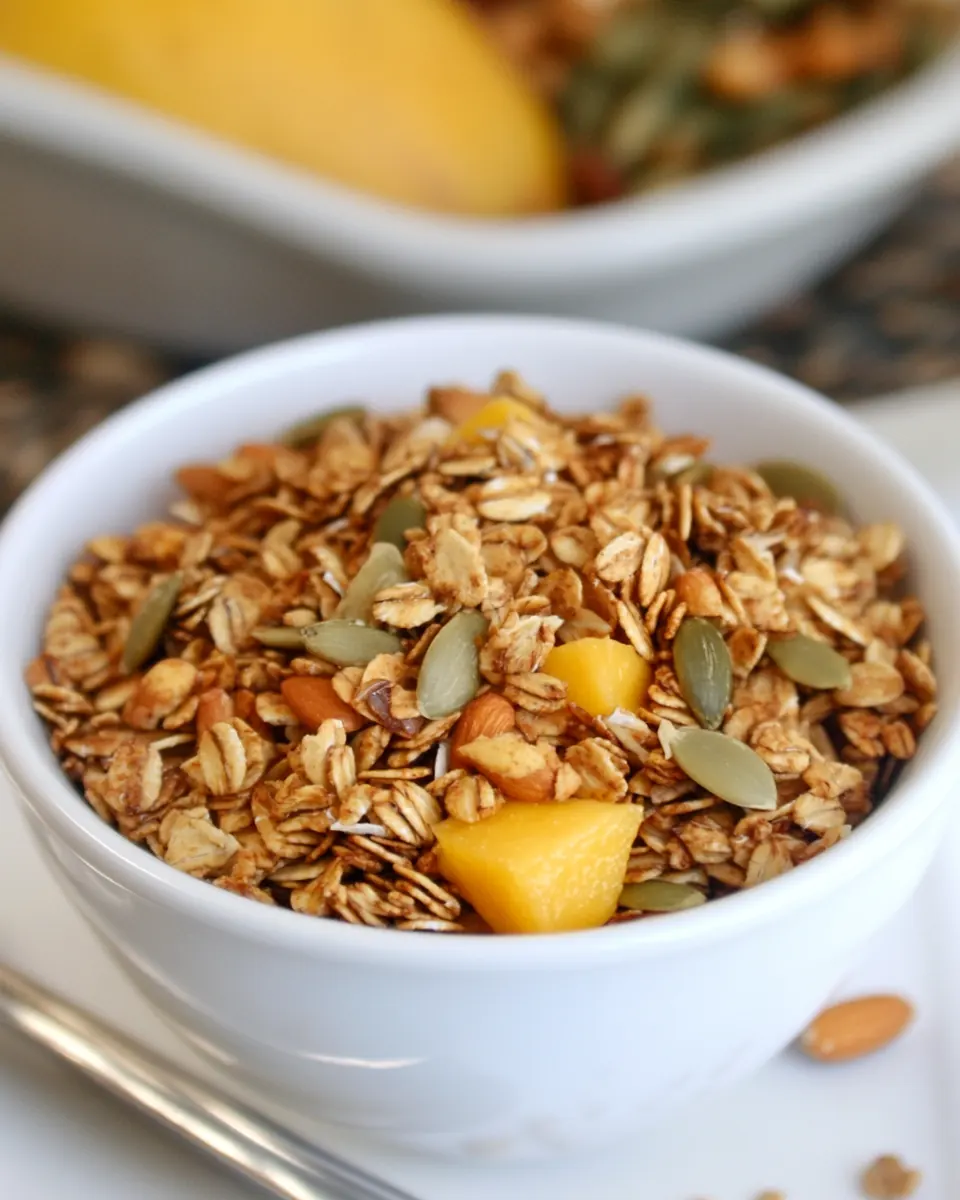
Let cool, then stir in the chopped dried mango (or other dried fruit).: Cooling is when the granola actually sets, and you will notice clusters becoming firm to the touch. Adding the dried mango after cooling preserves its soft chew and bright flavor, instead of letting it dry out in the oven. Mix gently to distribute pieces without shattering clusters. A common error is stirring while the granola is still hot, which can melt the fruit or make it sticky; patience here keeps texture balanced.
Store in an airtight container (it should keep for up to a month at room temp).: When sealed, the granola maintains its crunch and flavor, and storing in a cool, dark spot helps preserve the oils in the nuts. Use clear labeling if you make different flavors so you know which jar is which. One mistake is exposing it to moisture, which will soften the clusters, so always use a truly airtight container and a dry scoop when serving.