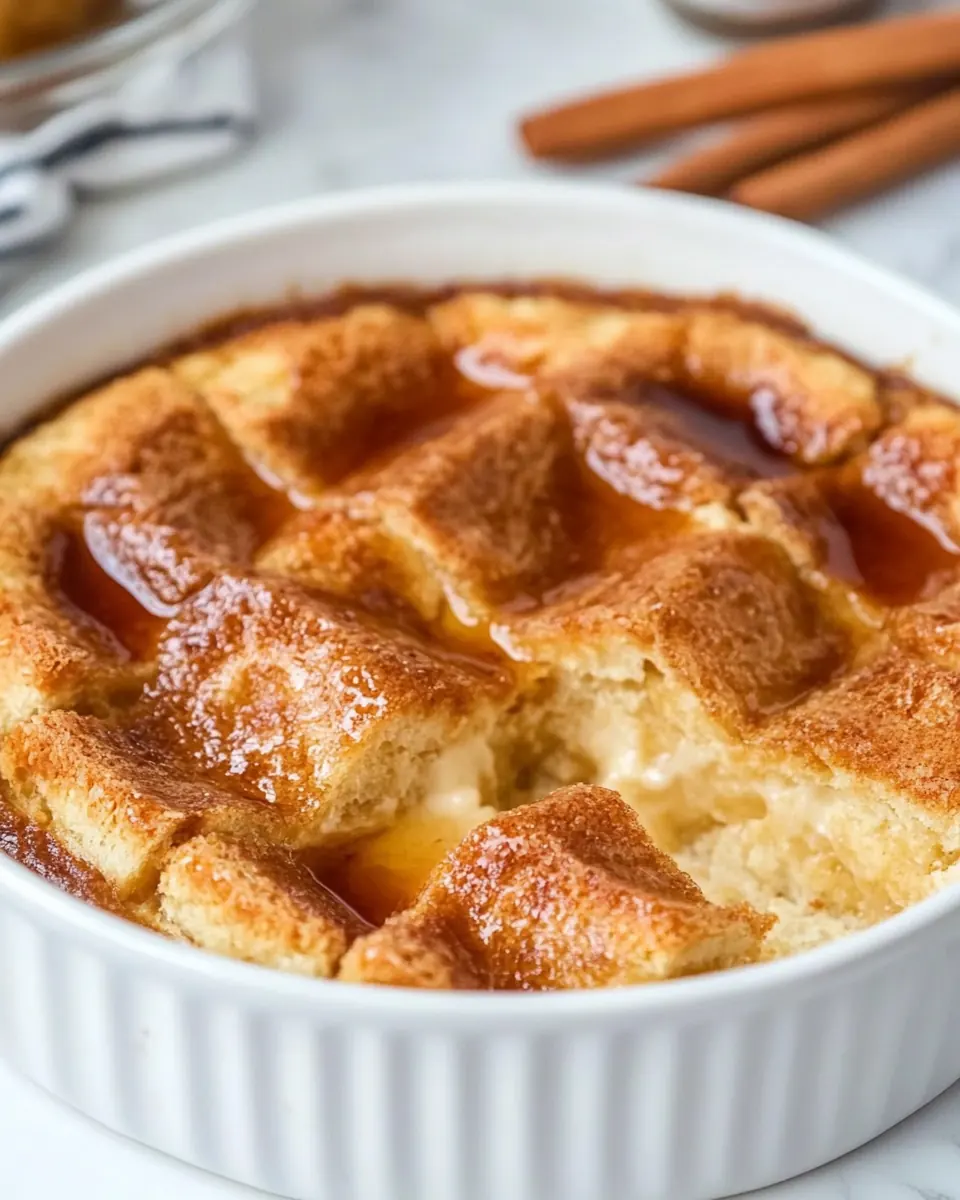
Preheat the oven to 350 degrees F. Butter a 1 1/2 quart baking dish. Take out a larger pan and be prepared to add about 1 inch of hot water in that dish when ready to bake. This will be the water bath for baking your bread pudding. The larger dish must be large enough to contain the baking dish you're using for the bread pudding.: As the oven warms, notice the gentle hum and the gradually warming kitchen air, a cue that the baking environment is stabilizing. A fully preheated oven ensures even rising and a consistent bake, preventing the custard from setting too slowly and becoming watery. A common mistake is starting with a cold oven, which can lengthen bake time and produce uneven texture, so wait until the temperature is reached before placing the dish inside.
In a small saucepan heat the milk and cream together. Set aside to cool slightly.: The sound of butter spreading and the sight of a glossy surface tell you the dish is prepared for a nonstick finish. The butter helps the pudding to release cleanly and adds a subtle layer of flavor around the edges. If you skip this, the edges can stick and tear when serving; so be generous with the butter and coat the sides well.
In a medium bowl, combine and whisk together the egg yolks, maple syrup, and salt. Very gradually whisk the milk mixture into the egg mixture. You don't want to scramble the eggs with hot milk, so do this slowly!: Lining up the water bath equipment gives you confidence during the transfer and prevents spills. The hot water will create steam and gentle, even heat around the baking dish, which produces a silky custard without curdling. A common trap is adding cold water, which can shock the custard and affect cooking times, so heat the water first.
In a separate bowl, use a hand mixer to beat the egg whites to stiff-peak stage (not dry). Fold the beaten egg whites into the egg custard mixture.: As the liquid warms you will see small bubbles at the edge and sense a sweet dairy aroma, a sign the mixture is ready to temper into eggs. Heating melds the flavors and helps the custard cook evenly. Avoid boiling, because overheated dairy can scald and impart a cooked flavor, so stop just before simmering.
Spread the bread cubes evenly in the prepared dish. Pour the egg custard mixture over the bread cubes and sprinkle nutmeg lightly on top. Place the baking dish in a larger pan filled with about 1 inch of hot water. You want enough water in the larger dish so the water comes up about halfway on the bread pudding baking dish when it's set into the water bath.: Allowing the warm dairy to cool for a short moment prevents scrambling when combined with eggs, and you will feel the tension ease as the mixture falls back in temperature. This pause preserves a smooth custard. Rushing this step risks scrambled eggs and a grainy texture, so be patient.
Bake 40 to 45 minutes, or until a knife inserted into the center comes out clean.: Whisk until the mixture is unified and slightly thickened; the glossy look of the yolks signals readiness. This base is where richness and flavor concentrate, so mix thoroughly. Under-whisking can leave pockets of yolk or uneven sweetness, so take a few extra strokes until smooth.
Very gradually whisk the milk mixture into the egg mixture: As you pour in the warm milk slowly while whisking, you will notice the mixture smoothing out and gaining a satiny sheen, which indicates proper tempering. Tempering prevents cooked bits of egg and yields a luxurious custard. The usual error is adding hot milk too quickly, which cooks the eggs, so go slowly and keep whisking.
Beat the egg whites to stiff peak stage: When the beaters come out with peaks that stand tall yet still look glossy, you have the right consistency; this will lighten the custard. The beaten whites trap air that creates a lighter mouthfeel after baking. Overbeating to dry peaks will cause the whites to break and weep, so stop when they look satiny and hold shape.
Fold the beaten egg whites into the egg custard mixture: Folding gently will keep the air in the whites while merging them with the denser custard, creating a tender lift. You should see soft swirls and a uniform color without streaks of white. Vigorous stirring will deflate the whipped whites and produce a denser pudding, so fold with a spatula using broad, gentle strokes.
Spread the bread cubes evenly in the prepared dish: Arrange the cubed bread so custard contact is uniform, and visually you'll want an even layer that allows soaking from all sides. Well distributed bread prevents soggy pockets and dry spots. Piling too many cubes in one area can block custard penetration, so loosen the cubes so liquid can reach every piece.
Pour the egg custard mixture over the bread cubes and sprinkle nutmeg lightly on top: As the custard soaks in you will notice the bread darken and soften, the aroma becoming warm and spiced from the nutmeg . The sprinkle adds fragrance and a subtle spice lift. A heavy hand with spice can overwhelm the maple notes, so use just a light dusting for balance.
Place the baking dish in a larger pan filled with about 1 inch of hot water: Setting the dish into the water bath equalizes heat and creates a tender, custardy texture, and you may see gentle steam rising from the water during the bake. The water should come roughly halfway up the sides of the baking dish, which ensures slow, even cooking. Too little water reduces the effect and can lead to curdling, while too much risks splashing into the pudding, so aim for the halfway mark.
Bake 40 to 45 minutes, or until a knife inserted into the center comes out clean: During baking you will see the top set to a light golden color and might hear faint bubbling at the edges, cues that the custard is nearing doneness. The knife test checks that the interior is set yet still moist; the center should feel slightly jiggly but not liquid. Overbaking dries the custard and makes it rubbery, so start checking near the lower end of the time range.