Preheat the oven to 350 degrees F. In a small bowl, mix together the cookie crumbs, sugar, salt and melted butter. Dump the crust mixture into a nine-inch (10-cup) springform pan and press evenly onto the bottom of the pan until packed tightly. Transfer to the oven to bake for 8 minutes. Remove from the oven and cool completely before adding the filling. Wrap the bottom of the spring form pan in a few sheets of foil and set aside.: You will notice the warm oven air carry a faint dry scent, indicating it is ready to gently bake the crust. Getting the oven temperature steady is important so the crust firms uniformly, avoiding soggy patches. A common mistake is rushing this step, which can lead to uneven baking.
To the bowl of a stand-up mixer, using a paddle attachment, add the cream cheese and goat cheese. Whip until smooth and fluffy, about 2 to 3 minutes. Next, mix in the sugar. With the machine on, add the eggs, one at a time, waiting until each egg is incorporated before adding the next one. Lastly, mix in the salt and vanilla extract.: The crumbs should feel evenly moistened and slightly glossy from the butter, with a cohesive texture when pressed between fingers. This binding step ensures the crust will set firmly and crisp up during baking. If the mixture seems dry, the crust may crumble when sliced, so add a touch more butter if needed.
In a small saucepan, add the cranberries, white granulated sugar, water, orange zest and salt. Cook over medium heat and simmer for about 5 minutes, until the cranberries become soft. Press the cranberries with a back of a spoon or spatula and cook for an additional minute until they’re softened. Pour the mixture through a medium-mesh sieve, pressing the cranberries to release any excess juice. The mixture should resemble a loose jam—it’ll thicken as it cools. Transfer to a squeeze bottle.: As you press, you should hear a light compacting sound and see the surface become smooth and even. A tightly packed crust prevents gaps and ensures clean slices. Press too lightly and the crust will fall apart when serving, which is an easy but avoidable mishap.
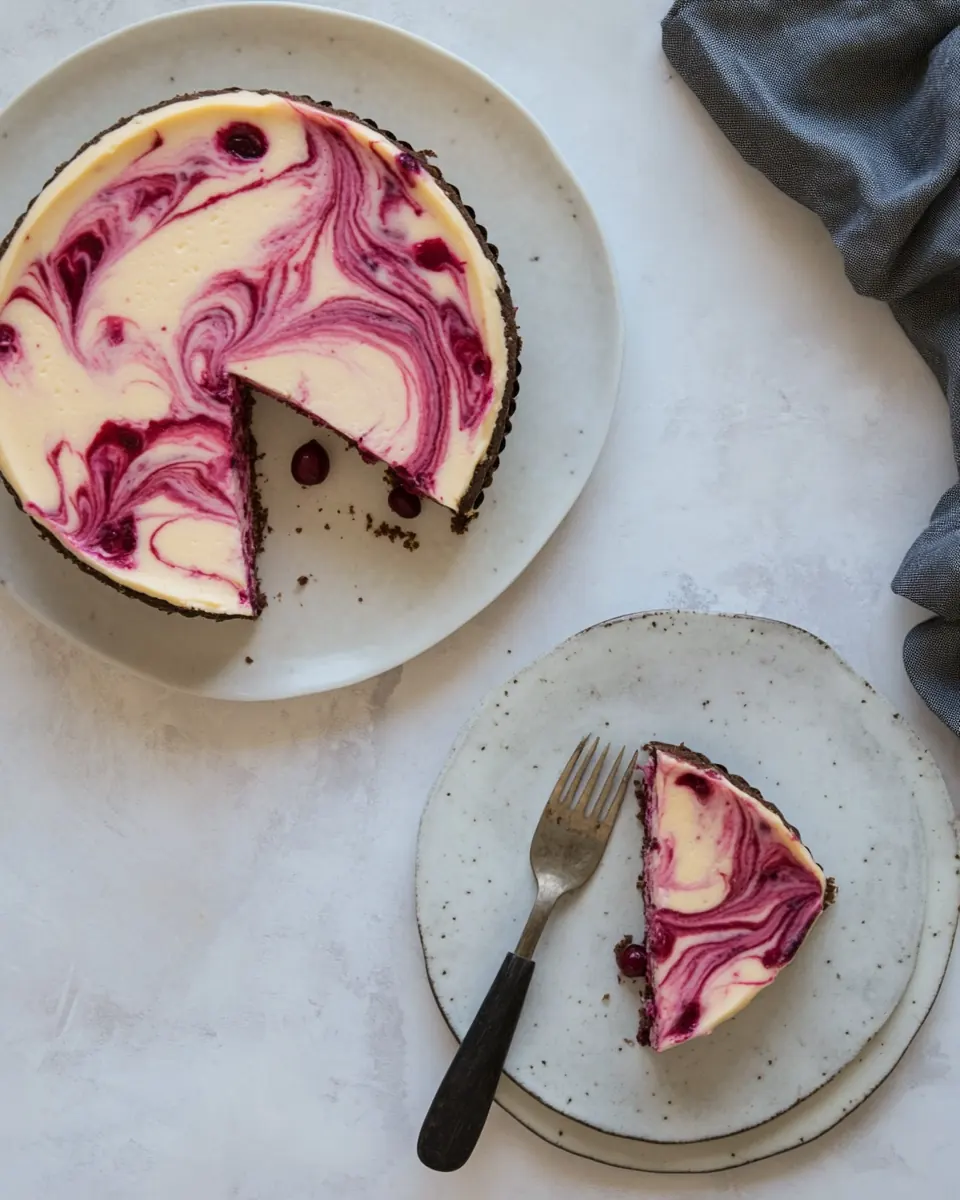
Pour the cream cheese mixture into the springform pan and smooth out the top with a spatula. Make sure it reaches the edge of the pan. Make little dollops of cranberry sauce all over the surface of the cream cheese. Take a skewer or popsicle stick and run it through the dollops creating a marbling effect. Place the springform pan in a roasting pan and transfer to the rack of the oven and fill up the roasting pan with about 2 inches of water. Bake for 40 to 45 minutes, until it looks set, yet it’s still a bit wobbly in the center. Place on a cooling rack for 30 minutes and then place it in the fridge to set for at least 3 hours.: During these minutes you will smell a toasty chocolate aroma as the butter and crumbs set. This brief bake helps the crust bind and develop stability. Overbaking can dry the crust, so watch the time closely.
Remove from the oven and cool completely before adding the filling: Cooling lets the crust firm up fully and prevents a soggy interface with the filling. You should feel the pan cool to the touch and notice the crust no longer steaming. If you add filling while the crust is hot, it can break down, creating a less distinct texture.
Wrap the bottom of the spring form pan in a few sheets of foil and set aside: Wrapping prevents water from seeping in during the water bath, and you may feel the foil slightly crinkle as you secure it. Proper wrapping keeps the cheesecake edges pristine. Skipping this can let water leak in and ruin the texture.
To the bowl of a stand-up mixer, using a paddle attachment, add the cream cheese and goat cheese: When the mixer runs, the cheeses will soften and smooth out, releasing a creamy, slightly tangy aroma. Properly softened cheeses incorporate more easily and yield a silkier filling. If your cheeses are cold, lumps will form, which is an easy trap to avoid by allowing them to come to room temperature.
Whip until smooth and fluffy, about 2 to 3 minutes: You will see the mixture lighten in color and texture, becoming airy and smooth. This aeration helps create the delicate custard like body. Overwhipping can incorporate too much air, which might lead to cracking, so stop when the texture is uniformly smooth.
Next, mix in the sugar: The sugar should dissolve into the cheeses, and you might feel the mixture become slightly more fluid. Properly dissolved sugar ensures a uniform sweetness and prevents graininess. If you rush without allowing dissolution, you may detect a sandy texture later.
With the machine on, add the eggs, one at a time, waiting until each egg is incorporated before adding the next one: As each egg blends in, the batter will soften and the surface will take on a glossy sheen. Adding eggs slowly maintains a stable emulsion and prevents curdling. Adding them too quickly can cause the mixture to split or become overly liquid, impacting the final texture.
Lastly, mix in the salt and vanilla extract: The vanilla scent will lift the filling and the salt will sharpen the flavors, creating depth. Stirring these in finishes the batter so it is ready to bake. Forgetting or under incorporating them can result in a flatter tasting cheesecake.
In a small saucepan, add the cranberries, white granulated sugar, water, orange zest and salt: As the pot warms, the cranberries will start to pop and release bright, fruity aromas accented by citrus oils. This simmer is where the compote gains its character. Too high a heat can cause the mixture to scorch, so keep it gentle.
Cook over medium heat and simmer for about 5 minutes, until the cranberries become soft: You will hear the light popping of berries and see their skins soften and collapse, releasing vivid red juices. This stage melts the fruit into a jam like texture that contrasts the filling. Cook too long and the mixture will become overly thick and less vibrant.
Press the cranberries with a back of a spoon or spatula and cook for an additional minute until they’re softened: Pressing releases every bit of juice, creating a loose, flavorful compote. The texture should be spreadable but not watery. If you press too roughly you can end up with too much liquid, so keep it controlled.
Pour the mixture through a medium-mesh sieve, pressing the cranberries to release any excess juice: Straining removes seeds and concentrates the jam, yielding a smooth sauce with intense flavor. Use a steady pressure to extract juices while leaving solids behind. Neglecting to strain can leave seeds and chunky bits that interrupt the marbling.
The mixture should resemble a loose jam—it’ll thicken as it cools: At this point the compote will cling to the spoon and show a glossy surface, promising deep fruit flavor once chilled. Allow it to cool to avoid bleeding too much into the filling. Pouring it in while hot may cause the filling to become thin where the compote mixes.
Transfer to a squeeze bottle: Using a bottle gives you control to place neat dollops across the filling, creating clean marbling later. The bottle should dispense smooth, even drops. If you skip this tool, you can use a spoon, but your marbling will be less precise.
Pour the cream cheese mixture into the springform pan and smooth out the top with a spatula: The filling will glisten and feel cool when spread evenly to the edge, creating a flawless canvas for the cranberry swirls. Smooth edges help with even baking and a neat slice. A rough surface can trap air and cause uneven setting.
Make little dollops of cranberry sauce all over the surface of the cream cheese: The bright red scoops should sit distinctly atop the pale filling, promising dramatic marbling. Place them thoughtfully to ensure pretty patterns later. If dollops are too close, the marbling can become muddled, so space them out evenly.
Take a skewer or popsicle stick and run it through the dollops creating a marbling effect: As you drag the skewer you will see vivid veins of cranberry weave through the filling, creating an appealing contrast. The motion should be swift and confident to form crisp lines. Over mixing will blend colors into an indistinct hue, losing the marbled look.
Place the springform pan in a roasting pan and transfer to the rack of the oven and fill up the roasting pan with about 2 inches of water: The water bath will steam gently, providing a humid environment that prevents cracks and encourages a silky texture. You should see soft steam rising from the roasting pan but not bubbling into the cheesecake. Forgetting the water bath often leads to cracked, dry edges.
Bake for 40 to 45 minutes, until it looks set, yet it’s still a bit wobbly in the center: During baking the surface will take on a light golden tint and the center will have a gentle jiggle, indicating the perfect custardy set. This careful bake yields a smooth, creamy interior. Overbaking will result in a dry, crumbly texture, so trust the wobble.
Place on a cooling rack for 30 minutes and then place it in the fridge to set for at least 3 hours: As it cools the filling will settle and the flavors will harmonize, and chilling solidifies the texture for clean slices. You should feel the pan cool and notice the aroma calm into a more integrated scent. Skipping sufficient chill time can lead to a loose center and messy slices.