Preheat the oven to 350 degrees Fahrenheit. Line a 9×13-inch baking pan with parchment paper, spray with pan spray, and set aside.: Warm air fills the kitchen with a faint hint of anticipation, and you will notice a cozy, anticipatory warmth when the oven reaches temperature. Preheating ensures even lift and consistent browning, which are critical to getting a golden edge and a tender middle. A misstep would be skipping preheat, which can cause uneven bake and a gummy center, so always wait until the oven registers the correct temperature.
Pulse 3/4 cup of the 1 1/2 cups rolled oats, 3-4 times in the blender to break it up. In a medium bowl, whisk the pulsed oats, the remaining whole oats, 1 1/2 cups all-purpose flour, 1/2 teaspoon baking powder, 1 teaspoon baking soda, 3/4 teaspoon salt, and 1 1/4 teaspoon ground cinnamon. Set aside.: The parchment creates a nonstick barrier and makes removal clean, while a light spray helps the paper lay flat. You'll see the parchment smooth and gleam slightly where the spray touched it, making it easy to lift the cooled bars out. If you skip lining, the bars can stick and tear when you try to remove them, so prepare the pan carefully.
In a separate large bowl, beat together 1 cup unsalted butter, 3/4 cup brown sugar, and 1/2 cup granulated sugar until combined and fluffy.: As the oats pulse, a soft, toasty aroma emerges and the texture becomes finer, resembling coarse flour, which helps bind the dough without losing whole oat chew. This step creates contrast in texture between the processed and whole oats. Avoid overpulsing all the oats, or the mixture will become too fine and lose the rustic chew that makes these bars satisfying.
Add 2 large eggs, 1 tablespoon milk and 1 tablespoon vanilla extract and beat until pale and fluffy. Mix in the dry ingredients until just combined.: The dry mix will look uniform, with flecks of oats and cinnamon distributed evenly, and the whisking aerates the mixture slightly for a lighter crumb. This balance prevents pockets of leavening and ensures consistent flavor in each bite. If you do not whisk well, you may end up with uneven distribution of baking soda, causing irregular rise and flavor.
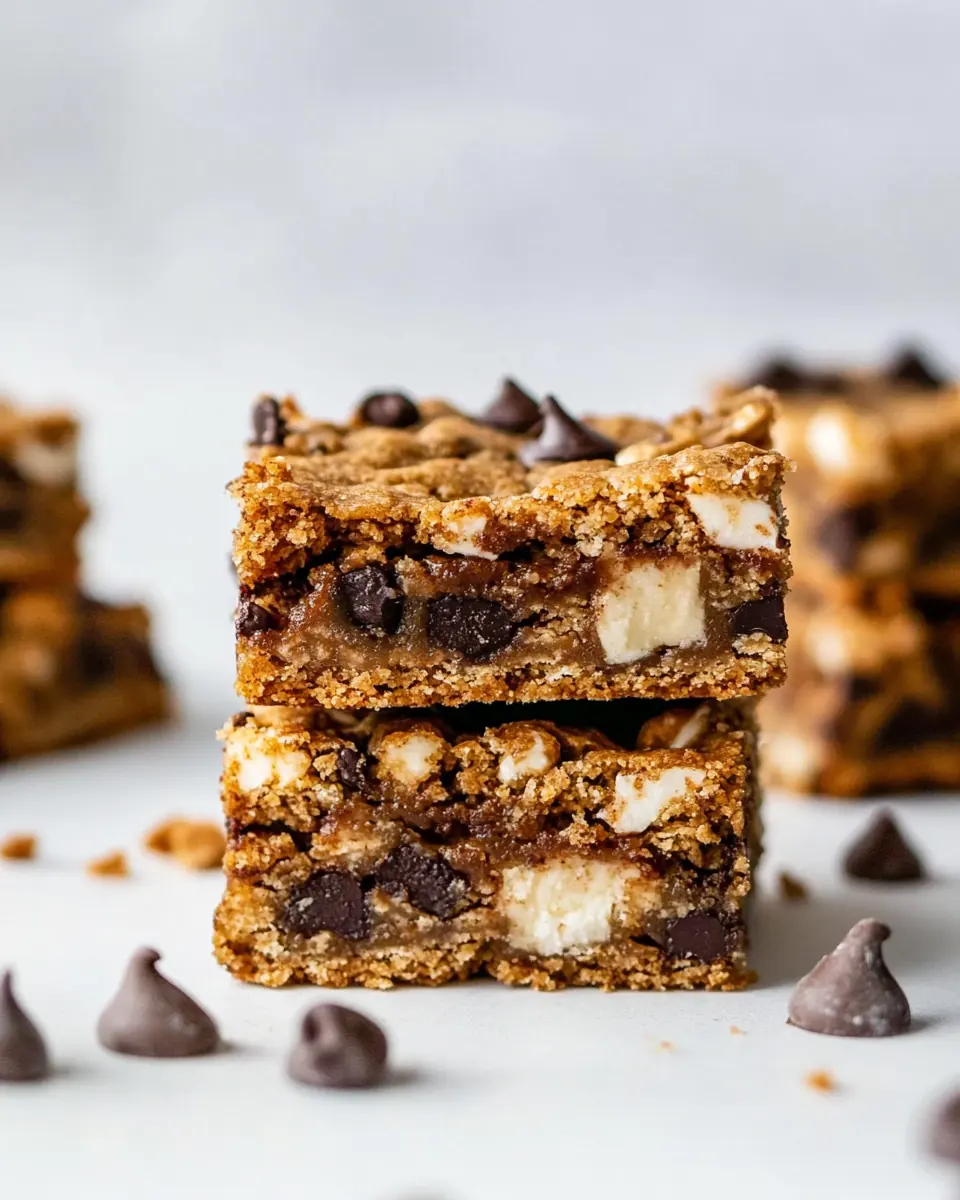
Fold in 1 cup white chocolate chips and 1 cup semi-sweet chocolate chips by hand until evenly distributed in the dough.: As you beat, the sugars dissolve slightly into the butter and the mixture lightens in color, creating a soft, ribbonlike texture that traps tiny air pockets. This aeration supports a tender crumb and a lightly crisp top. Using butter that is too cold will prevent proper creaming, resulting in dense bars, so let it reach room temperature before starting.
Spread the dough evenly in the prepared pan and bake for 25-30 minutes, until golden brown and a toothpick comes out clean from the center. If the top is turning too brown too quickly, carefully lay a sheet of nonstick foil right over the top of the pan (not touching the bars) to prevent further browning.: The batter will become silkier and slightly glossy, and the eggs bring structure and moisture while vanilla rounds the flavor. You should see the mixture lighten and increase a bit in volume, which helps the final texture. If you add cold eggs, the butter may seize and the mixture can look curdled, so ensure eggs are at room temperature.
Allow the cookie bars to cool completely before removing them from the pan and cutting them into pieces.: The dough will transform from glossy batter into a thicker, slightly sticky mass with visible flecks of oats and cinnamon. Mixing just until combined preserves tenderness and avoids developing excess gluten, which would toughen the bars. Overmixing is the common mistake here, and it will produce a tougher, less tender bar, so stop once you have no streaks of flour.
Fold in 1 cup white chocolate chips and 1 cup semi-sweet chocolate chips by hand until evenly distributed in the dough: Folding by hand preserves the batter's air and ensures the chips remain intact and distributed, giving you melty pockets of chocolate in the bake. You will see the chips dot the dough and hear a soft thud as your spatula moves through the mixture. Using a mixer at this stage can break the chips and overwork the dough, so fold gently.
Spread the dough evenly in the prepared pan and bake for 25 to 30 minutes, until golden brown and a toothpick comes out clean from the center: As the pan bakes, the kitchen fills with a toasty, buttery aroma and the edges will take on a warm golden hue while the center firms up. A toothpick inserted into the center should come out clean or with a few moist crumbs, indicating proper bake. If the top browns too fast, tent with foil to prevent overbrowning, because continuing to bake with a dark top can leave the interior dry before the center sets.
If the top is turning too brown too quickly, carefully lay a sheet of nonstick foil right over the top of the pan (not touching the bars) to prevent further browning: The foil will deflect direct heat, allowing the interior to finish without burning the surface, which is especially helpful in hot spots of older ovens. You will notice the aroma deepen but the color stop progressing, a clear sign the foil is doing its job. Avoid pressing the foil onto the surface, as contact can mar the finish and cause sticking.
Allow the cookie bars to cool completely before removing them from the pan and cutting them into pieces: Cooling solidifies the crumb and melted chocolate, making clean slices possible, and the bars will keep their shape better after they reach room temperature. You will see the sheen on the chocolate dull as it sets, and the bars will release from the parchment cleanly. Cutting too soon can lead to squashed, gooey pieces that do not slice well, so exercise patience for the best presentation.