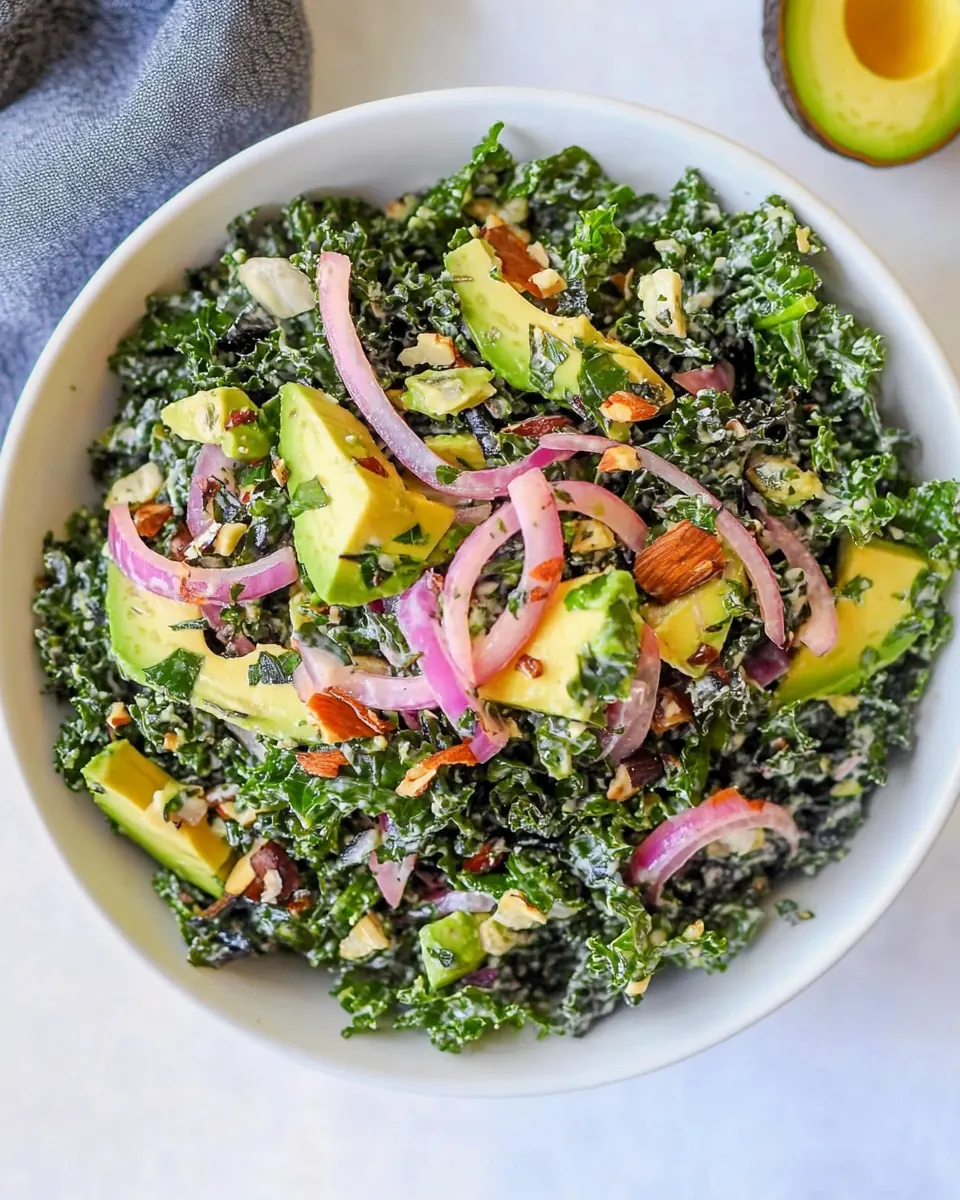
Wash the kale leaves and pat them dry. Remove the leaves from the stems and finely chop the leaves. You can save the stems for smoothies or feed them to your dog! Place the kale leaves in a large serving bowl and add half the lemon juice. Massage the kale leaves (taking large amounts in your palms as though you're ringing out a dish towel) until they begin to wilt and soften, about 2 to 3 minutes. Allow the leaves to sit 10 minutes to soften further.: Your hands will notice the initial coarse texture as you rinse and shake away grit, and the sound of water running off the leaves is reassuring. Drying with a towel or salad spinner prevents a watery dressing, which can dilute flavor, and removing stems ensures a tender finished bite. One common mistake is leaving the leaves wet, which makes the dressing slide off rather than coat, so dry thoroughly before chopping. When chopping, aim for even ribbons so the lemon and oil distribute uniformly, and discard any yellowed patches for the best color and flavor.
In a small bowl, whisk together the remaining lemon juice, olive oil, and sea salt. Pour dressing over the salad. Add the diced avocado, pickled red onions, and sunflower seeds, and toss everything together until well combined. Serve alongside your favorite entree, and enjoy!: When you pour the first half of the lemon juice over the chopped kale , you will hear a faint sizzle as acid meets green, and you may smell bright citrus blossom. The acid begins to relax the cell walls, which is why we start with a small portion early on. Avoid adding too much liquid at once, as the leaves can become limp instead of pleasantly tender. A common oversight is skipping this step, which results in chewier leaves instead of soft, silkier ones.
Massage the kale leaves taking large amounts in your palms as though you're ringing out a dish towel until they begin to wilt and soften, about 2 to 3 minutes.: The massage technique transforms the mouthfeel, and you will feel the leaves wilt under your palms as their structure breaks down. The aroma shifts from raw green to a deeper, almost nutty note. Why this matters, the tenderized leaves better absorb the dressing and are more pleasing to eat. A typical mistake is massaging too briefly, leaving the leaves resistant and fibrous, so persist until they visibly soften and darken in color.
Allow the leaves to sit 10 minutes to soften further.: During this rest, the lemon juice continues to mellow the fibers and the leaves relax into a silky texture. You'll notice the color deepen to a glossy emerald, and the salad becomes less loud on the palate. This pause also gives you time to prepare other components. Avoid skipping the wait, as the immediate texture will be firmer and less integrated if you toss right away.
In a small bowl whisk together the remaining lemon juice olive oil and sea salt.: The whisking will create a harmonized dressing with a sheen that clings to the leaves, and you will smell a bright citrus top note balanced by the oil's fruitiness. Emulsifying by whisking helps the dressing coat rather than pool, creating a balanced bite in every forkful. Over seasoning or under whisking are common issues; taste and adjust the salt or oil so the dressing is lively but not sharp.
Pour dressing over the salad.: As the dressing hits the kale , the leaves will glisten and a subtle perfume of lemon will rise. Tossing gently ensures even coverage, and you should see the leaves take on a light sheen rather than being drenched. A mistake to avoid is using too much dressing, which can mask other flavors and make the salad heavy; add in stages and stop when the leaves look glossy and supported by the oil.
Add the diced avocado pickled red onions and sunflower seeds and toss everything together until well combined.: At this stage, textures converge, and you will notice the creamy avocado yielding against the crisp sunflower seeds and the tangy pop of the pickled red onions . Toss gently to preserve the cubed shape of the avocado and keep the seeds crunchy. One common pitfall is overmixing, which bruises the avocado and turns the salad mushy, so fold with care until components are evenly distributed.
Serve alongside your favorite entree and enjoy!: When plated, the salad should present a mosaic of deep green, pink, and pale green from the avocado , and the seeds will catch light. You will taste the fresh lemon, silky oil, and a tangy echo from the pickled onions. If you notice a lack of acidity or salt, a tiny finishing squeeze of lemon juice or a pinch of sea salt can lift the dish. A typical error is serving the salad too cold after refrigeration which can mute flavors; serve at cool room temperature for the best taste.