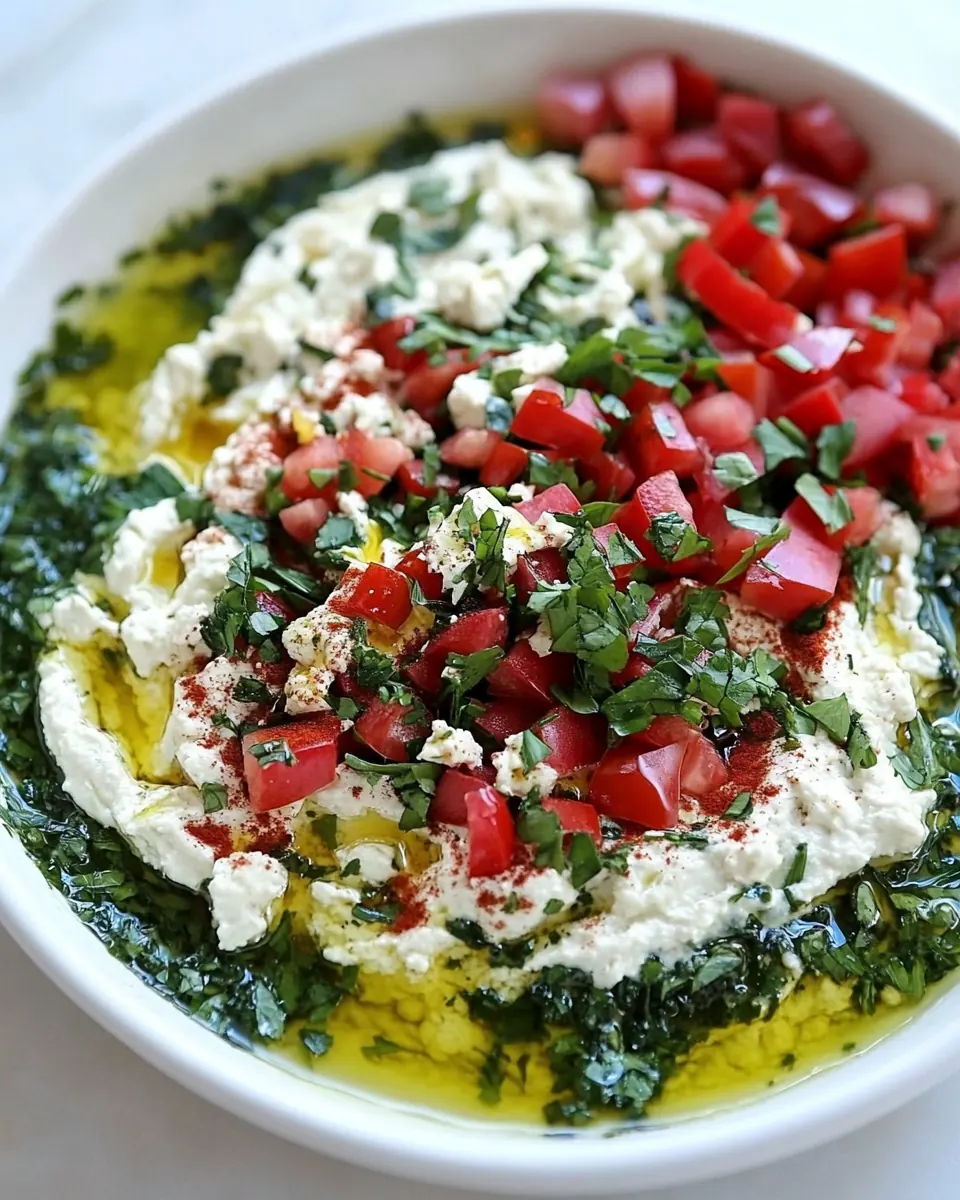
Spread plain greek yogurt over a shallow serving platter or dish. Sprinkle with salt and pepper and using the back of a spoon, swirl seasonings into yogurt.: The first sensory cue is cool and thick, the surface smooth as you spoon it into a shallow platter. Use a spoon or offset spatula to create an even bed, leaving enough rim so toppings sit visibly on top. This presentation matters because it exposes layers, creating contrast. A common mistake is packing the yogurt too densely, which hides toppings; keep it spread but not compressed.
Top with olives, chopped roasted red peppers, feta cheese and parsley. Squeeze lemon juice over entire thing.: As you sprinkle salt and freshly ground pepper, you ll notice a faint mineral scent that starts to cut the yogurt s tang. When you use the back of a spoon to gently swirl, it is not to mash, but to incorporate the seasoning distribution so every bite is balanced. The sound here is soft, a faint scraping, and the visual cue is a marbled surface. Avoid over stirring, which can thin the texture.
Sprinkle with lemon zest, drizzle with olive oil and top with more salt and pepper. Serve alongside pita chips.: Once the base is set, add the toppings so they sit like a mosaic. The olives should glint with oil, the roasted red pepper should show deep red streaks, the crumbled feta cheese will look like snowy bits, and the chopped parsley gives green flecks. This is where texture interplay happens, and you want each element to be distinct. A common error is piling everything in a clump, which makes scooping uneven; distribute in small clusters so each scoop gets variety.
Squeeze lemon juice over entire thing: As you squeeze fresh lemon, the aroma bursts forward with citrus oils that lift the bowl. The juice will bead across ingredients and then sink slightly into the yogurt, brightening every component. This is the acid that balances the salt and oil. Too much juice can overpower the yogurt s creaminess, so start light and taste before adding more.
Sprinkle with lemon zest drizzle with olive oil and top with more salt and pepper: Finishing touches are sensory gold. Lemon zest releases tiny fragrant oils that perfume the dip, while a ribbon of olive oil adds sheen and richness that carries flavors on the palate. A final pinch of salt and a turn of pepper sharpens the profile, but go sparingly because the feta cheese and olives already contribute salt. Visually, this step makes the dish look composed and inviting; avoid drowning it in oil which can separate the mouthfeel.
Serve alongside pita chips: The last act is the contrast between the creamy bowl and crisp pita chips . When guests scoop, you should hear a pleasant crunch and see a generous coating of toppings on each chip. If the chips are too flimsy they will fold and make serving messy, so choose sturdy chips or slightly toast them beforehand. This finishing step is about texture and balance, ensuring each bite is both crunchy and lush.