In a shallow plate whisk together all the marinade ingredients. Add the chicken breasts and toss them around making sure they are fully covered in the marinade. Cover with plastic wrap and refrigerate for about 30 minutes to up to 4 hours.: The aroma of olive oil , zesty lemon juice , and dried herbs should be bright and herbaceous, which indicates a well blended marinade. As you whisk, notice the glossy sheen forming on the surface, and the way the herbs rehydrate slightly when combined with the liquid; that helps distribute flavor deeply into the chicken . One common mistake is under-mixing, which leaves pockets of herb that will toast unevenly on the grill. If the mixture smells flat, add a touch more lemon juice for lift.
Heat up your grill so that it's around 400℉.: You should feel the marinade coat the chicken as you move it, and the surface will look slick and slightly glossy. Ensuring full coverage allows the acids and oils to penetrate surface fibers, which helps the chicken remain juicy and flavorful after grilling. Avoid crowding the plate, because overlapping pieces will not marinate evenly. If you spot dry patches, redistribute the marinade with your hands or a spoon.
In the mean time whisk all the dressing ingredients together in a small bowl and set aside.: As the chicken rests in the fridge, the flavors will meld and the acidity will tenderize the meat. You should notice a subtle aroma coming from the container when you open it after marinating, which signals good infusion. Do not over-marinate for very long if your marinade is highly acidic, as the texture can become mushy. A common pitfall is forgetting the chicken in the fridge, so set a timer if you need to.
In a larger bowl toss the lettuce, cucumber, red onion, bell pepper, tomatoes, and olives together.: A properly heated grill will produce a satisfying sizzle and create those desirable char marks on the chicken . When you flick water onto the grate, it should dance and evaporate quickly. Preheating ensures a quick sear that locks juices inside; a cool grill will lead to sticking and longer cook times. Use a grill thermometer to confirm temperature rather than guessing.
Grill the chicken on both sides, about 5 minutes per side or until no longer pink and is cooked through. Discard remaining marinade.: The dressing should smell bright and herbaceous, and the oil will emulsify slightly with the lemon juice to create a glossy coating. Taste and adjust salt and pepper, keeping in mind the Kalamata olives and feta cheese will add saltiness. A common mistake is over-salting early; hold some seasoning back until you toss the salad.
Let the chicken cool for about 5 minutes before slicing it into 1/2 inch slices.: When tossed, the vegetables should look vibrant and evenly distributed, and you will hear a light rustle of the leaves and a soft thud from chopped vegetables. Tossing aerates the salad and ensures every bite gets a variety of textures. Avoid over-handling which bruises delicate ingredients. If the lettuce looks limp, it may need more thorough drying before assembling.
Drizzle the prepared dressing over the salad and toss well. Add the crumbled feta to the salad and mix.: You should hear a steady sizzle and see clear grill marks forming, with juices running clear when the chicken is nearing doneness. Cooking to the right internal temperature keeps the meat juicy while achieving a pleasant char that adds smoky complexity. A frequent error is flipping too often, which prevents proper searing. Use an instant read thermometer to ensure doneness.
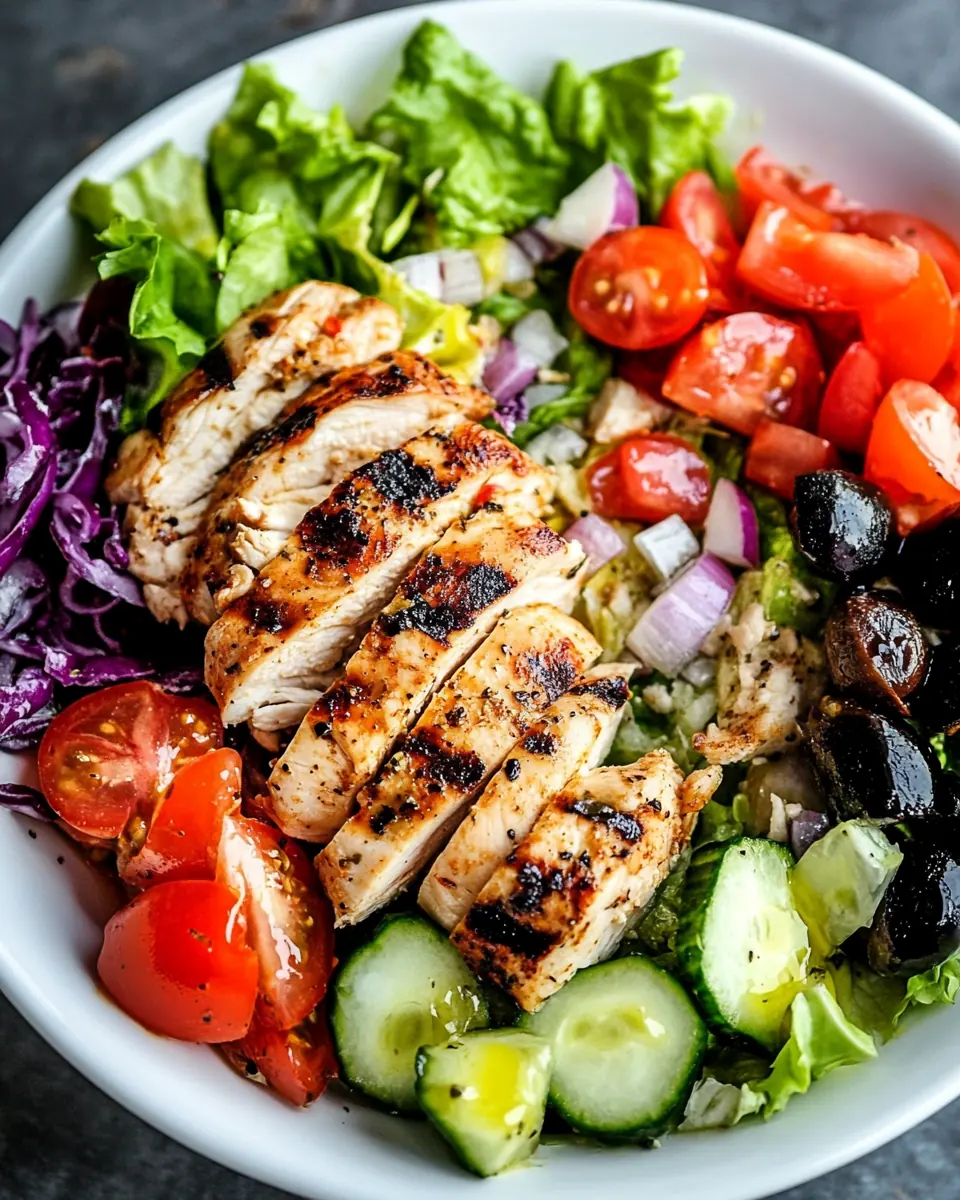
Serve with the sliced chicken breast over the salad and avocado slices. Other optional sides include hummus and pita chips.: The used marinade can harbor raw juices, so getting rid of it prevents cross contamination. The grill will have already captured the marinade flavor on the chicken , so there is no loss in tossing it. A common oversight is reserving the marinade for basting without cooking it first, which is unsafe. If you want to use it as a sauce, bring it to a rolling boil for several minutes.
Let the chicken cool for about 5 minutes before slicing it into 1/2 inch slices: Allowing the chicken to rest lets juices redistribute, so the slices stay moist rather than leaking on the plate. The surface will be slightly warm to the touch, and the flesh should be firm but yielding. Slicing too early will cause juices to run out and dry the meat. Use a sharp knife and slice against the grain for the best tenderness.
Drizzle the prepared dressing over the salad and toss well: As you toss, the dressing should cling to leaves and vegetables, creating a glossy, even coating. Tossing brings the flavors together, making each bite balanced between acid, oil, and salt. Avoid drowning the salad with dressing; you want brightness, not sogginess. If the salad tastes flat, add a splash more lemon juice .
Add the crumbled feta to the salad and mix: The crumbled feta cheese will add creamy, tangy pockets throughout the tossed greens, enhancing savory depth. Mix gently so the cheese distributes without turning to mush. Overmixing can break the crumbles into powder, losing textural contrast. Taste and adjust seasoning after adding the feta cheese .
Serve with the sliced chicken breast over the salad and avocado slices: Placing the warm sliced chicken on top creates a striking presentation and allows the meat to mingle with the dressing slightly, warming the salad. The sliced avocado adds a rich, buttery counterpoint and smooth texture. A misstep is adding avocado too early, which can brown; add it just before serving for best color.
Other optional sides include hummus and pita chips: These sides add a snackable element and are traditional companions that extend the meal. Hummus offers creamy, savory richness, while pita chips give a satisfying crunch. Avoid placing them directly on the salad to prevent sogginess. If making hummus at home, keep it chilled until serving.