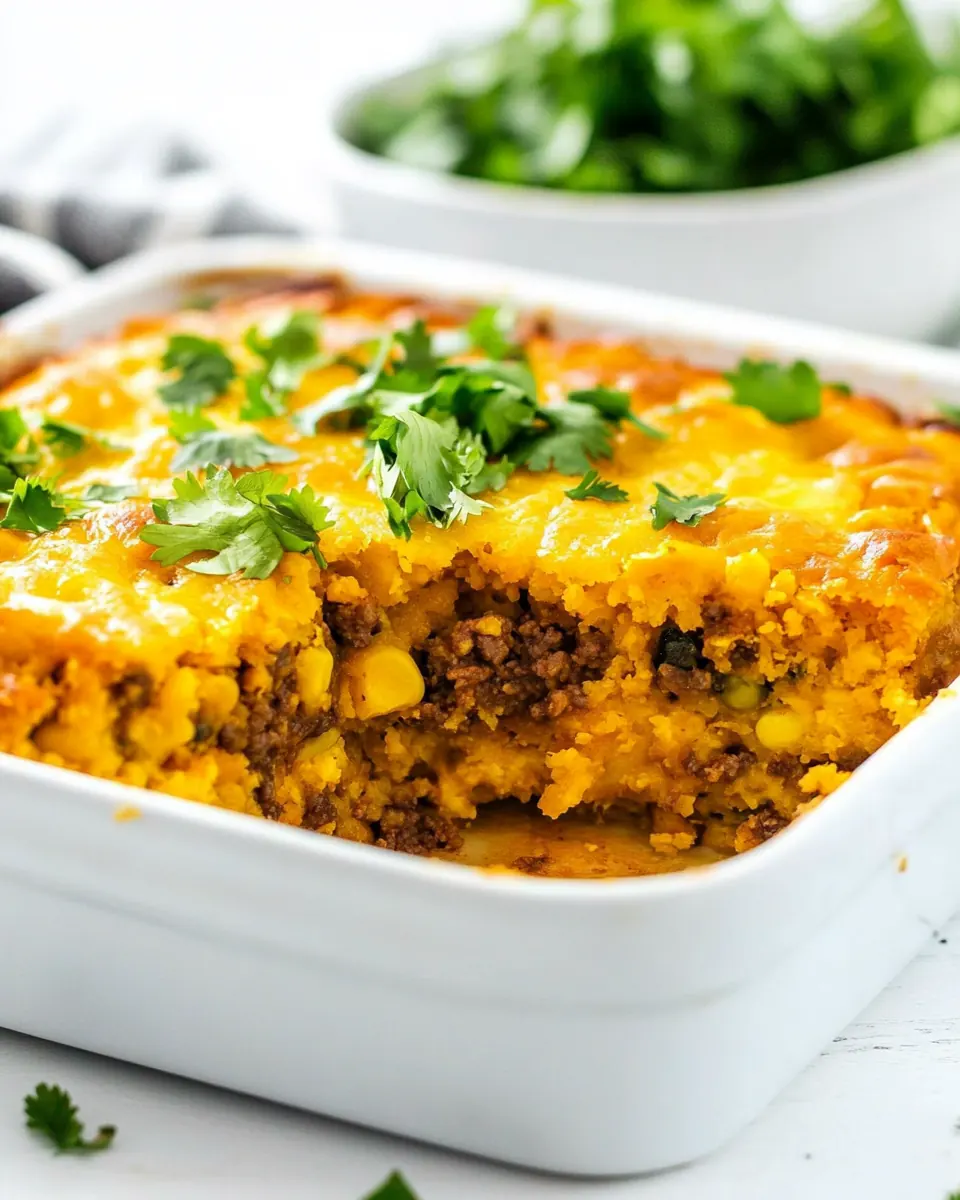
Preheat the oven to 350°F, and lightly coat a 9×13-inch baking pan with cooking spray.: The moment you smell the oven warming, it signals the start of transformation, and a preheated oven ensures even rise and proper browning. The warm air helps the cornbread set correctly so that the top achieves a nicely colored crust while the interior stays tender. If you skip preheating you risk uneven baking, which can lead to a soggy center. A common mistake is using too much cooking spray which can make the pan slick and cause the casserole to slide while cutting, so a light, even coating is best.
In a large skillet, cook the beef over medium-high heat until it browns.: You will hear the sound of the beef hitting the hot pan and beginning to sizzle, a fragrant cue that browning is happening. Browning creates complex flavors through Maillard reactions, giving the meat a deeper, more savory profile that carries through the entire casserole. Cook until most of the pink is gone and small brown bits form, stirring occasionally to break up large clumps. Avoid turning the heat too low, or the beef will steam instead of brown, producing less flavor and a softer texture than desired. A frequent error is overcrowding the skillet, which lowers the pan temperature and prevents proper browning.
Drain the beef, and add the taco seasoning per package directions.: The aroma intensifies when you add the seasoning, releasing toasted spices into the warm meat. Draining removes excess fat that could make the casserole greasy, while the seasoning infuses the beef with savory, smoky notes that define the filling. Follow the package instructions for added water if required so the seasonings dissolve and coat the meat evenly. If you leave too much liquid, the filling may become runny; if you add too little, the meat can taste dry. A common pitfall is under stirring after adding the seasoning, which can leave clumps of powder and unevenly flavored meat.
In a large bowl, prepare the corn muffin batter per package directions (but do not bake it yet). Stir in half of the cream-style corn and half of the regular corn.: Mixing the batter creates a smooth, slightly thick texture that will bake into tender cornbread. The batter should have a few small lumps but not be overbeaten, as excessive mixing can develop the batter and yield dense cornbread. Stir in half of the cream style corn and half of the regular corn to introduce moisture and little bursts of sweetness that keep the interior lush. If the batter looks too stiff, the added cream style corn softens it; if too loose, the cornbread may not hold its structure. A mistake to avoid is adding extra liquid beyond package directions, which can prevent proper setting.
Spread half of the cornbread batter in the prepared baking pan and top with taco meat.: As you spread the batter, it will look slightly glossy and pillowy, and forming an even layer is key for uniform baking. The ground beef provides a savory layer that contrasts with the sweet corn elements, making each bite balanced and interesting. Press the batter gently so it makes good contact with the pan and creates a stable base for the meat. If you spread unevenly, the casserole may bake with thin spots that overbrown while thicker areas remain undercooked. One common mistake is piling the meat into a single mound instead of distributing it evenly, which creates uneven slices.
Mix together the remaining cream-style corn and corn kernels and spread that over the meat.: This creamy corn mixture will sear slightly into the hot meat and act like a glue between layers, creating a moist, cohesive filling. The added moisture helps the cornbread top bake without drying out, and you will notice small glossy pockets where the cream style corn pools, which turn into tender bites after baking. If the corn seems watery, blot a little with a paper towel to prevent an overly loose center. A common slip up here is adding too much liquid, making the middle soggy rather than lush.
Sprinkle with half of the grated cheese and all of the green chilies.: The first layer of cheese melts into strings that bind to the corn and beef, while the green chilies offer bright, tangy heat that cuts through richness. When the cheese begins to warm it releases a savory aroma that signals the dish is close to being cohesive. Even distribution prevents pockets without cheese, which can taste dry compared to the rest of the casserole. Avoid using pre shredded cheese with anti clumping additives in high amounts, as it does not melt as smoothly as freshly shredded cheese.
Spread the remaining cornbread mixture on top.: The final batter layer should be smoothed gently to produce a uniform top that browns evenly. As it bakes, the top will puff slightly and set into a golden crust, while the inside remains moist. Smooth the surface with a spatula to eliminate thin edges that brown too quickly. A frequent mistake is pressing the batter down too firmly, which can compress air pockets and yield a denser outcome.
Sprinkle with the remaining cheese.: A final blanket of cheese on top will melt and form a slightly crisp, savory finish that invites serving. As the casserole nears doneness, the cheese will bubble and take on small browned spots that add texture and flavor contrast. This finishing touch also visually signals readiness, because the bubbling cheese looks celebratory. Overlooking this step can leave the top pale and less appealing, while adding too much can create a heavy, overly greasy crust.
Bake for 35 to 40 minutes, until the cornbread is baked through.: While baking, you will notice the edges pull slightly away from the pan and the top develop a golden color and a gentle crackle, signals the interior is set. The aroma of corn and seasoned meat will fill the kitchen, and a toothpick inserted in the center should come out mostly clean with maybe a few moist crumbs. Bake the full time to ensure the middle firms up and the flavors meld. Opening the oven too often lowers the temperature and can prevent even rise, which is a common error that leads to underbaked centers.
Let it sit for about 5 minutes. Then cut into squares to serve with any toppings you desire.: Resting allows steam to settle so the casserole slices cleanly, and the internal temperature evens out, making the texture more pleasant. You will notice the scent intensify as it cools slightly, and the melted cheese firms just enough for tidy squares. Cut with a sharp knife and use a spatula to lift pieces without breaking them. A common misstep is slicing immediately, which results in a runny center and messy portions.