Bring a medium pot of water to a boil. Salt liberally, add pasta and cook according to package instructions.: Steam and thunder fill the kitchen as the water reaches a rolling boil, and the aromatic lift of salted water primes the ditalini pasta to absorb flavor. Cooking the pasta to just al dente gives it a slight resistance so it stands up to tossing, and salting the water deeply seasons each piece from the inside out. If you under salt, the salad can taste flat, and if you overcook the ditalini pasta it becomes gluey, so test a piece a minute or two before the package time is up to catch the perfect texture. The visual cue is a pale but tender center when you bite into it, and the sound is the steady simmer rather than a wild boil.
Strain and rinse with cold water. Set aside.: A brisk rinse cools the ditalini pasta quickly to stop carryover cooking, which preserves firm texture and prevents the dressing from heating and breaking down. Use a colander and gentle shaking so the pasta drains but does not collapse, and spread it briefly on a tray if you want extra cooling. Over rinsing can wash away seasoning, so two to three seconds under running cold water is usually enough, and patting with a towel will remove excess moisture that can dilute the dressing.
Cut fresh corn off the cob and use the back of the knife to scrape out the milk.: When you slice kernels from the corn , the sound is a soft tearing as kernels pop free, revealing the sweet, starchy interior. Scraping the cob with the back of the knife extracts the milky residue, which carries concentrated corn flavor and deepens the overall taste. Be careful to keep fingers clear of the blade and maintain a firm cob grip for safety. If you leave too much of the cob flesh, you lose that extra sweet liquid, and if you cut too aggressively you can shred kernels into smaller pieces, losing the pleasant pop.
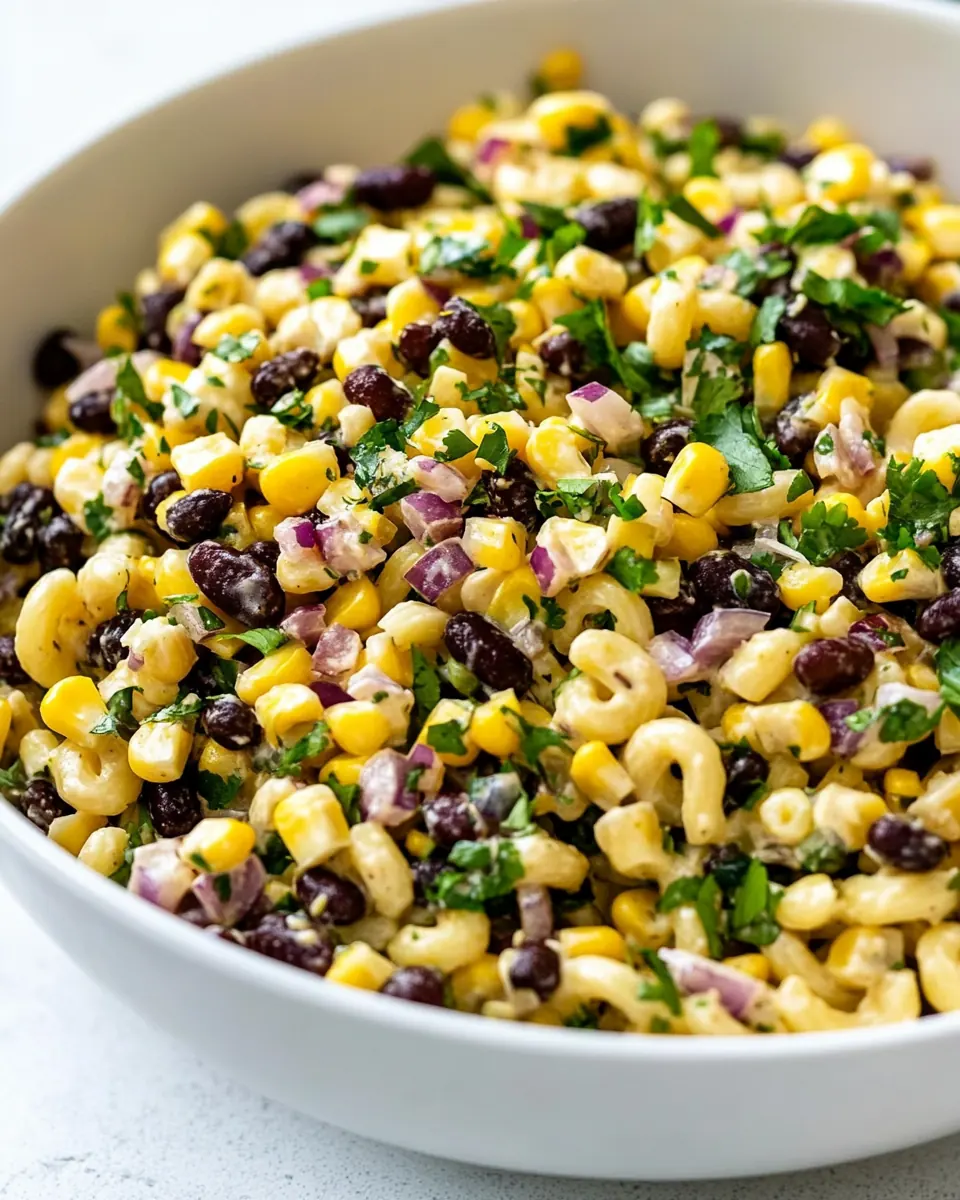
Add cooked pasta, corn, red onion, jalapeno, black beans, cilantro, and cojita cheese to a large bowl. Stir to combine.: At this stage aromas converge, and the visual contrast of yellow corn , black beans, and red onion makes the bowl lively. Toss gently so the cojita cheese disperses in small salt flecks rather than clumping, and ensure the jalapeno is distributed to avoid heat pockets. Overmixing can bruise delicate cilantro leaves, so fold ingredients together with a large spoon to keep textures intact. The rhythm of mixing is important: a few confident turns produce even distribution without crushing components.
Add all ingredients to a small bowl and whisk to combine.: This step creates the dressing, where the creamy base meets spice and acid, and the sound of whisking becomes steady and airy. Emulsifying the mayonnaise and sour cream with lime juice and spices is crucial so the dressing clings to the pasta rather than sliding off. If the dressing is too thick, a teaspoon or two of reserved pasta water can loosen it, and if it is too thin, a touch more mayonnaise will thicken without dulling flavor. A common mistake is not tasting as you go, so adjust salt and acid gradually to reach balance.
Add sauce to the main bowl of ingredients and stir well until all pasta and vegetables are coated with sauce.: The first stir should produce a glossy sheen as the dressing tucks into ditalini pasta hollows and clings to kernel surfaces. Stir thoroughly but gently, ensuring each piece is coated so every bite has flavor. If the mixture seems dry, add a splash of lime juice or a little reserved pasta water to bring it together. Avoid over stirring which can make the salad watery; aim for a cohesive but not soupy texture.
Serve at room temperature or chilled. Garnish with additional grated cojita and fresh chopped cilantro. Enjoy!: Serving temperature shifts the flavor balance, with chilled salad feeling brisk and room temperature emphasizing aromas and creaminess. Garnishing with extra grated cojita cheese and chopped cilantro gives a final pop of color and saltiness that elevates each bite. If refrigerated, allow the salad to sit at room temperature for fifteen to twenty minutes before serving so flavors unfurl. A common oversight is garnishing early, which can wilt herbs, so add final touches just before plating.