For the Crust: In a food processor place the flour, butter, egg yolks, sugar and salt. Pulse for about 1 minute until the mixture resembles oatmeal. Then add a teaspoon of cold water at a time, until the dough comes together in a ball. Take the dough out of the food processor, wrap it in plastic and refrigerate for about 30 minutes.: The first sensations you will notice are the coldness of the cold diced butter and the slight crunch of pulses as the mixture changes from floury to lumpy, like coarse oatmeal. The goal here is to break the butter into pea sized pieces so that during baking the pockets of fat steam and create tender layers, which produces that flaky, pleasant break when you bite into the crust. A light, rhythmic pulsing prevents overworking the dough, which would develop too much gluten and yield a tough crust. If the mixture feels too dry and fails to hold together when you press it between fingers, add the cold water one teaspoon at a time, feeling for a cohesive mass that still looks slightly shaggy. A common mistake is adding water too quickly or blending too long, resulting in a sticky, limp dough; if this happens, chill the dough for twenty to thirty minutes before rolling to firm up the butter again. After forming the dough, wrap it tightly in plastic so it does not absorb fridge odors and so the butter stays firm for easier rolling later.
Meanwhile, heat the oven to 400 degrees F. When the crust is chilled, roll it out on a floured work surface. Carefully, place the rolled crust on the bottom and the sides of a 10-11 inch tart pan. Fit the crust into the edges. Then trim off any excess.: When you roll chilled dough, you will feel it resist slightly and then loosen into a smooth, cool sheet; this tactile feedback tells you the butter is still properly cold, which helps with flakiness. Lightly dust the work surface with all purpose flour to prevent sticking, and turn the dough often to maintain an even thickness. As you press it into the tart pan, pay attention to the way it adheres to the sides, easing it gently into the corners rather than stretching, because stretching causes shrinkage during baking. Trim the edges neatly for a uniform rim, and use a fork to dock the bottom if you want extra steam release. A frequent error is stretching the dough to fit, which will pull it away from the pan as it bakes; if you notice gaps, press the dough back gently while cold so it holds its shape.
Cover the crust with parchment paper, then fill it with dried beans or baking weights. Bake the crust for 15 minutes. Without turning the oven off, remove the parchment paper and baking beans, and bake the crust for another 10 minutes. Remove from the oven and cool for at least 30 minutes.: As the crust bakes the smell of warm butter and toasted flour will begin to emerge, a reassuring cue that the structure is setting. The first blind bake with weights keeps the base from puffing and maintains the crisp edge, while the uncovered bake allows the surface to color slightly into a light golden brown. Keep an eye on the rim for even coloring; if the edges brown too fast, tent them with foil to prevent burning. After removing from the oven the crust will feel firm but still slightly warm, which is the ideal moment to let it cool fully so the curd will not overcook when added. Avoid the temptation to fill the crust while it is hot, because that can cause the filling to cook unevenly and develop a curdled texture.
For the Lemon Curd Filling: Reduce the oven temperature to 300 degrees F. In a mixing bowl, add the eggs and sugar. Whisk (or beat) for 5 minutes or until pale in color. Add the heavy cream, Meyer lemon juice and lemon zest. Whisk to incorporate.: The eggs and granulated sugar will transform visually as you whisk, moving from golden to a paler, frothy mixture that holds a ribbon when lifted; that change indicates air and emulsification which help create a smooth custard. Adding the heavy cream rounds out the texture and tempers the acidity from the Meyer lemon juice , while the Meyer lemon zest releases fragrant oils that perfume the mixture. Whisk thoroughly so the sugar dissolves and the ingredients form an even custard; any graininess in the sugar can cause a slightly sandy texture, so be patient. A key pitfall is adding cold cream or juice too quickly into the eggs without mixing, which could shock the eggs and create curdling; instead, add and whisk steadily to form a uniform batter.
Pour the filling into the cooled crust and bake for 30-35 minutes, or until just set when you jiggle the pan. Cool completely before removing from the pan.: While baking you will notice the filling puff slightly and the surface will gain a pale golden hue; give the pan a gentle jiggle, and the center should wobble like gelatin but not be liquid. This barely set stage results in a silky, sliceable curd once chilled, because residual heat finishes the gentle cooking without overcooking the eggs. Cool the tart on a rack so air circulates underneath; rushing this step by refrigerating while hot can cause condensation and a soggy crust. A typical mistake is overbaking, which creates a rubbery texture and cracks in the surface, so trust the jiggle cue rather than watching the clock alone.
For the Lemon Topping: Slice 2 Meyer lemons into ultra-thin rounds. Remove the seeds.: As you slice, aim for paper thin rounds that will become translucent once poached, using a sharp knife or mandoline for consistency. The thinness is important because thicker slices take much longer to candy and tend not to look as elegant atop the tart. Removing seeds prevents bitter pockets and keeps the slices visually clean. Be careful when using a mandoline to avoid nicks, and if a slice tears do not discard it, layer it artistically to maintain a beautiful finish.
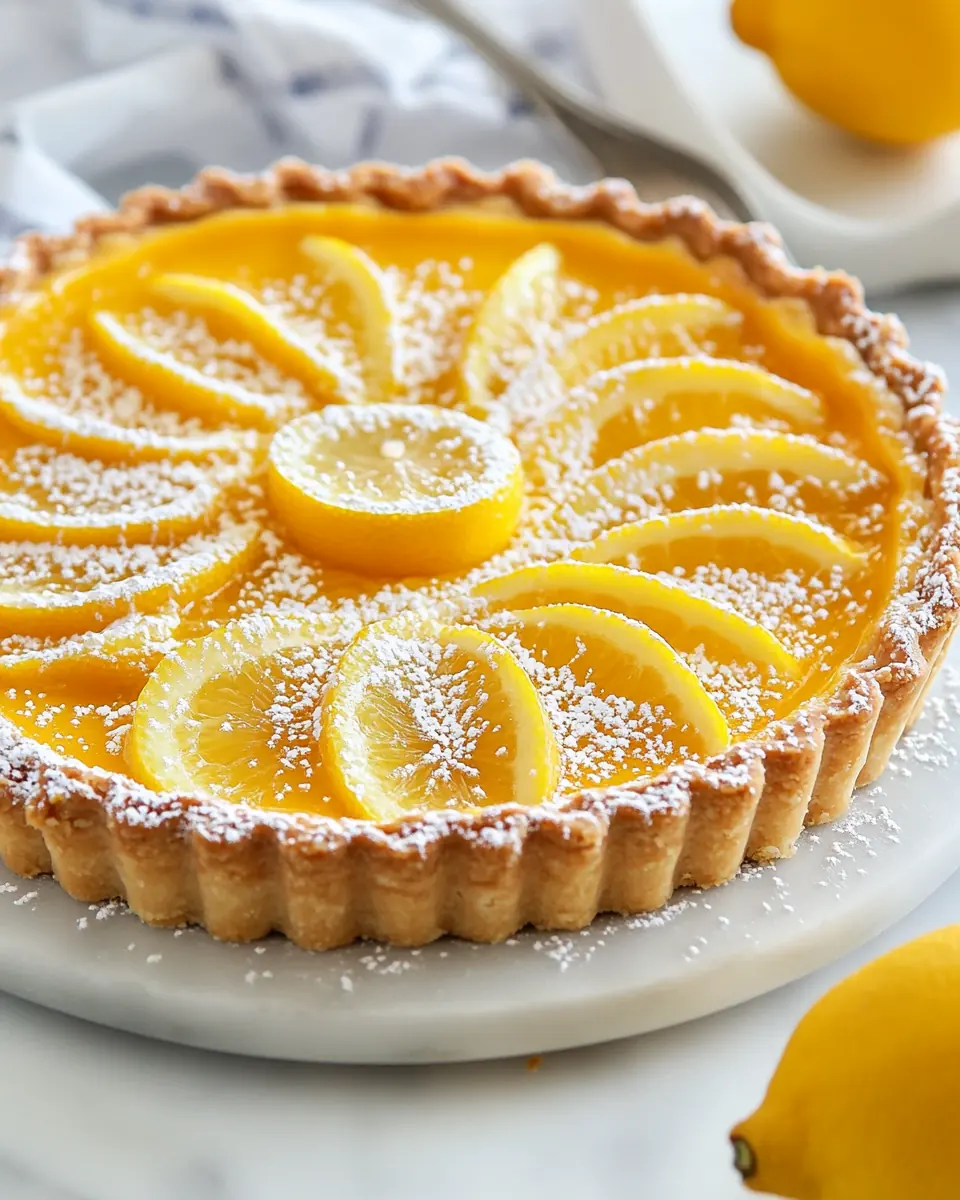
In a small saucepan add the sugar, water, and lemon slices. Stir to combine. Place over low heat. Simmer for 25-30 minutes or until the pulp looks transparent. Take the slices out and arrange them on top of the tart. Dust with some powdered sugar (optional), slice and enjoy!: As the lemons poach, the syrup will thicken slightly and the citrus flesh will go from opaque to glassy, giving you a clear visual indicator that candying is complete. Keep the heat low and steady so the sugar dissolves evenly and the slices do not caramelize, which would darken them and add a cooked flavor. Use a slotted spoon to lift slices gently, and let them drain briefly on paper before arranging them on the cooled tart so excess syrup does not pool. A common error is boiling too vigorously, which breaks apart the delicate rounds and leaves an overly concentrated syrup; maintain a gentle simmer for best results.
Dust with some powdered sugar optional slice and enjoy: The final sensory moment arrives when you dust the tart lightly with powdered sugar , adding just a whisper of sweetness and visual contrast against the glossy lemon rounds. Serve on a clean plate so each slice shows the neat edge between crisp crust and creamy filling, and notice the first bite where the buttery crust gives way to silky lemon curd and the candied lemon adds a slightly chewy brightness. If storing, cover the tart loosely and keep refrigerated to preserve texture, because the curd benefits from coolness and the candied lemons stay best when not exposed to warm air. Avoid leaving the tart at room temperature for extended hours to prevent texture degradation and to keep flavors fresh.