Preheat the oven to 375ºF.: You will notice a dry, warm air in the oven as it approaches temperature, and that initial heat jump is essential for forming the crisp edges while keeping the centers soft. Preheating gives a consistent environment so cookies start baking immediately, creating the right spread. A common mistake is putting dough into an oven that is not fully heated, which yields uneven browning and underbaked centers. If your oven runs hot, rotate the pan midway for even color.
With a wooden spoon, mix the sugars together in a large bowl and add the melted butter. Stir vigorously for about a minute or more. Mix the egg and vanilla in the measuring cup you used for the sugar and add to the mixture. Stir until the mix gathers a glossy sheen, about 1 more minute.: At this point, you should feel the sugars softening as they absorb the warm butter , and the aroma will be rich and buttery. Stirring vigorously helps dissolve some granules, producing a glossy texture, which contributes to an even, shiny dough. If you stir too little, the mixture can be grainy and not bind properly; stir until the sugars and butter meld into a smooth, satiny mass. Avoid overheating the butter before combining to protect the egg you'll add next.
Mix in the flour, milk powder, kosher salt, baking powder, and baking soda until just combined. Stir in the chocolate chips and mix until evenly distributed.: You should see the mixture lighten slightly and gain elasticity as the egg emulsifies with the sugared butter , giving the dough structure and moisture. The vanilla scent will lift the aroma, and the dough should feel cohesive and slightly tacky. The trap here is adding a cold egg , which can seize the warm butter ; ensure the egg is room temperature to promote smooth blending.
Use a #24 squeeze handle scoop to portion the dough (or lightly form it into balls about the size of a golf ball) and place them on a sheet pan lined with parchment paper about 2 to 3 inches apart. Sprinkle the tops of each cookie with some of the flaky sea salt (note that you may not need to use all of the 1/4 cup of salt).: As you continue to stir, watch for that glossy sheen which signals proper emulsification, and the mixture will become slightly more fluid and shiny. This sheen helps with even folding of the dry ingredients and encourages proper spreading during baking. Overbeating at this point can incorporate too much air, making cookies cakier, so stop when you see a consistent shine.
Bake for 9-11 minutes or until golden brown around the edges but still soft in the middle. The cookies will fall as they cool. Transfer to a cooling rack to cool completely.: After adding these dry elements, the mixture will thicken and become more dough like, with a soft, slightly sticky feel. You should stop when streaks of flour disappear, because overmixing develops gluten and yields tougher cookies. A common error is trying to make the dough perfectly uniform; a few small flour streaks are okay and will disappear with gentle folding.
Stir in the chocolate chips and mix until evenly distributed.: Folding in the chocolate chips gives the dough pockets of rich, molten goodness, and you will see chocolate peeking through the surface. Distribute them evenly so each cookie gets chocolate, but avoid vigorous mixing which can break chips into crumbs and overwork the dough. If you notice large clumps of chips, redistribute them with your hands to ensure even portions.
Use a #24 squeeze handle scoop to portion the dough (or lightly form it into balls about the size of a golf ball) and place them on a sheet pan lined with parchment paper about 2 to 3 inches apart.: As you portion, the dough should hold its shape, slightly domed and mottled with chocolate. Leaving space allows heat to circulate so they spread evenly and gain nicely browned edges. A frequent mistake is crowding the pan, causing cookies to merge and bake inconsistently. For best results, rotate pans if baking multiple sheets to maintain uniform color.
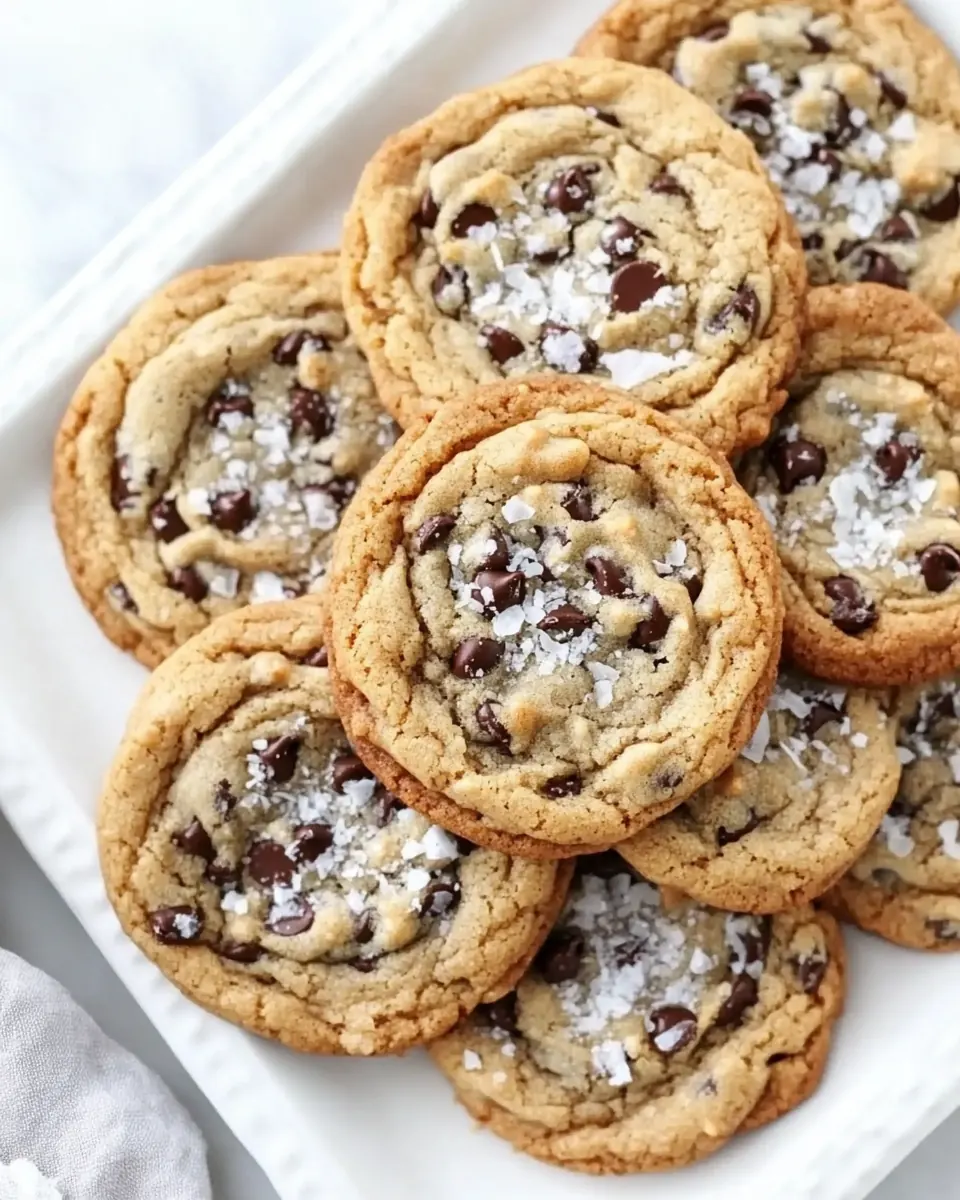
Sprinkle the tops of each cookie with some of the flaky sea salt (note that you may not need to use all of the 1/4 cup of salt).: The flakes should land delicately and glisten, creating visible crystals that will crisp slightly in the oven. This salt adds bright pops of flavor against the sweet dough. Heavy sprinkling can overwhelm the bite, so use a light, even dusting. If your flakes are large, press them gently so they adhere and do not blow off in the oven.
Bake for 9 to 11 minutes or until golden brown around the edges but still soft in the middle.: During baking you will notice the edges taking on a light amber color and the centers remaining glossy; that is the sign to remove them. The smell becomes rich and toasty, with chocolate and caramelizing sugars blending. Overbaking dries the centers and removes that tender contrast, so err on the side of underbaking slightly, as they finish setting while cooling on the rack.
The cookies will fall as they cool. Transfer to a cooling rack to cool completely.: After removing from the oven the cookies will gently deflate, creating that signature crinkled top, and the interior will set into a tender, slightly chewy crumb. Transferring to a rack lets air circulate and prevents sogginess from trapped steam. A common misstep is leaving them on a hot pan too long, which can overcook bottoms; move them after a few minutes once they hold their shape.