In the bowl of a stand mixer fitted with the paddle attachment, beat 1 cup (127 grams) flour, ? cup (67 grams) sugar, yeast, salt, 3/4 teaspoon (1.5 grams) cardamom, and 1/4 teaspoon ginger at low speed until combined.: Warm aromas of yeast and spices may be faint as you begin mixing, and the dry ingredients should form a uniform pale mixture without clumps. The low speed prevents flour from flying and allows the spices to distribute evenly. A common mistake is starting at too high a speed which can create airborne flour and uneven distribution. If you see a few clumps, stop and scrape down the bowl, then resume at low speed so everything integrates smoothly.
In a medium saucepan, heat milk, 1/4 cup (57 grams) butter, and oil over medium heat, stirring frequently, until butter is melted and an instant-read thermometer registers 120°F (49°C) to 130°F (54°C). Add warm milk mixture to flour mixture; beat at medium-low speed for 2 minutes, stopping to scrape sides of bowl. Add Milk Roux, eggs, and orange blossom water; beat at medium-high speed for 2 minutes. With mixer on low speed, gradually add 21/4 cups (286 grams) flour, beating just until combined.: As the milk heats, you'll notice steam rising and a gentle sweetened dairy scent building. Reaching the specified temperature ensures the liquid is warm enough to activate the yeast without killing it. When you add the warm milk, the dough will feel initially loose and tacky; beating for two minutes helps hydrate the flour. Avoid pouring in liquid that is too hot, which can kill the yeast and prevent a proper rise. If the mixture seems curdled, scrape and stir until it becomes cohesive again.
Switch to the dough hook attachment. Beat at medium-low speed until a soft, tacky dough forms, 6 to 10 minutes, stopping to scrape sides of bowl; add up to remaining 1/2 cup (64 grams) flour, 1 tablespoon (8 grams) at a time, if dough is too sticky. (Dough may still stick slightly to sides of bowl but should pass the windowpane tests see Notes.): At this stage the bowl will fill with a richer, creamier scent from the roux and orange blossom. Beating at medium-high speed incorporates air and develops a softer texture, producing a glossy, slightly elastic mixture. Overbeating can cause excessive gluten tightening, making the dough tougher later, so watch the texture. If the mixture appears separated, stop and scrape the bowl to recombine before continuing.
Add candied orange and anise seeds to dough, and beat at low speed just until combined. Turn out dough onto a very lightly floured surface; knead 6 to 10 times to help disperse candied orange and anise seeds.: The dough will shift from wet batter to a shaggy mass as you add more flour. Adding the flour gradually prevents lumps and helps you judge the final hydration. A typical error is dumping all the flour in at once, which makes it harder for the mixer to incorporate and can lead to dry pockets. Stop when you see a cohesive, somewhat sticky dough that cleans the sides of the bowl.
Lightly spray a large bowl with cooking spray. Place dough in bowl, turning to grease top. Cover and let rise in a warm, draft-free place (75°F/24°C) until doubled in size, 40 minutes to 1 hour.: The mixer will create a smooth, elastic dough that pulls away slightly from the bowl. You should feel a springy resistance when you press the dough. The sound changes to a lower, rhythmic thump as gluten develops. If the dough is overly sticky after several minutes, add flour sparingly to avoid a dry loaf. A common pitfall is over kneading, which can result in a tight crumb; check for the windowpane test to confirm readiness.
Punch down dough; cover and let stand for 5 minutes. Turn out dough onto a clean surface; divide into 10 portions (about 96 grams each), and shape into balls, pinching seams closed as needed. Cover with plastic wrap, and let stand for 10 minutes.: At low speed the candied orange and anise will distribute without being pulverized, leaving little citrus pockets and flecks of seeds across the dough. You want even distribution for consistent flavor, but avoid overmixing which might break down the candied fruit into undifferentiated bits. If the fruit clumps, turn the dough out and fold gently by hand to spread it evenly.
Position oven rack in upper third of oven. Preheat oven to 375°F (190°C). Line 2 light-colored baking sheets with parchment paper.: The tactile feedback here is important, as you will feel the dough relax and smooth slightly. Kneading a limited number of times helps spread inclusions without overworking the gluten. The surface should feel slightly tacky but manageable. Avoid adding too much extra flour while kneading, which will make the final loaf dry and dense. If the dough tears easily, let it rest five to ten minutes and try again.
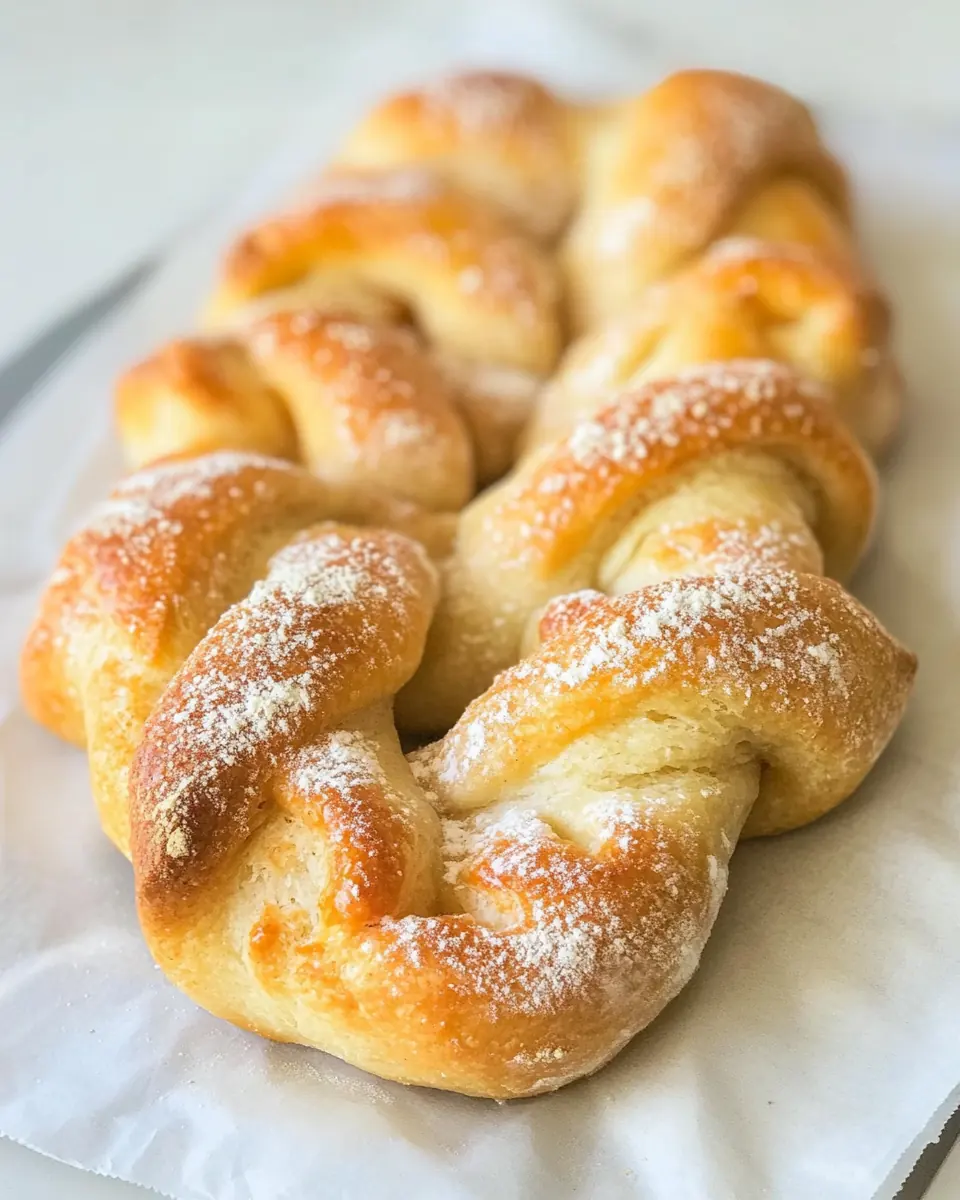
Flatten and shape each ball into a 4×4-inch semicircular shape. With flat side closest to you, use a plastic bench scraper, make a 21/2-inch-long cut crosswise in center of semicircle. Make a 21/2-inch-long cut on each side of first cut, angled toward center of flat portion of semicircle, leaving about 1/4 to 1/2 inch of dough intact on each side. Along rounded side of semicircle, make 1-inch cuts evenly spaced to side of each original cut. Stretch dough gently to open cuts; place on prepared pans. Cover and let rise in a warm, draft-free place (75°F/24°C) until dough is puffed and holds an indentation when poked, 25 to 30 minutes.: During proofing you will see the dough visibly expand and feel airy when you press it gently. The surface will be smooth and slightly domed. The aroma of yeast, butter, and spices becomes pronounced. If the dough rises too quickly, it can overproof and collapse, so monitor the time and room temperature. If your kitchen is cooler than 75°F (24°C), expect a longer rise rather than a shorter one.
Bake, one batch at a time, until lightly golden, 8 to 10 minutes.: After punching down, the dough will deflate and become easier to portion, with an even crumb texture. Resting for five minutes relaxes the gluten, making shaping straightforward. When you shape balls, pinch seams tightly so they hold shape while rising. A frequent mistake is leaving loose seams which can open during baking and distort the intended shape.
In a small microwave-safe bowl, heat remaining 1/2 cup (113 grams) butter on high in 10-second intervals, stirring between each, until melted.: This short bench rest allows the dough to relax and the surface to dry slightly, facilitating the next shaping steps. You will notice the dough become more pliable and less resistant to stretching. If you skip this rest, the dough may spring back when you try to form the characteristic cuts. Keep the dough covered to avoid forming a hard skin.
In a medium bowl, stir together remaining 1 ? cups (267 grams) sugar, remaining 1/4 teaspoon ginger, and remaining ? teaspoon cardamom.: A properly preheated oven creates immediate oven spring and helps the loaves set quickly, preserving their delicate internal crumb. Light-colored pans prevent overbrowning of the sugar crust. If your oven runs hot or cold, use an oven thermometer to confirm accuracy. Placing loaves on a cold tray can reduce rise and alter texture, so always preheat first.
Brush warm loaves on both sides with melted butter. Roll each loaf in sugar mixture twice. Serve warm, or let cool completely on wire racks.: As you shape, you will feel the dough thin and become more elastic. The series of cuts create the signature pattern, and gently stretching reveals the interior to create a lace like silhouette when baked. If you cut too deeply, the loaf can tear and lose shape, so leave the small intact margins as instructed. For cleaner cuts, use a sharp bench scraper or kitchen scissors to avoid dragging the dough.
Cover and let rise in a warm, draft-free place 75°F (24°C) until dough is puffed and holds an indentation when poked, 25 to 30 minutes: The final proof should produce visibly puffed loaves that yield slowly when gently pressed, indicating proper readiness. The aroma intensifies and the texture softens. Overproofing results in collapse and a flat final loaf, while underproofing gives tight crumb and limited oven spring. Use the indentation test as your primary cue for timing.
Bake, one batch at a time, until lightly golden, 8 to 10 minutes: During baking, the loaves will develop a light golden color and the sugar coating will begin to sparkle. The smell of butter and spices will deepen. Bake a single batch at a time to ensure even heat exposure. A common error is baking for too long which dries the crumb; remove when the tops are pale golden and the bottoms sound hollow when tapped.
In a small microwave-safe bowl, heat remaining 1/2 cup (113 grams) butter on high in 10-second intervals, stirring between each, until melted: Melting the butter gently prevents scorching and keeps the flavor pure. The warm butter will be fragrant and creates a glossy finish when brushed on. Overheating can brown the butter and change the intended flavor, so use short bursts in the microwave and stir frequently.
In a medium bowl, stir together remaining 1 1/2 cups (267 grams) sugar, remaining 1/4 teaspoon ginger, and remaining 1/2 teaspoon cardamom: The sugar mixture combines the final aromatic notes that will coat the loaves, offering contrasting texture and an intensified spice profile. Mixing the spices into the sugar ensures even distribution. If you grind spices unevenly, the coating may have pockets of strong flavor, so blend thoroughly.
Brush warm loaves on both sides with melted butter. Roll each loaf in sugar mixture twice. Serve warm, or let cool completely on wire racks: Brushing while the loaves are warm allows the butter to soak slightly into the crust, and rolling in the spiced sugar creates a glossy, flavorful shell. Rolling twice ensures good coverage and a sparkly finish. Serve warm for the most tender experience, or cool on racks to set the crumb. If you press too hard while rolling, you may flatten the loaf and lose the delicate cuts, so handle gently.