Place chilled cream in a large mixing bowl and whip with an electric mixer until stiff peaks form.: The moment you begin whipping, you will hear the cream shift from gentle swirls to a higher pitched rhythm, and the mixture will turn glossy and thicken; visually, you should see ribbons that hold their shape when you lift the beaters. Why this matters, I always tell people, is that those trapped air bubbles are what create the light, scoopable texture instead of a dense ice block. A common error is underwhipping, which leaves the base too loose and increases the chance of ice crystals, while overwhipping will start to break the emulsion and feel grainy, so stop right at stiff peaks.
Add 1/4 cup of condensed milk and gently fold in with a spatula.: After incorporating this small portion of chilled sweetened condensed milk , you will notice a slower, creamy movement as the base integrates, and the initial addition helps stabilize the whipped structure so subsequent mixing is gentler. The reason behind this staged approach is to avoid deflating the peaks all at once, maintaining volume and creaminess. If you fold too vigorously here, air escapes and the finished ice cream can be flat, so use broad, gentle strokes instead.
Add half of remaining milk and fold in. Add the rest of milk, peppermint extract and food coloring (if using) and fold in until no streaks of milk are visible. Add chocolate chips and stir in.: As you fold the next portions, watch for visual uniformity, that glossy sheen with no visible streaks of white condensed milk. The scent of peppermint will start to emerge once the extract mixes, offering a bright, cooling top note, and the chips will dot the surface like little promises of crunch. The why here is balance: gradual addition keeps the whipped texture intact, and folding until streak-free ensures every scoop tastes consistent. Avoid overmixing which can incorporate excess air or cause pockets of unmixed extract, and do not stir so aggressively that chips clump together.
Pour the mixture into a 9"x 5" loaf pan.: When you pour, you should feel the mixture glide like thick cream, and the surface will settle to a smooth, even layer; visually smoothing the top with a spatula helps reduce the need for scraping later. Putting it into a loaf pan gives a convenient shape for slicing and scooping, and the metal or glass retains cold which helps the initial freeze set nicely. A mistake to avoid is leaving large air pockets in the pan, so gently tap it on the counter to release trapped bubbles.
Cover the loaf pan with saran wrap and place in the freezer.: Covering prevents freezer odors from infiltrating the ice cream and helps retain moisture so the surface does not form a hard crust; you will feel the difference when you uncover it. I always press the wrap gently onto the surface to minimize air exposure, which helps maintain a silky top. Forgetting to seal properly leads to freezer burn and an icy texture, and that is a common issue to watch for.
Freeze for 4 hours.: During this time the mixture will firm up from a glossy soft cream to a scoopable, cold texture; the aroma will mellow and the chips will settle into the frozen matrix. The 4 hour window is reliable for a loaf pan thickness, giving enough time for the interior to solidify while keeping it scoopable. Freezing significantly longer without a tight cover can encourage ice crystals, so ensure the pan is well sealed, and if you plan on storing longer, wrap an extra layer of plastic or foil to protect it.
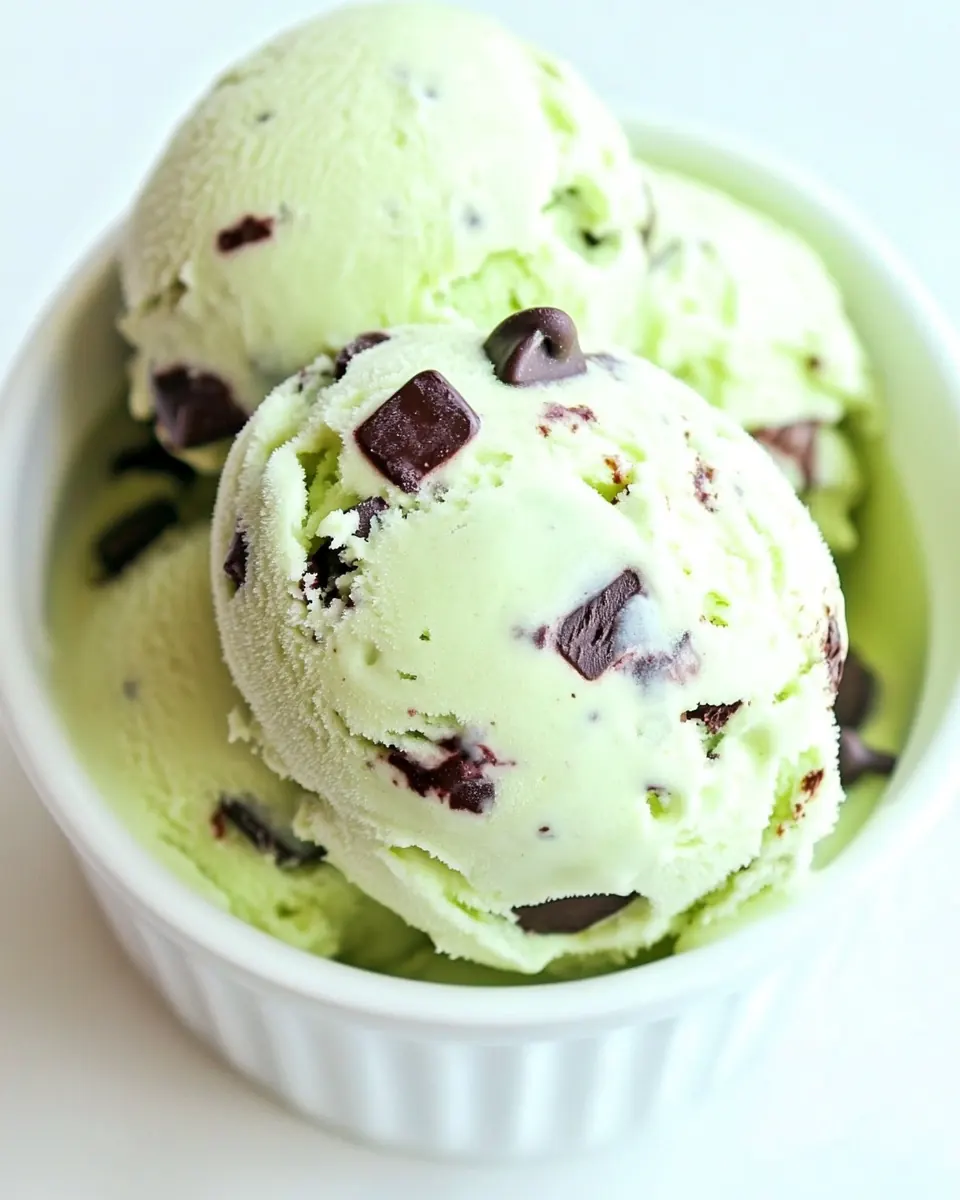
Scoop and enjoy!: The first scoops will have a cold, silky feel that melts quickly on the tongue, releasing peppermint and pockets of chocolate, and visually you should see clean, smooth scoops that hold shape. Serving immediately gives the best balance of firmness and creaminess, and the contrast between cold cream and chocolate shards is most pronounced then. A typical slip-up is trying to scoop straight from rock hard freezer storage; if so, let the pan sit at room temperature for a few minutes to soften slightly for easier scooping.