Preheat oven to 350 degrees F. Spray a 9 x 9-inch pan with nonstick spray. Cover bottom with parchment paper in a way that overhangs on two sides, for easy cookie bars removal.: As the oven comes to temperature you should notice a faint warm, dry scent that hints at browning to come, and the air will feel slightly warmer when you open the door. Preparing the pan early prevents last minute fumbling and ensures the batter goes into a properly heated environment, promoting even baking and consistent edge formation. The parchment overhang is a tiny trick that makes lifting the finished slab effortless, preserving clean edges when you slice bars. A common mistake is skipping the parchment which can cause bars to stick, making them hard to remove and resulting in crumbly servings.
In a large bowl, stir the first three ingredients together until well combined. Add M&M's and stir until well combined.: As you mix the vanilla cake mix , the slightly grainy texture will smooth out when the melted butter and eggs are incorporated, and the batter will take on a glossy, cohesive look. You'll hear soft scraping sounds as the spatula glides, and the aroma will sweeten noticeably once the butter is added. Gently folding in the M&M's keeps the candies intact, preserving visual appeal and textural contrast. Overmixing is the usual pitfall here, which can lead to a tougher crumb; stop mixing once the ingredients are homogenous.
Spread and pat the cookie dough in the pan. Level the top with a spatula.: When you transfer the batter to the prepared pan, the surface should feel slightly tacky but spreadable. Use an offset spatula or the back of a spoon to press the dough evenly, aiming for uniform thickness so the bars bake consistently. Pressing too hard can compact the batter and produce denser bars, while leaving it uneven results in underbaked centers. The visual cue is a smooth, level top with no large air pockets; if you see many bubbles, gently tap the pan on the counter to settle the batter before baking.
Bake for about 25-35 minutes or until golden brown. A toothpick inserted in the center should come out clean, or just a few crumbs, but not raw batter.: As the bars bake you will notice their edges turning golden and the kitchen filling with a warm, buttery aroma. The butter and sugars in the mix caramelize slightly, contributing to color and flavor. Listen for a gentle settling sound as moisture leaves the batter, and watch for a firm top that springs back when touched lightly. The toothpick test is the most reliable indicator; raw batter indicates more time needed. Overbaking leads to dry bars, so err on the side of checking early if your oven runs hot.
Let the cookie bars cool before cutting, as cooling will allow them to firm a bit.: Cooling is crucial because the center continues to set as it loses residual heat, and this makes for cleaner slices. The aroma will mellow and the texture will stabilize during this time. Cutting too soon risks tearing and a gooey center, while letting them cool fully helps the candies settle into place. A typical mistake is impatience, which yields messy squares instead of tidy bars.
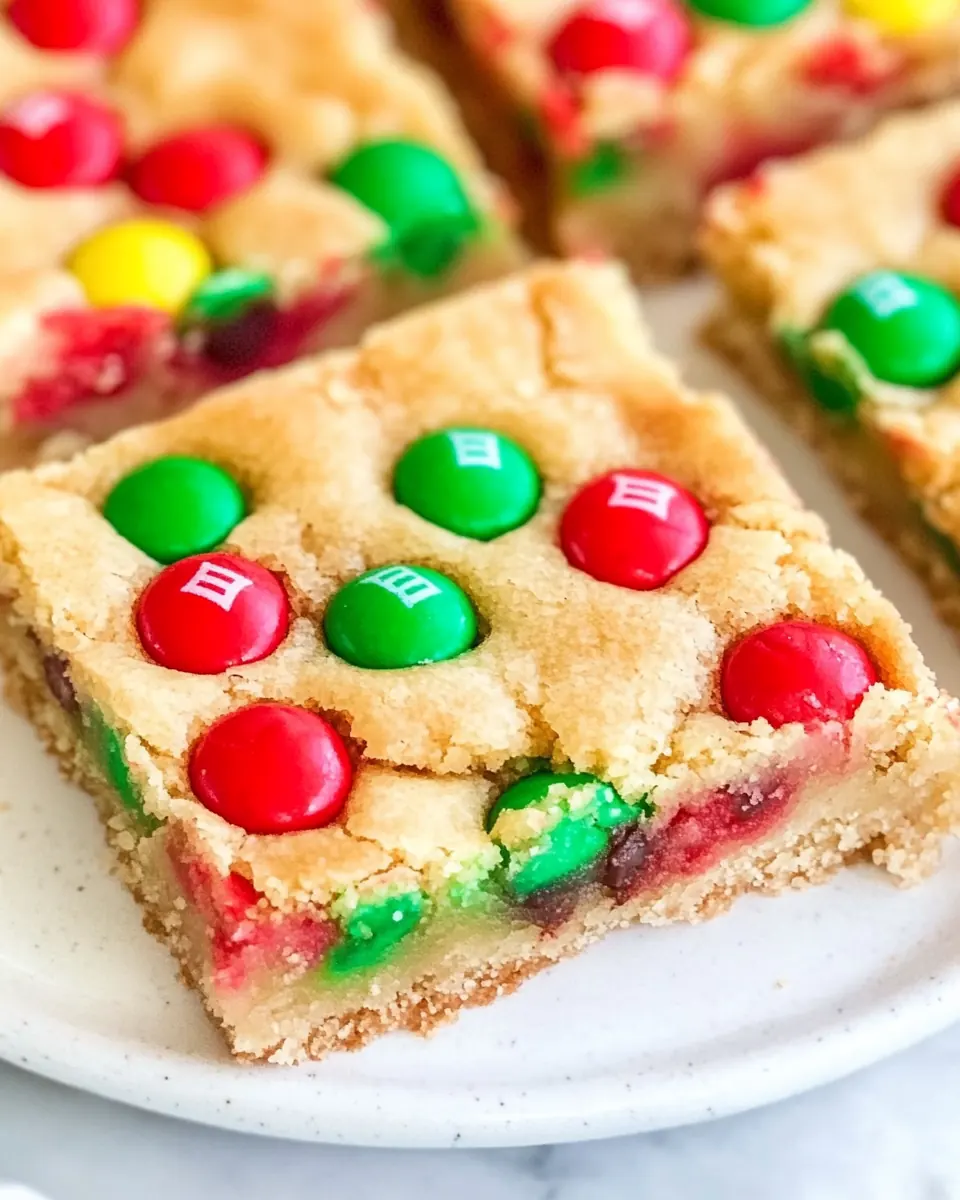
Using the parchment paper handles, lift the cookie from the pan and cut into bars.: Gently lifting the parchment will reveal the browned underside and the colorful candy-dotted surface. Use a sharp knife, and for cleaner cuts run the blade under hot water and dry it between slices to reduce sticking. You should hear a soft, clean slice as the knife passes through; if it drags, the bars need a bit more time to cool. Avoid sawing motions that crumple edges instead of producing neat pieces.