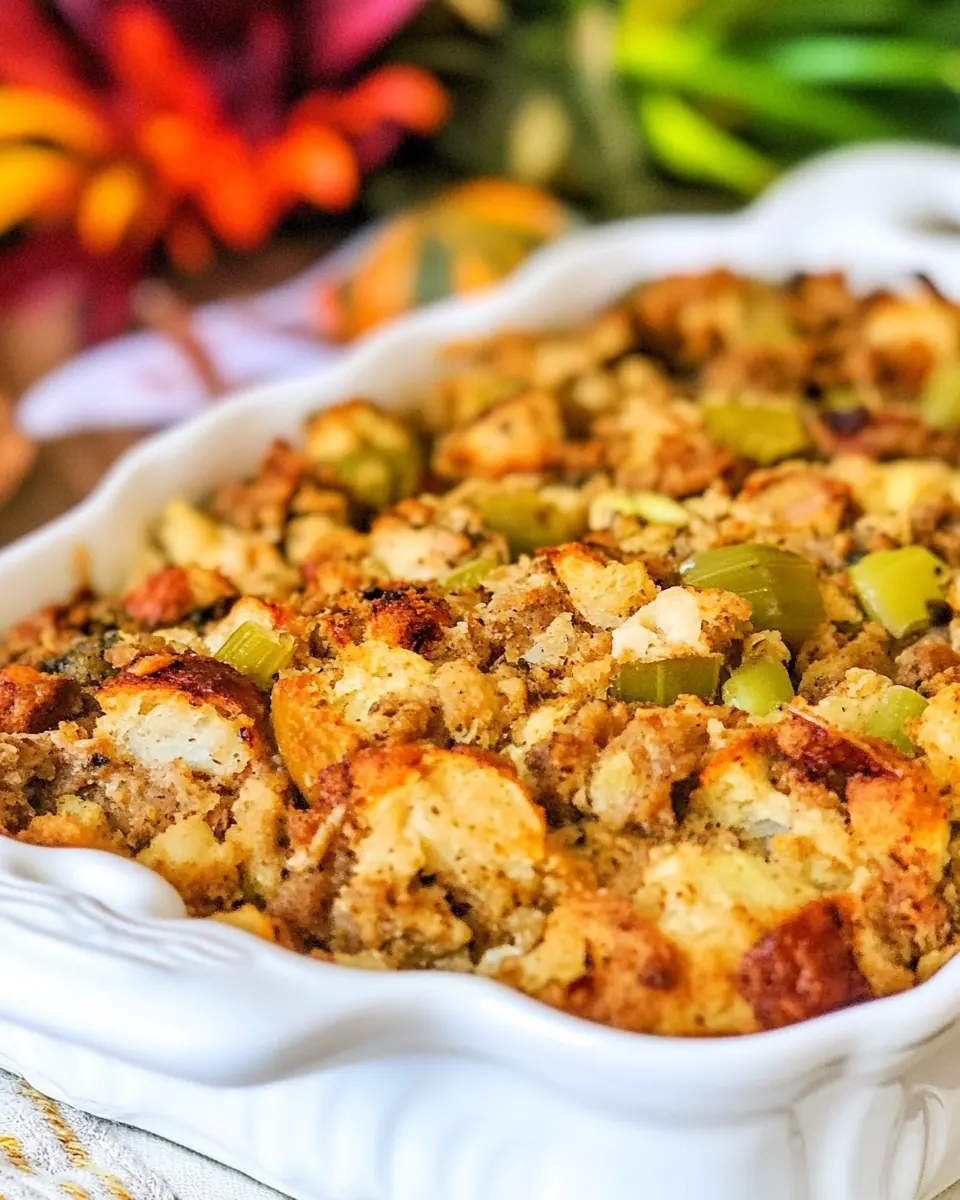
Preheat oven to 350°F.: You will feel the kitchen warm slightly as the oven reaches temperature, and that even heat is what produces gentle browning around the edges and a tender center. Preheating ensures the dressing starts cooking immediately and prevents a long stall that can dry out the top before the interior sets. A common mistake is placing the dish in while the oven is still cold, which can lead to uneven texture and longer cooking times. If your oven runs hot or cool, use an oven thermometer to confirm the actual temperature and adjust slightly to maintain a steady 350°F.
Combine all ingredients, except the broth, in a large bowl or pot, cover, and set overnight in the refrigerator, or for at least several hours.: When you stir these pieces together the aroma of onion , celery , and sage will wake up and mingle with the torn bread textures, creating a layered scent that hints at how the final bake will taste. Chilling the mixture lets the dry crumbs absorb the seasonings and egg, which develops internal moistness without immediate overheating. If you skip this rest, the crumbs might not hydrate evenly and can produce a gummy interior; giving the mix time avoids that. Covering keeps the flavors concentrated and stops the breads from taking on fridge smells, so use a tight lid or plastic wrap.
Transfer the mixture into your serving dish and pat down gently with your hands.: As you press the mixture into the dish you will hear gentle compacting sounds, and the surface will become smooth but not packed solid. This patting step helps eliminate large air pockets so the final bake holds together when sliced, while still leaving small crevices for a crisp top. Avoid compressing too hard, which can make the cooked dressing dense and heavy; aim for even compression so the heat penetrates uniformly during baking.
Pour enough broth into the prepared dressing until it's just juicy to the touch. Shouldn't be swimming in it, but still juicy when pressed.: Adding warm broth brings the aromas to life and you will notice steam rising briefly as it wets the top. The right amount will feel moist when you press down yet not release a pool of liquid; this balance yields a creamy interior with crisped edges. The reason this method matters is that it controls texture by letting the crumbs absorb the liquid rather than float in it. A typical pitfall is pouring too much broth at once, which leaves the dish soggy and prevents proper browning; add gradually and test by pressing gently.
Bake for 50 minutes. If starting to brown too much, cover with foil in the final 15 minutes of baking.: During baking the scent of roasted bread and melded aromatics will deepen, and you will hear a faint crackling as the top crisps. Look for a golden brown surface with bubbling edges and a set center when you jiggle the dish gently. Covering with foil slows surface browning so the interior can finish cooking without burning the top, which is especially useful if your oven hotspots. One common mistake is removing the dish too early; if the center still feels very loose, give it another 5 to 10 minutes as carryover heat finishes the set. When done, let it rest briefly before serving to make slicing cleaner and to let flavors settle.