Preheat oven to 400º. Line two baking sheets with parchment and set aside.: As the oven warms, you will notice a dry, rising heat that helps the puff pastry puff properly. Preheating creates that immediate oven spring, so the layers separate and become flaky. A common error is not allowing the oven to reach full temperature, which can result in dense pastry. If your oven runs cold, add a few extra minutes to the baking time and look for an even golden color.
Beat egg and water together in a small bowl; set aside.: The thin, neutral scent of parchment prevents sticking and encourages even browning on the bottom of the pinwheels. Lined sheets also mean easier transfer to wire racks. Avoid placing pinwheels on a hot pan straight from the fridge as sudden heat can cause uneven puffing. If parchment slips, a light dab of flour on the sheet corners helps it stay put.
Stir Muenster, Parmesan, and garlic powder together. Set aside.: When whisked, the egg and water form a glossy wash that will shimmer and toast into a crisp exterior. You can hear a faint liquid gloss as you brush, and the egg wash deepens color. Overbeating is not an issue, but avoid adding salt to the wash which can draw moisture out of the pastry.
Lightly flour work surface. Unfold the thawed puff pastry and roll lightly with a floured rolling pin. Brush the surface with the beaten egg. Top with cheese mixture, then evenly top with thawed spinach.: Mixing the shredded Muenster with grated Parmesan releases a layered aroma of dairy and nuttiness. This combination melts at different rates, giving pockets of creaminess and pockets of savory crunch. A typical mistake is shredding cheese too finely, which can lead to a pasty filling, so aim for medium shreds.
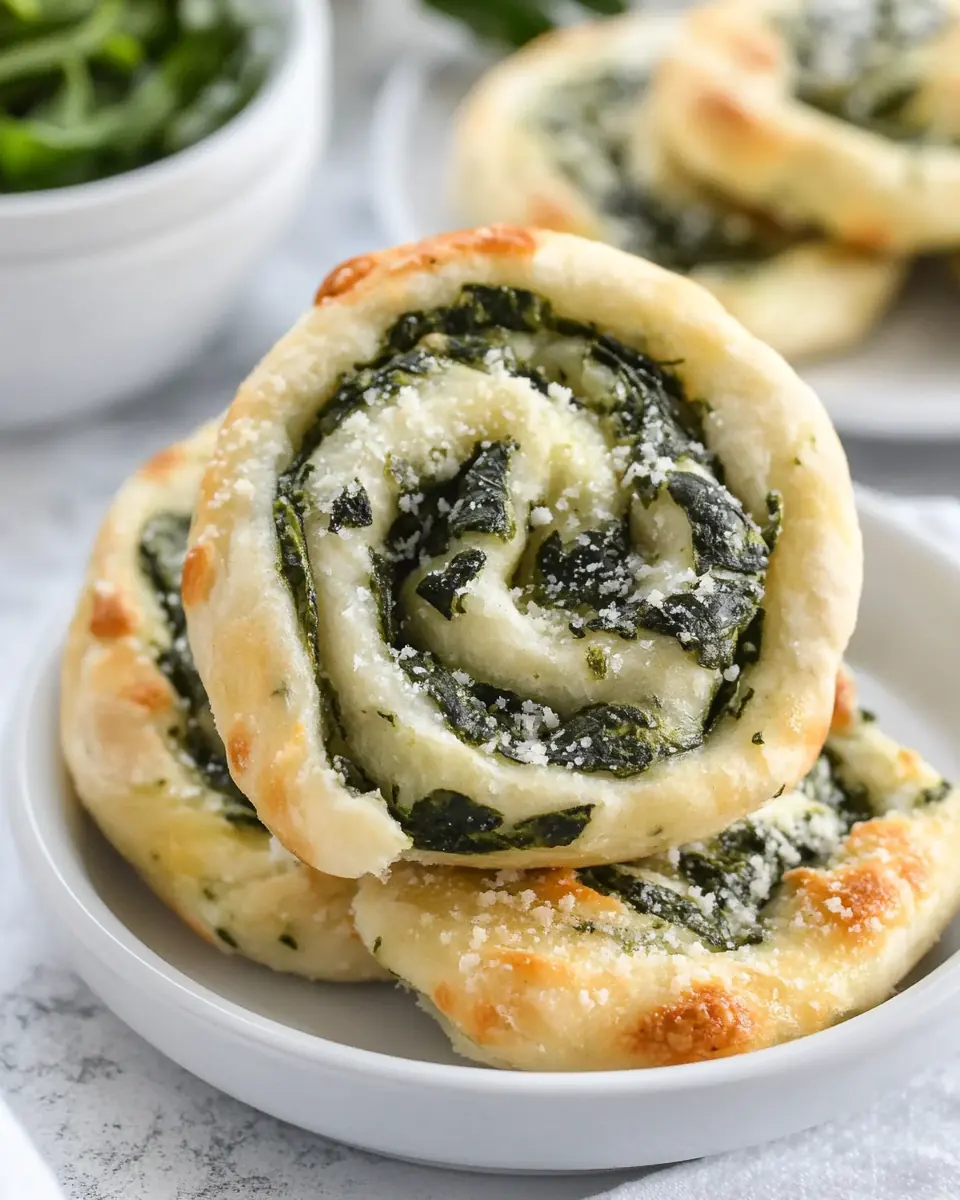
Starting at the short end, roll up like a jelly roll. Slice at 1/2-inch intervals and place rounds on baking sheets. Brush with egg wash.: A whisper of flour prevents the puff pastry from sticking and tearing while you roll. You should feel a slight resistance as the pin rolls across the surface, not drag. Using too much flour will dull the pastry surface and can interfere with browning, so brush off excess before assembly.
Bake for 15 minutes or till golden brown. Remove to wire racks and let cool for 10 minutes before serving.: As you roll, you will hear the soft, paperlike crackle of chilled layers relaxing. Rolling smooths seams and creates an even canvas for the filling, but avoid overworking which warms the butter layers and reduces lift. If pastry becomes warm, slide it back into the fridge for a few minutes.
Brush the surface with the beaten egg: The glossy sweep of egg wash seals the surface and helps the cheese adhere. Once brushed you will see a shimmering sheen that dies down slightly as you add cheese. A common pitfall is soaking the pastry with wash, which can cause sogginess, so use a light hand and thin strokes.
Top with cheese mixture then evenly top with thawed spinach: Layer the shredded Muenster and Parmesan so it covers the pastry nearly edge to edge, then scatter the very dry spinach on top. When the filling is even, each pinwheel bakes with consistent flavor and texture. If spinach is damp, steam will form and weigh down the pastry, so always squeeze until dry and pat with paper towels if needed.
Starting at the short end roll up like a jelly roll: As you roll you can feel the filling compress slightly and the layers nest together. Rolling from the short end produces thicker, sturdier rounds. If you roll too loosely the slices will unravel, and if too tight the pastry can tear, so aim for a snug, even tension. If the roll resists, chill for a few minutes to firm up the pastry before slicing.
Slice at 1/2-inch intervals and place rounds on baking sheets: Use a sharp knife to produce clean spiral faces, and you will see a neat swirl of filling that promises balanced bites. Spacing the rounds allows hot air to circulate for even browning. A dull blade will squash the shapes, and uneven slices bake unevenly, so take your time with even cuts.
Brush with egg wash: A second light coat will deepen the color and create a shiny surface that crackles pleasantly when cooled. You can almost hear a faint sizzle as the wash hits hot pastry in the oven. Too much wash can pool in the centers, so apply sparingly and with a small brush for precision.
Bake for 15 minutes or till golden brown: Inside the oven you will notice a warm, buttery perfume and gentle rising as layers separate. Look for a uniform golden tone and tiny browned edges where the cheese peeks out. Underbaking leaves the pastry doughy, and overbaking risks hard, overly browned edges, so rotate the sheets halfway if your oven has hot spots.
Remove to wire racks and let cool for 10 minutes before serving: Cooling on racks preserves crispness by allowing steam to escape from all sides, and the filling sets slightly so slices hold their shape. After cooling, the first bite should be flaky pastry with warm, melty cheese and tender spinach . If you serve too hot, the filling will be floppy and may not cut cleanly, so trust the cooling time.