Sift the flour and make a well in the center. Add the salt and butter, then begin kneading until you get a crumbly dough. Gradually add the whisked egg, sour cream, and water until your dough is smooth and uniform. Wrap the dough in cling film and refrigerate for half an hour.: The moment the flour and butter meet, you should smell a clean, comforting, slightly sweet flour scent, and the texture should feel like coarse sand. Working quickly keeps the butter cold, which is crucial for a tender crust that flakes slightly when baked. If the dough feels greasy, it means the butter warmed too much, so chill it ten to fifteen minutes before finishing. A common mistake is over kneading, which warms the dough and activates gluten, creating a tough pastry; handle it lightly and rest it wrapped so it relaxes and firms up.
Put the milk on medium heat and when it starts to boil add the semolina in a steady stream while whisking well. Take off the heat when it starts to thicken. Add the honey, then the eggs one at a time, stirring well and quickly. Leave to cool.: As the milk nears the boil you ll see steam rising and smell a warm dairy note, then the semolina will transform the liquid into a thick, porridge like custard that clings to the whisk. Removing from heat the instant it thickens prevents it from overcooking and becoming grainy. When you fold in the honey the mixture becomes glossy and a little denser, and adding the eggs one by one tempers them so they incorporate smoothly without scrambling. Stir briskly for even texture, and if you notice any lumps use a whisk or sieve them out while still warm. Avoid pouring piping hot semolina onto the raw eggs , because they may scramble; temper gradually for a silky result.
Preheat the oven to 160 °C (320 °F) and ready a 20-22 cm (7.5 – 8.5 inches) baking tray. Grease the bottom and sides with oil.: As the oven warms you can feel the temperature rising and hear the faint hum of the heating elements settling. Preparing a properly sized tray matters because too large a pan will thin the filling and change bake time. Greasing prevents sticking and keeps the edges intact when you unmold or slice. A common oversight is using a pan that is too shallow; choose the recommended size for the classic height and set of this pie.
Take the dough out of the fridge and roll it out into a circle, about 0.3 mm (1/8 in) thick. Place the dough in the baking tray and carefully shape it to cover the sides.: When rolling, the dough should feel cool and slightly elastic, releasing a faint buttery scent. Rolling to an even thickness ensures the crust bakes uniformly, so rotate often and check under light for thin spots. Gently press the dough into the pan, making small tucks rather than stretching, to avoid shrinkage while baking. If the dough springs back too much, let it rest a few minutes at cool room temperature. Avoid stretching to force it into place, which causes tearing or shrinking when it bakes.
Add the cream cheese, sour cream, and candied fruit (I use cantaloupe) to the semolina and egg mixture, then stir gently until smooth. Add the vanilla essence and lemon juice. Continue stirring.: The addition of room temperature cream cheese brings a velvety consistency and a faint tang that harmonizes with the cooked semolina . As you fold in the sour cream the mixture loosens and gains silkiness, and the specks of candied fruit create visual interest and textural pockets. The aroma of vanilla lifts the dairy notes while the lemon juice cuts through richness with a bright citrus whisper. Stir gently to maintain a smooth emulsion; vigorous mixing can introduce too much air, which may cause small cracks during baking. A frequent error is adding cold cream cheese directly, which leaves lumps; ensure it s softened for a uniformly smooth filling.
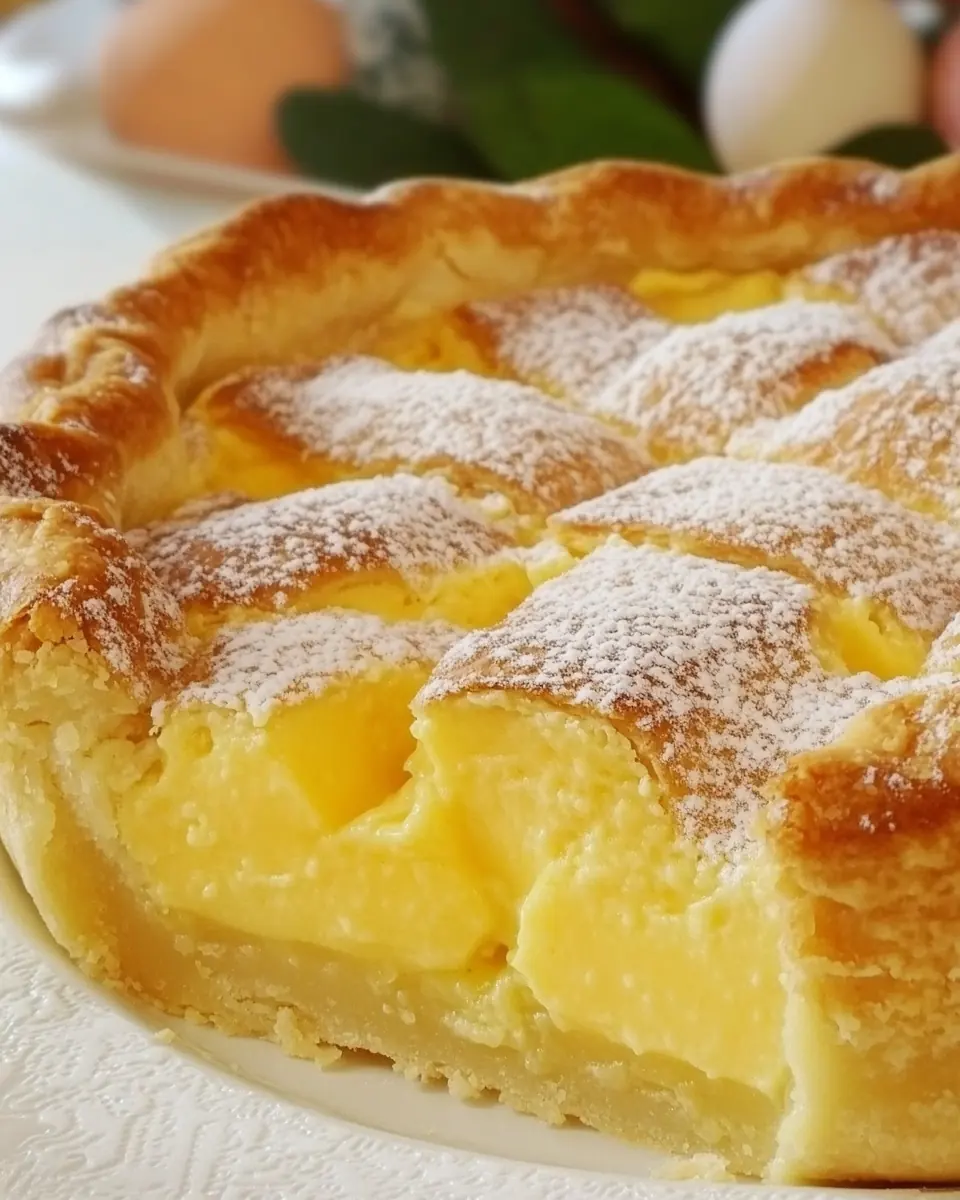
Pour the cream cheese over the dough and bake for about an hour. Let it cool completely, then portion it out.: As it bakes the top will slowly take on a pale golden hue, and the kitchen will fill with a honeyed, milky fragrance. The filling should quiver slightly in the center when you gently nudge the pan, signifying it is set but still moist. Cooling completely is crucial because the filling firms as it returns to room temperature, allowing neat slicing and preserving the creamy texture. Avoid cutting too early when warm because the slices will collapse; patience pays off here. If the crust browns too quickly tent with foil to prevent burning while the center finishes setting.