preheat your grill to about 400 degrees. Place the green beans in a bowl and toss them with a drizzle of olive oil, a pinch of salt, pepper and garlic powder. Place the green beans on the grill (I put mine on directly, but you can use a grill pan or foil and grill), turning often. Grill for 4 to 5 minutes, until the beans are blistered and slightly charred.: When the grill reaches around 400 degrees you will hear the satisfying sizzle as the green beans hit the grate, and that sound signals quick blistering instead of slow steaming. Aim for medium high heat so the beans char in spots and develop smoky notes without shriveling. A common mistake is using too low heat, which leads to limp, pale beans rather than ones with browned edges. If using a grill pan, let it get hot until it radiates heat for best surface contact.
heat about 3 inches of water in a small saucepan over medium heat until boiling. Once boiling, reduce the heat until it’s barely at a simmer, add the eggs gently and cook for 6 minutes. Remove the eggs with a slotted spoon and place them in an ice bath. Let cool completely before peeling. Slice to serve.: After tossing the green beans you'll smell a faint garlicky fragrance and the oil will sheen on their surface, which helps them blister evenly. The oil encourages the Maillard reaction and the seasoning boosts natural sweetness. Avoid overdosing with oil or salt, which can make them greasy; just coat lightly so they char rather than fry.
In a bowl, whisk together the lemon juice and mustard. Whisk in the oil until the dressing is emulsified. Add a pinch of salt and pepper along with the herbs. Whisk to combine. Any extras of this stays great in the fridge for a few days - it just has to be whisked and stirred before using!: As the beans hit the hot grate they should emit a quick hiss and begin to darken at the tips within moments. Turn them often so multiple sides get those browned spots, and watch closely as they move from bright green to blistered and slightly blackened. If left too long they can collapse and taste bitter, so remove as soon as you see blistering and a softer bite when pierced with a fork.
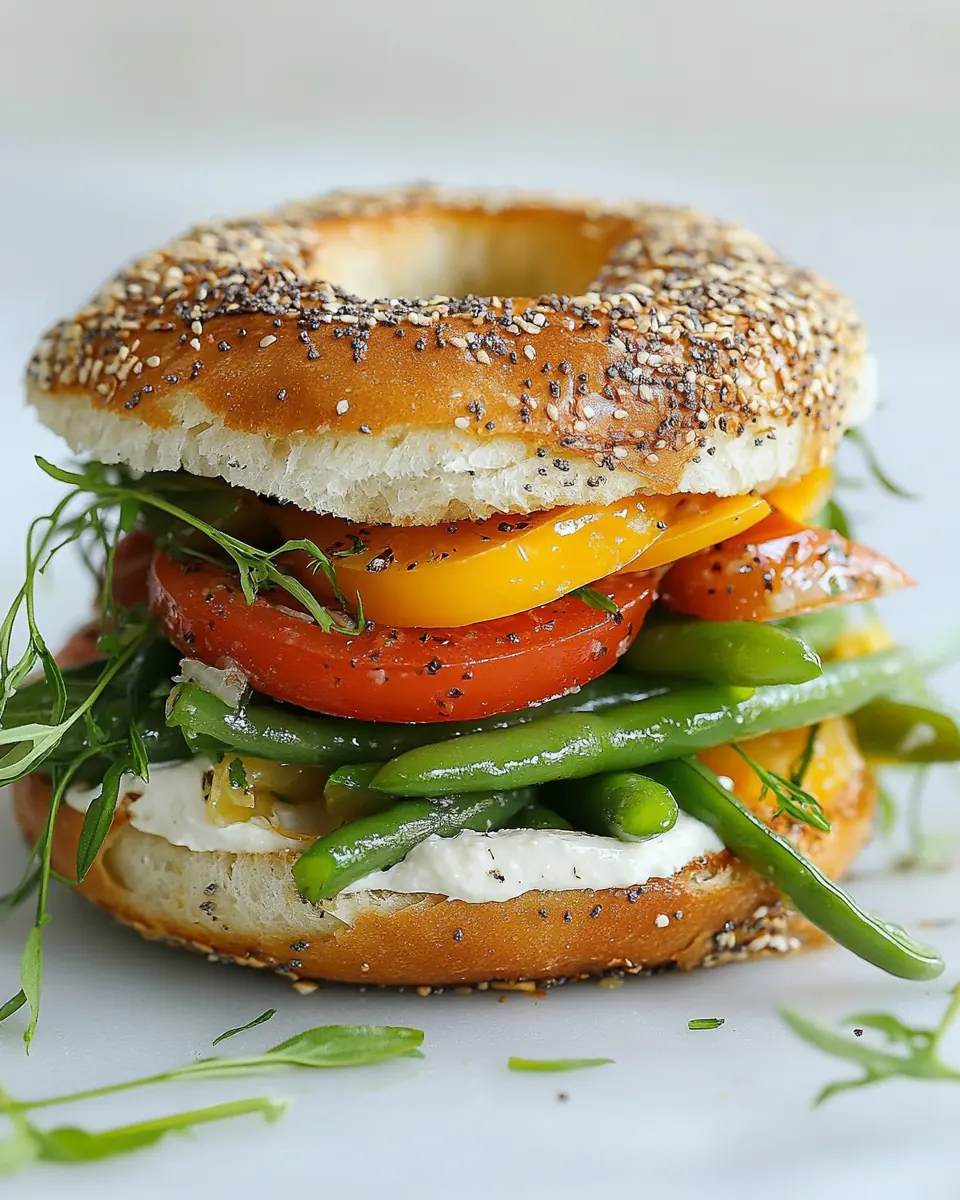
Drizzle some of the vinaigrette on both cut-sides of the bagel. Top one side with a slice of tomato (and a pinch of salt and pepper), some smoked salmon, the green beans, pickled onions, olives and capers. Add on a handful of microgreens. Top with half of a soft boiled egg and a pinch of salt and pepper. Top it with the other bagel half.: Gentle, frequent turning ensures even charring and prevents single sided burning, and it also creates that contrast of tender interior and crunchy exterior. Use tongs to flip the green beans every 30 to 45 seconds so no one side becomes overly charred. A common slip is overcrowding the grill, which steams rather than chars; give beans space for direct heat.
everyone loves their sandwiches different. Some people like them loaded with lots of each ingredient, some want a single layer of each ingredient. Consider this when reading the recipe and if you are serving people who enjoy really thick, loaded sandwiches (like Eddie, who would want all the salmon for his sandwich!), you may want to double a few of the ingredients above.: Around the 4 to 5 minutes mark you will notice an aromatic, slightly smoky scent and the beans will yield when pressed. This is the sweet spot where they are still crisp but have developed a roasted depth. Overcooking past this window will cause them to dry out, becoming tough or stringy instead of tender crisp.
heat about 3 inches of water in a small saucepan over medium heat until boiling: Bringing water to a rolling state creates steady heat to softly cook the eggs , and the gentle agitation in the pot helps them cook evenly. You should see steady bubbles but not violent splashes. Too vigorous a boil risks cracking the shells and losing whites to the water.
Once boiling, reduce the heat until it’s barely at a simmer, add the eggs gently and cook for 6 minutes: Lowering to a gentle simmer keeps the eggs from jostling and cracking, and at 6 minutes the yolks will be creamy and slightly jammy. Use a slotted spoon to lower them in to avoid shell damage. Common mistakes are overcooking for longer than six minutes, which results in fully firm yolks that lack the luscious, spreadable texture we want.
Remove the eggs with a slotted spoon and place them in an ice bath: The immediate cold shock stops carryover cooking and firms the whites while preserving a creamy yolk. You'll feel the shells cool quickly, and the eggs are easier to peel after about five minutes in ice water. Skipping the ice bath can lead to overcooked yolks and a chalky texture.
Let cool completely before peeling: Once cooled you can peel the eggs under running water to ease shell removal, keeping the white surface intact. Carefully slicing afterward reveals a glossy, nearly jammy center that will meld into the sandwich. Rushing to peel while warm often tears the white and creates a messy assembly.
Slice to serve: A clean slice exposes the soft center of the egg and helps each portion spread a bit into the sandwich. Use a sharp knife and a gentle sawing motion to avoid smooshing the yolk. If the knife drags, chill the egg briefly to firm the white for neater cuts.
In a bowl, whisk together the lemon juice and mustard: The first whisking step aerates the mixture and begins to emulsify the dressing, creating a cohesive base that will carry the oil and herbs. You'll smell the bright citrus right away and see the mustard break down into small threads. If the mixture separates later, whisk vigorously or add a tiny splash of water to rebind it.
Whisk in the oil until the dressing is emulsified: As you pour in the extra virgin olive oil slowly while whisking, the dressing will thicken and coat the back of a spoon, indicating a successful emulsion. This makes it cling gracefully to the bagel and veggies. Adding oil too quickly causes the dressing to break, which can be rescued by starting with a fresh spoonful of mustard and whisking the broken emulsion into it drop by drop.
Add a pinch of salt and pepper along with the herbs: Freshly chopped herbs folded into the dressing bring fragrance and complexity, while salt and freshly cracked black pepper heighten flavors. Taste and adjust; the herbs should be a supporting note, not overpower the citrus. Over seasoning at this stage is the main error, so season lightly and test on a small piece of bagel or tomato .
Whisk to combine: A final whisk integrates flavors and creates a glossy vinaigrette that will enliven every element. You should see a homogenous dressing with specks of herb dispersed throughout. If it looks broken or oily on top, whisk harder or add a tiny splash of lemon to rebind it.
Drizzle some of the vinaigrette on both cut-sides of the bagel: Brushing vinaigrette onto both halves ensures the bagel absorbs flavor without becoming soggy, and the tactile act of spreading helps the other ingredients adhere. A light hand is key, too much will soak the bread and make it fall apart during eating.
Top one side with a slice of tomato: As the slice of heirloom tomato hits the vinaigrette you will notice bright juices begin to mingle with the dressing, adding freshness. Sprinkle a touch of pinch of salt and freshly cracked black pepper on the tomato to amplify its flavor. Thick slices can release too much juice, so aim for even, thin slices for balance.
and a pinch of salt and pepper: The simple seasoning on the tomato unlocks its sweetness and helps integrate it with savory layers. Salt draws out aroma while pepper adds edge. Avoid oversalting, because the capers and olives will contribute brine.
some smoked salmon: Gently layer smoked salmon next so the delicate texture remains intact, and the oil from the dressing will highlight its smoky, savory qualities. Arrange it so each bite has an even distribution, and remember that piling too much can overwhelm the other flavors.
the green beans: Add the blistered green beans on top of the salmon to preserve their crispness and to keep the warm beans from wilting the greens. You should still see flashes of char on their edges. If beans are overly soft, they likely sat too long after grilling and will lose their textural interest.
pickled onions, olives and capers: Scatter small amounts of pickled onions , chopped olives , and capers so each bite gets a tangy pop. These bold accents intensify the sandwich's Mediterranean feel, and they are intentionally used sparingly so they do not dominate the smoked salmon .
Add on a handful of microgreens: The microgreens introduce a peppery lift and a delicate chew, and their freshness helps balance the brininess. Place them loosely so they add volume and visual appeal. Pressing them too flat will cause wilting and reduce their textural contribution.
Top with half of a soft boiled egg and a pinch of salt and pepper: Nestle a halved egg on top so the creamy yolk can mingle with the dressing and other fillings, creating pockets of richness. A finishing pinch of salt and freshly cracked black pepper will enhance the egg's flavor. Overhandling the egg can smear yolk prematurely, so place it gently.
Top it with the other bagel half: Finish with the second bagel half and press slightly so layers settle. The toasted exterior will give a satisfying bite and the structure will hold for eating or packing. If the sandwich seems too tall, consider removing or thinning one component rather than compressing it to avoid spillage.
everyone loves their sandwiches different: Recognize guests have preferences, some want every ingredient piled high, while others prefer a single layer of each component, and adjusting quantities ensures everyone is happy. If serving a crowd, multiply key ingredients to accommodate big appetites. The biggest mistake is assuming one build fits all, so offer extras of strong components like smoked salmon and capers on the side.