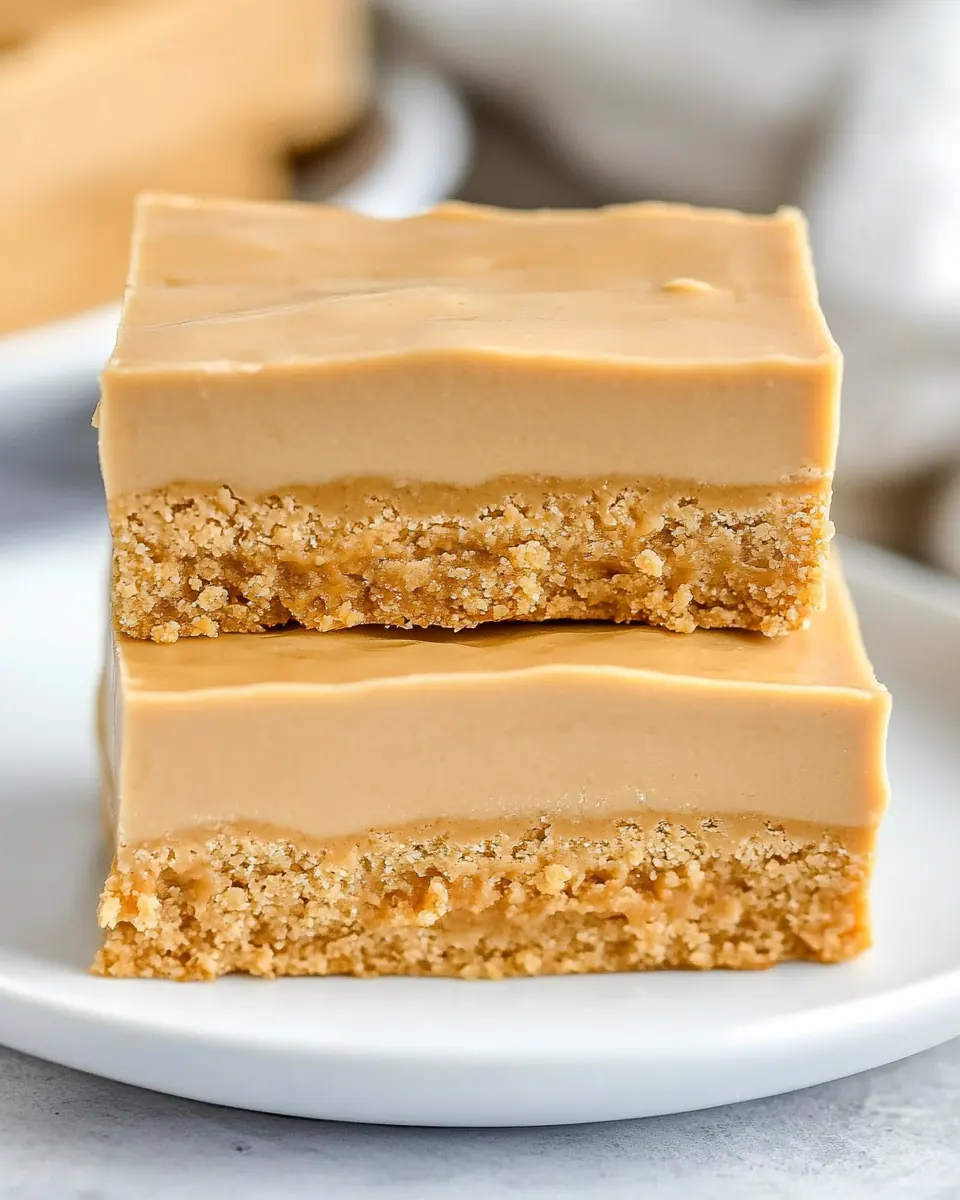
Line a 9×13” pan with foil and spray with cooking spray.: You will feel the smooth drag of the foil as you press it into the pan, and the light sheen of cooking spray prevents sticking while making it easy to lift the finished slab out. This step matters because it preserves the clean edges of your bars and prevents them from tearing when sliced. A common mistake is skipping the spray or lining, which can lead to bases sticking and crumbling when you try to remove the bars. Make sure the foil is snug in the corners, and leave an overhang for easy removal.
Place melted butter, graham cracker crumbs, powdered sugar, and 3/4 cup peanut butter in a large bowl. Mix by hand until combined. Press firmly into prepared pan.: As you combine these ingredients you should notice the warmth of the butter and the toasty aroma of the graham cracker crumbs , and the dusting of powdered sugar will start to disappear as it binds with the fats. The reason you mix by hand is to get an even texture without overworking the mixture; your hands let you feel when the crumbs are uniformly moistened. A typical error is adding too much pressure which can cause the base to become oily. Aim for a cohesive, slightly tacky mixture that holds when pressed together.
Place white chocolate chips and remaining 2 tablespoons peanut butter in a microwave-safe bowl. Heat on 50% power in 30 second increments, stirring between each, until melted and smooth. Pour over bars and spread with a spatula to evenly coat.: As you work the mixture, listen for the quiet shift of crumbs compacting and notice when the texture changes from loose to cohesive. Achieving the right consistency ensures the base will pack tightly and slice cleanly later. Avoid leaving dry pockets of powdered sugar , which create chalky bites; if you encounter this, press and rub the mix a little more until uniform. If it seems overly wet, add a few extra crumbs to balance it.
Chill for at least 1 hour to set, slice into bars. It’s best to slice them at room temperature so your chocolate doesn’t shatter.: Pressing the base firmly creates a dense, stable foundation that will hold its shape when sliced. Use the bottom of a measuring cup or a flat glass to apply even pressure, listening for the slight compacting sound as air pockets are expelled. Firm pressure matters because a loosely packed base will crumble and not hold bars together. A common slip is pressing unevenly, which causes thin spots that break; take your time to get a uniform thickness across the pan.
Place white chocolate chips and remaining 2 tablespoons peanut butter in a microwave safe bowl: When you measure these, the visual contrast between the pale white chocolate chips and glossy peanut butter is appealing. Combining them before melting helps the peanut butter distribute evenly, smoothing the texture and enhancing peanut flavor in the topping. Skipping the small amount of peanut butter in the topping can lead to a very sweet, one dimensional finish rather than a layered, nuanced top.
Heat on 50% power in 30 second increments, stirring between each, until melted and smooth: You will see the chips start to soften and the mixture become glossy as the white chocolate chips melt, while gentle stirring ensures an even, lump free texture. Heating at reduced power is essential to prevent scorching; if the mix goes grainy, it has overheated. A typical error is melting at full power which yields a burnt flavor and gritty texture. Stir thoroughly, scraping the bowl so no unmelted pockets remain.
Pour over bars and spread with a spatula to evenly coat: As you pour the warm mixture, it should flow like a thick ribbon and settle into an even layer across the compacted base. Smooth with a spatula in long, confident strokes to avoid dragging crumbs into the topping. The visual cue you want is a glossy, level surface without air bubbles. If the topping becomes too stiff to spread, warm it briefly in the microwave at low power and stir, but avoid overheating which dulls the shine.
Chill for at least 1 hour to set, slice into bars: During chilling you will notice the topping going from glossy and soft to firm with a slight snap, and the base will feel cool and solid. Chilling is crucial because it allows the layers to bind and makes slicing tidy. A common mistake is under chilling, which leads to squashed bars and smudged topping. For best results, refrigerate until the topping is set to the touch and the base resists pressure.
It’s best to slice them at room temperature so your chocolate doesn’t shatter: Letting the chilled pan sit at room temperature for a short time softens the top just enough to prevent brittle cracking while maintaining structure. You want a balance where the topping yields cleanly under a sharp knife without cracking into shards. Cutting too cold will cause the chocolate to shatter into pieces, while cutting too warm will smear the topping. Allow the pan to rest until the edges slightly lose that icy firmness but are still cool.