Set out a 9-inch pie pan and a food processor. Place the graham crackers in the food processor. Lock the lid into place and pulse into a fine crumb. Then add in the melted butter, sugar, and salt. Pulse to combine.: When you start here you will hear the crackers break into a steady whispering grind, and the aroma becomes faintly warm and toasty. The goal is a uniform sandy texture, like wet sand that will hold together when pinched, because that ensures a compact crust that slices cleanly. If the crumbs are uneven, some pockets may stay loose, so pulse in short bursts and check the texture often. A common error is over processing to a paste, which makes the crust greasy and dense, so stop once crumbs are fine and evenly coated by the butter.
Dump the graham cracker crumble into the pie pan. Use your hands to press it into an even layer over the bottom of the pan and up the sides. Refrigerate until ready to fill.: Pressing the crumbs produces a faint clinking as the pan fills and a gentle compacting sound as you tamp it down, and visually you want a uniform surface with no holes. Firm, even pressure creates a crust that supports the filling without collapsing. If you press too lightly, the crust will crumble when sliced, and if you press too hard you can compress it into an overly hard base. Chill it sufficiently to set the butter, otherwise the filling can loosen the crust when poured in.
Wipe out the food processor bowl. Then add in the cream cheese, sweetened condensed milk, lemon juice and lemon zest. Puree until smooth. Pour/scoop the filling into the pie crust and continue to refrigerate.: As you puree, you should see the mixture transform into a glossy, velvety mass and smell a bright citrus scent that mixes with the dairy richness. The sound becomes a steady hum, and the visual signal is a smooth ribbon when the blade is lifted. Smoothness matters because lumps of cream cheese will create pockets of uneven texture. If your cream cheese was not softened, blending becomes tough and the mixture may become lumpy, so always soften to room temperature. Pour carefully along the crust edge so the crust does not shift.
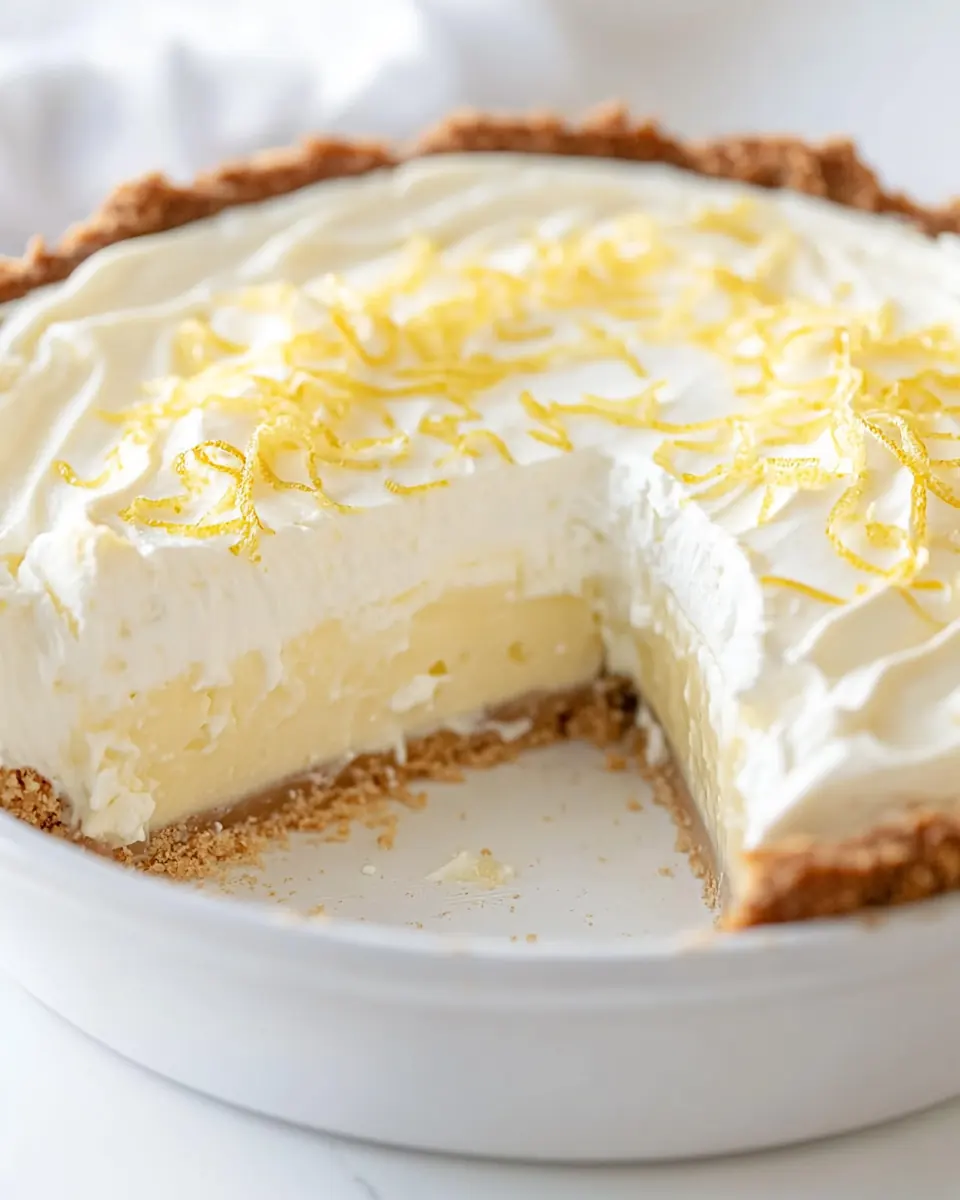
In a medium bowl, mix the sour cream and powdered sugar. Stir until smooth. Then fold in the Cool Whip. Spread the topping over the lemon pie filling and place in the freezer for at least 4 hours, undisturbed.: When you stir the sour cream and powdered sugar you should feel the mixture become silky and smell slightly tangy. Folding in the Cool Whip adds an airy cloud like texture, and the topping should look pillowy and even when spread. The reason to freeze is to allow the filling to firm and the topping to set so slices come out clean. Avoid vigorous stirring which will deflate the topping, and do not move the pie while it freezes to prevent ripples or collapse.
When ready to serve, cut into pieces while frozen. Let each piece sit out at room temperature for 10 minutes, then serve slightly softened. Garnish with lemon slices if desired.: Cutting while frozen gives the cleanest edges and a satisfying snap, and you will hear a crisp sound as the knife passes through. After resting for about 10 minutes, the filling softens to a creamy custard like texture and releases a fresh lemon perfume. If you wait too long at room temperature the slices will become too soft and weep, so monitor the timing carefully. A dull knife will mash the pie, so use a sharp blade and wipe between cuts for neat slices.