Preheat oven to 350 degrees.: Even though this is a no bake cheesecake, preheating to 350 degrees is suggested for a brief crust bake if you choose to brown it. You'll notice a warm, toasty aroma as the oven reaches temperature, and that scent signals the caramelization that deepens the crust flavor. This step matters because a lightly baked crust holds together better and has more depth. A common mistake is skipping the preheat and attempting to bake into a cold oven, which leads to uneven browning. If you do not want the extra toasty note, you can skip the bake and chill the crust instead, but expect a slightly softer base.
Crush the digestive biscuit cookies in a food processor, process cookies until they are crushed into fine crumbs. Pour cookies into a bowl, and add 6 tablespoons of melted butter and nutmeg and stir to combine. Press the crust into an 8-inch spring-form pan. Bake crust in for approximately 12 – 15 minutes. The crust should be a golden brown color.: The crushed crumbs should look like wet sand and smell faintly sweet and biscuity before you add the butter . As you stir in the melted butter and freshly grated nutmeg , the mixture will darken slightly and clump together when pressed. Pressing it firmly into an 8-inch spring form pan creates an even base that supports the filling. If you bake the crust for about 12 to 15 minutes, small wafts of toasted aroma will emerge and the surface will develop an even, golden brown hue. That visual cue tells you the crust's oils have caramelized enough for a firmer bite. A typical error is under-pressing the crumbs, which causes a crumbly base that falls apart when sliced. Use the back of a measuring cup to press evenly, and let the crust cool briefly before adding filling so it sets properly.
In a medium-sized bowl combine cream cheese and sweetened condensed milk. Add 1 teaspoon lemon juice, and one teaspoon vanilla stirring into the cream cheese. Mix cheesecake mixture until very smooth, this can be done by hand or with a mixer. Peel two of the mandarin oranges, and cut the segments into small pieces over the bowl with the cheesecake mixture.: When you start mixing the cream cheese with the sweetened condensed milk , the texture transitions from slightly lumpy to silky smooth, and the bowl will take on a glossy sheen. The lemon juice and vanilla add bright and aromatic notes that balance the sweetness. Cutting the peeled mandarin oranges over the bowl allows their juices to mingle directly with the batter, imparting fresh citrus fragrance and a hint of tartness. If you use a mixer, pulse slowly first to avoid splattering, then blend until no lumps remain. A common misstep is using cold cream cheese , leading to clumps; make sure it is softened at room temperature for a velvet finish.
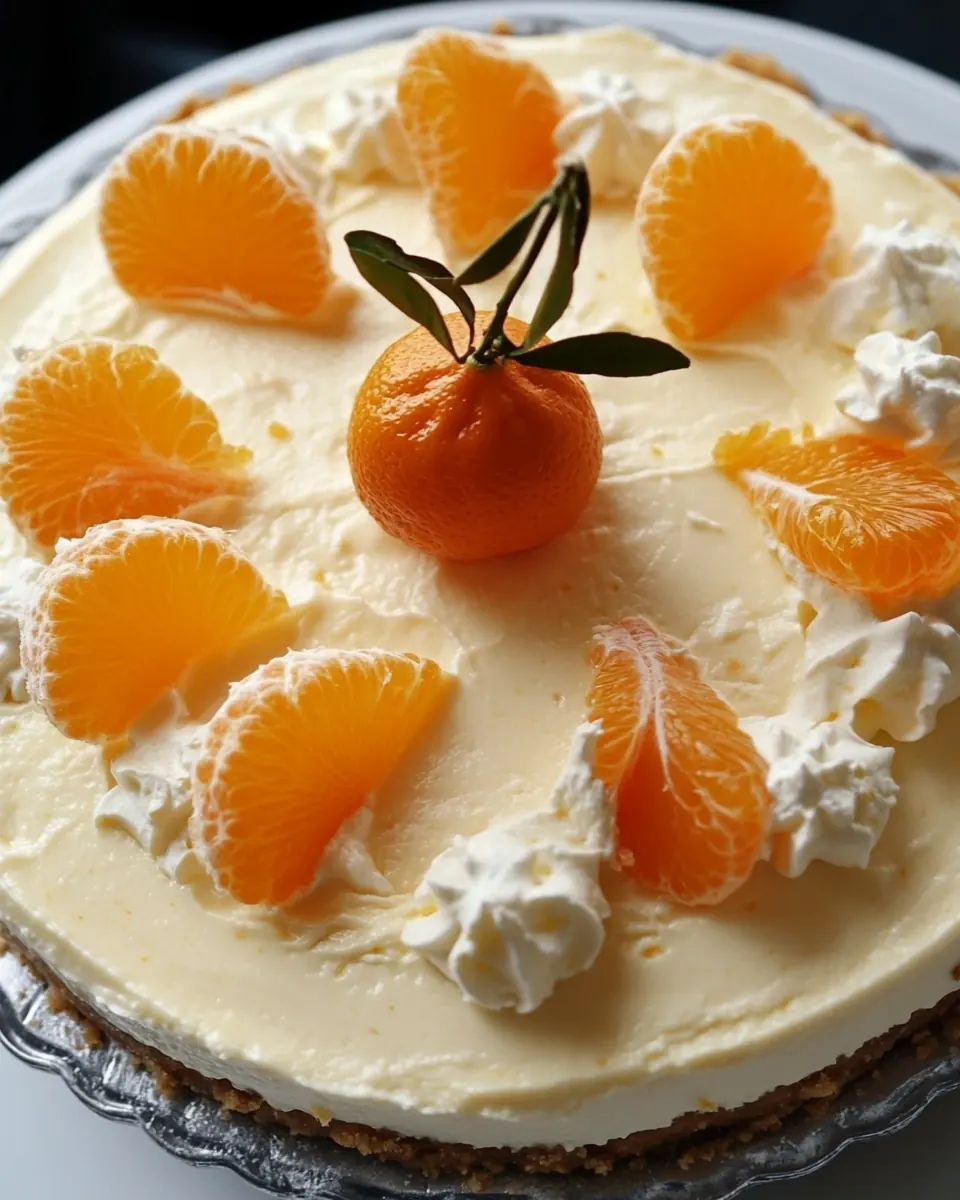
You will want any of the juices to fall into the cream cheese batter. Stir the orange pieces into the cream cheese. Spread the cheesecake batter over the crust, and refrigerate for at least 8 hours before serving. Just before serving, peel the last orange and use segments to decorate the top of the cheesecake.: As the orange juices drip into the batter, you will see the mixture brighten visually and smell fresh citrus. Folding the segments in distributes bursts of mandarin across the cake, so each slice has pockets of fruity texture. Smooth the surface over the crust so the filling sets in an even layer, and place the pan in the refrigerator to chill for at least 8 hours . During this time the filling firms to a sliceable consistency without heat, and the flavors meld. A typical pitfall is cutting into the cheesecake too early, which yields a runny center; patience here rewards you with clean slices. Decorate with segments from the final peeled mandarin orange right before serving for the best visual contrast and fresh aroma.